
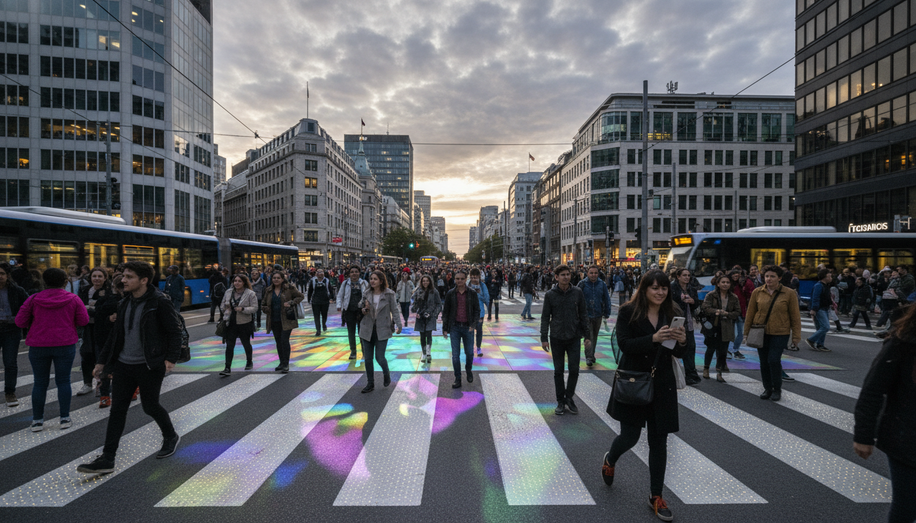

In the bustling heart of cities worldwide, out-of-home (OOH) advertising is evolving from static billboards into dynamic canvases for brand storytelling. Brands are no longer content with passive displays; they’re transforming urban spaces—bus shelters, public squares, and high-traffic plazas—into temporary hubs of immersion and interaction. This shift toward experiential OOH marketing harnesses the physicality of real-world environments to forge emotional connections, turning everyday commutes into unforgettable encounters that linger long after the activation ends.
Consider the power of these interventions. A traditional billboard might catch an eye for seconds, but an experiential setup invites participation. In one striking campaign, a sustainable clothing brand commandeered a neighborhood park, erecting a lounge from recycled shipping pallets where passersby could relax, try on garments, and learn about eco-friendly fabrics through hands-on workshops. What began as a serene urban oasis quickly buzzed with activity, as participants snapped photos and shared their experiences online, amplifying the brand’s message virally. This isn’t mere advertising; it’s an event that blurs the line between promotion and genuine entertainment, fostering brand loyalty through shared memories.
The mechanics of experiential OOH thrive on surprise and sensory engagement. Mobile activations, like custom LED trucks or glass-walled vehicles, roam festivals and downtown streets, offering 360-degree product views or interactive games. Picture a giant replica of an almond bottle trundling through a city center, its sides opening to dispense samples while digital screens pose trivia questions for prizes. At a recent urban festival, such a setup drew crowds who not only tasted the product but also spun wheels for discounts, generating leads and social media posts that extended reach exponentially. These activations excel in high-traffic zones, where spontaneity catches pedestrians off guard in delightful ways, converting skeptics into advocates.
Urban infrastructure itself becomes the playground. Bus stops evolve into pop-up coffee stands, dispensing branded lattes amid aromatic mists and photo booths that encourage shares. Interactive billboards, equipped with motion sensors, respond to passersby—dancing lights or personalized messages that prompt selfies. In London, a campaign for a music streaming service turned Underground stations into “lost in music” zones, with augmented reality installations letting commuters mix tracks via their phones. Riders didn’t just wait for trains; they co-created content, associating the brand with joy and creativity. Data from similar efforts shows engagement rates soaring—up to 70% higher recall compared to static ads—because participants aren’t viewers; they’re protagonists in the narrative.
This trend’s potency lies in its fusion of physical and digital realms. Experiential OOH ignites on-site buzz that fuels online virality, creating a feedback loop of exposure. A pop-up art installation in New York, branded around a tech giant’s new gadget, invited users to “donut-ify” their selfies through AR filters, blending whimsy with product demos. The result? Millions of user-generated posts, dwarfing traditional media spend. Brands like Nike and Netflix have mastered this, deploying hyper-local digital OOH tied to activations—towering screens teasing releases while ground-level experiences offer sneak peeks. Nike’s urban runs, complete with branded hydration stations and leaderboards, don’t just advertise sneakers; they embody the athletic lifestyle.
Yet, success demands more than novelty. Effective campaigns align activations with core brand values, ensuring authenticity resonates. Collaboration is key: creative agencies partner with OOH specialists to navigate permits, logistics, and metrics like footfall tracking via beacons or social sentiment analysis. Challenges persist—weather, regulations, high costs—but ROI metrics, from earned media value to sales uplift, justify the investment. A recent study pegged experiential OOH at delivering 2.5 times the impact of digital ads alone, thanks to its tangible, shareable nature.
As cities densify and attention fragments, experiential OOH stands out by reclaiming public spaces for human connection. It’s redefining advertising as an invitation, not an interruption. Brands bold enough to paint urban canvases with interactivity aren’t just seen—they’re felt, remembered, and talked about. In 2026, with AR advancements and sustainable materials on the rise, expect even more ambitious takeovers: interactive facades on skyscrapers, eco-pop-ups in green belts, and AI-driven personalization at transit hubs. The message is clear: the future of OOH isn’t on the wall—it’s in the world around us.