
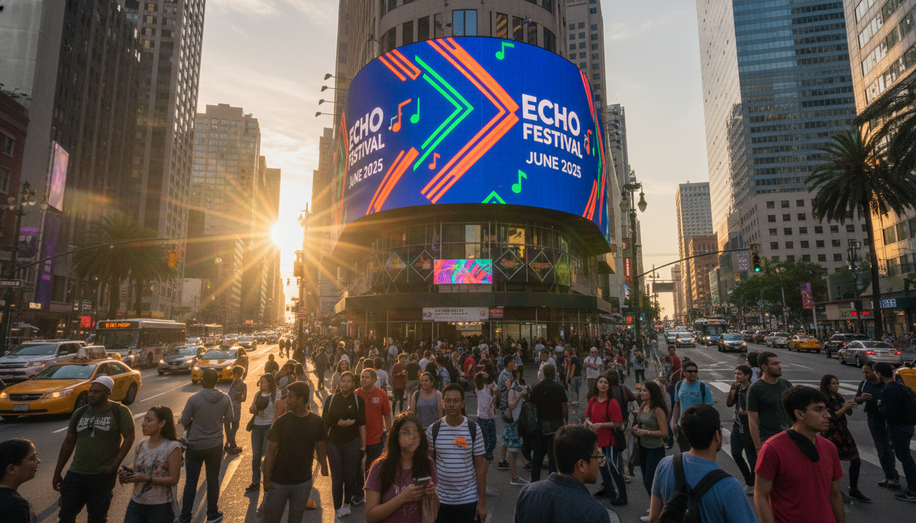

Out-of-home advertising has emerged as a cornerstone strategy for event promoters looking to fill venues and generate momentum before doors open. Whether promoting a music festival drawing thousands of fans, a corporate conference attracting industry professionals, or a local community gathering, OOH campaigns cut through the digital noise and speak directly to consumers in their everyday environments where they cannot simply scroll past or close a browser window.
The power of OOH for event promotion lies in its fundamental ability to reach broad audiences with high visibility. Billboards positioned along major traffic corridors, transit advertisements on buses and trains, and digital displays in shopping districts ensure that potential attendees encounter event messaging repeatedly as they move through their daily routines. This repeated exposure builds awareness organically and creates a psychological momentum that translates into ticket purchases and attendance commitments.
Strategic placement becomes even more effective when tied to intelligent event data and audience targeting. Smart campaigns position advertisements in locations where the target demographic naturally congregates. A music festival targeting young adults benefits from placements near universities, popular entertainment venues, and trendy neighborhood hotspots. Similarly, a professional conference reaches decision-makers through advertising positioned near corporate office buildings, transit hubs serving business districts, and conference center vicinity locations. By meeting audiences where they already are, event promoters maximize message receptivity and conversion likelihood.
The visual and creative dimensions of OOH advertising play a critical role in generating excitement and anticipation. Eye-catching designs, bold typography, and vibrant color palettes work together to capture attention within seconds—the typical window consumers have to process an advertisement while driving or walking. High-quality professional design that communicates essential information—event name, date, location, and ticket information—ensures the message lands clearly and compels action. Interactive elements, such as QR codes linking to ticketing platforms or social media engagement opportunities, transform static advertisements into conversion tools that bridge the physical and digital worlds.
Digital OOH technology has revolutionized event promotion capabilities by enabling dynamic, flexible messaging that can adapt to real-time circumstances. Digital billboards can display countdown timers building urgency as event dates approach, rotate between multiple messages targeting different audience segments, or showcase live social media feeds generating organic buzz. This technological flexibility allows campaigns to remain fresh and relevant throughout promotional periods, maintaining engagement and preventing message fatigue among audiences exposed to repeated placements.
Mobile activations and experiential OOH campaigns add another dimension to event promotion by creating memorable brand interactions. Glass trucks, LED-wrapped vehicles, and custom installations positioned near venue entrances or throughout surrounding neighborhoods generate conversation and social media content that extends reach far beyond those physically present. These tactics prove particularly effective when timing aligns with high-traffic periods—placing mobile units near office buildings during lunch hours reaches busy professionals, while positioning them near college campuses during peak social periods captures student attention when they are most receptive to entertainment opportunities.
The complementary nature of OOH advertising within broader marketing ecosystems cannot be overlooked. While social media campaigns, email marketing, and digital advertising handle targeted outreach, OOH provides the physical presence and repeated reinforcement that strengthens message retention. This multi-channel approach creates a cohesive marketing narrative where each medium reinforces the others, significantly increasing the likelihood that awareness translates into attendance.
Data demonstrates measurable impact from OOH event promotion strategies. Studies indicate that viewers of digital OOH advertising frequently take follow-on actions, visiting websites, making purchases, or discussing brands with others. For events specifically, OOH advertising builds both the awareness necessary to draw crowds and the excitement that transforms passive awareness into active attendance decisions. Event organizers implementing comprehensive OOH strategies report higher ticket sales, more robust pre-event buzz, and stronger audience engagement.
As competition for consumer attention intensifies across channels, OOH advertising remains a dependable, high-impact vehicle for event promotion. Its proven ability to reach diverse audiences, build excitement, drive attendance, and complement other marketing efforts makes it an essential component of successful event marketing strategies across all venue sizes and event types.