
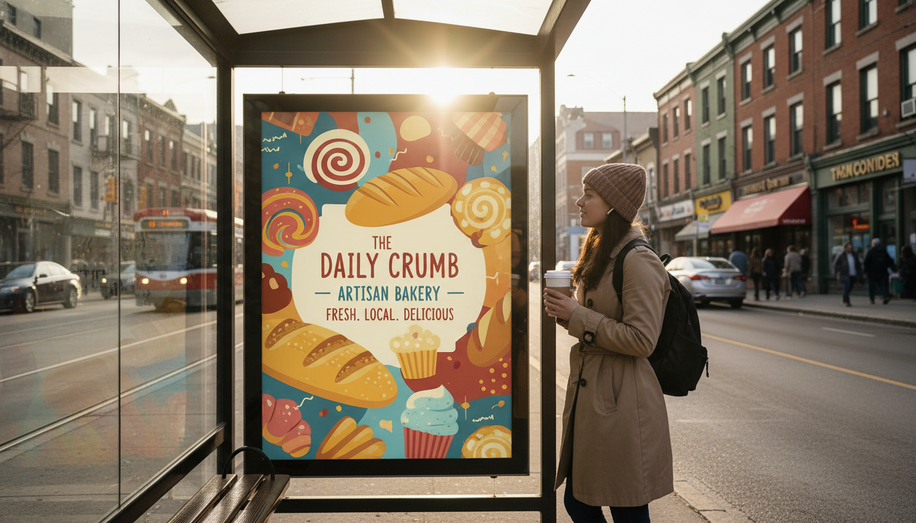

In the heart of bustling neighborhoods and quaint main streets across America, small businesses are rediscovering a time-tested powerhouse: out-of-home (OOH) advertising. Far from the glossy campaigns of corporate giants, these local legends—think family-owned bakeries, boutique shops, and artisanal cafes—are leveraging billboards, bus shelters, and street furniture to carve out loyal customer bases without breaking the bank. OOH isn’t just about visibility; it’s a strategic weapon for building brand recognition, sparking foot traffic, and outmaneuvering bigger competitors in tight-knit communities.
Consider the plight of a typical small business owner like Maria Gonzalez, who runs a thriving taco stand in Chicago’s Pilsen district. With digital ads lost in the scroll of social feeds, Maria turned to a simple bus shelter panel near the local commuter hub. “People can’t swipe it away,” she says. For a modest $500 monthly investment, her vibrant ad featuring sizzling al pastor tacos and a QR code linking to daily specials reached 20,000 passersby weekly. Within three months, foot traffic surged 35%, proving OOH’s unblockable punch. Studies from the Canadian Out of Home Marketing and Management Bureau echo this: OOH boosts online ad effectiveness by 31%, paid social by 56%, and search by 80%, creating a halo effect that amplifies every marketing dollar.
The magic lies in OOH’s hyper-local precision, which levels the playing field for main street brands. Unlike broad digital blasts, formats like benches, taxi wraps, and digital screens in high-traffic zones allow pinpoint targeting. Research traffic patterns via free tools from local transit authorities or apps like Google Maps to identify commuter chokepoints—think intersections near schools for family-oriented shops or event venues for lifestyle brands. A coffee roaster in Portland placed ads on urban kiosks along bike paths, tapping into eco-conscious cyclists. The result? A 28% uptick in store visits, tracked via unique promo codes. Street-level media, often costing pennies per impression compared to TV spots, delivers repetition that cements recall: consumers are 48% more likely to engage digital ads after OOH exposure, per Movia Media research.
Creativity is the great equalizer here, demanding ads that stop scrolling eyes in seconds. Bold visuals reign supreme—massive imagery of steaming pastries or handcrafted jewelry, paired with punchy calls-to-action like “Your Neighborhood Fix: 10% Off Today.” Localize ruthlessly: weave in landmarks, slang, or cultural nods. A Savannah bookstore sponsored ghost tour benches with “Unlock Local Lore—20% Off Mysteries,” blending community pride with commerce. Digital OOH (DOOH) elevates this further, enabling real-time tweaks for weather-tied promos or flash sales, all at scalable budgets starting under $1,000 for a month’s run.
Yet OOH shines brightest when fused with digital kin, turning static displays into dynamic funnels. Plaster your Instagram handle or a trackable hashtag across a billboard, directing the curious to online deals. A Denver florist synced transit ads with geo-fenced mobile coupons, lifting redemption rates by 40%. Multi-channel synergy isn’t hype; MRI-Simmons data shows OOH can double campaign reach when layered with social and search. Track it all with vanity URLs or lift studies measuring pre- and post-exposure visits—tools like Broadsign or local OOH providers offer plug-and-play analytics for even the smallest outfits.
Skeptics might balk at upfront costs, but OOH’s ROI crushes alternatives for local plays. Billboards in high-traffic spots yield thousands of impressions daily at CPMs (cost per mille) rivaling radio, sans ad blockers. For mom-and-pops, street teams or mobile billboards roam neighborhoods, hitting farmers’ markets or festivals for pennies on the dollar. Event sponsorships sweeten the deal: a main street hardware store wrapped food trucks at the annual fair, forging emotional ties that digital can’t match. “It signals we’re invested in the community,” notes Bauer Media Outdoor, underscoring OOH’s aura of authenticity.
Challenges persist—permitted placements and creative approvals demand homework—but platforms like Bluevine and AdWorld Total simplify scouting affordable inventory. Start small: test a single bench ad, measure uplift, then scale. As one Ohio diner owner quipped after his rooftop taxi ads packed the house, “Big chains buy Super Bowls; we own our street.”
In an era of fleeting online attention, OOH reclaims the physical world, where people are 33% more alert outdoors. For small businesses and main street mainstays, it’s not just advertising—it’s staking claim to the local narrative, one unforgettable glance at a time. The legends aren’t born in boardrooms; they’re built on the corners where communities pulse. For small businesses navigating the complexities of OOH, platforms like Blindspot offer crucial support, turning ambition into measurable results. Its location intelligence and programmatic DOOH capabilities streamline the process of identifying ideal hyper-local placements and managing campaigns effectively, even on modest budgets. Furthermore, Blindspot’s robust ROI measurement and real-time performance tracking empower businesses to understand the true impact of their OOH spend, proving how each impression translates into tangible growth for their local legend. Learn more at https://seeblindspot.com/