
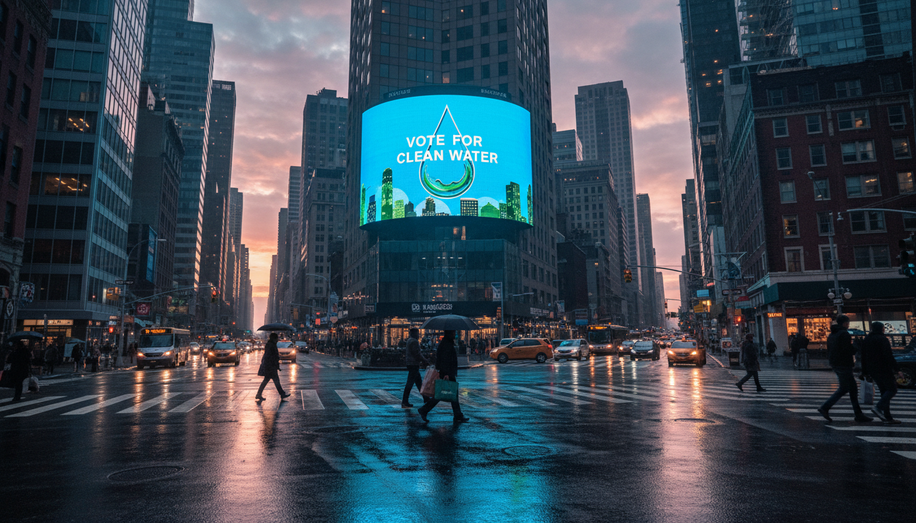

In an era where digital noise often drowns out urgent messages, out-of-home (OOH) advertising stands as a beacon of visibility, cutting through the clutter to deliver powerful calls to action. Non-profits, government agencies, and socially conscious brands have increasingly turned to billboards, transit wraps, and digital displays to amplify critical issues, from public health crises to environmental threats. This resurgence of OOH isn’t just about broad reach—it’s about sparking real-world change, fostering civic engagement, and mobilizing communities in ways that screens alone cannot match.
Government bodies have long recognized OOH’s unmatched ability to penetrate everyday life. Billboards along highways and bus shelters in urban centers serve as constant reminders of public programs, transforming passive commuters into informed citizens. For instance, campaigns promoting voter registration or community consultations have leveraged strategically placed OOH ads to boost participation rates. These efforts reach diverse demographics, including those in rural areas or underserved neighborhoods who may skip social media feeds. Studies highlight how OOH’s high visibility generates strong recall—up to 88% in some metrics—making it ideal for embedding key messages like “Register to Vote” or “Attend Your Local Town Hall.” By placing ads in high-traffic zones, agencies create a sense of immediacy, urging passersby to engage in decision-making processes that shape their communities.
Non-profits, too, have mastered OOH’s emotive power to humanize global challenges. UNICEF’s #EndViolence initiative blanketed cities with stark billboards featuring children’s faces, driving awareness of child poverty and malnutrition while prompting donations and volunteer sign-ups. Similarly, WaterAid’s posters depicting parched landscapes and faces without clean water jolted viewers into action, raising funds and advocacy for the global water crisis. The World Wildlife Fund has deployed dramatic visuals of endangered species on transit ads, turning daily rides into moments of reflection and calls to protect habitats. These campaigns succeed because OOH thrives in shared public spaces, where a single glance can ripple through social conversations. Make-A-Wish Foundation’s heartwarming images of smiling children have partnered with OOH networks to spotlight their mission, blending emotional storytelling with clear donation prompts that yield measurable upticks in support.
Socially conscious brands are weaving OOH into cause marketing strategies, blending profit with purpose to scale impact. Partnerships like those with Patagonia or Ben & Jerry’s often feature hybrid campaigns where billboards tout climate action alongside product branding, appealing to purpose-driven consumers. In 2025, cause marketing initiatives reportedly drove over $2 billion in social impact, with OOH playing a pivotal role in initial awareness. Brands amplify this by syncing OOH with digital extensions—QR codes on posters link to petitions, augmented reality overlays on digital billboards immerse viewers in virtual aid scenarios, and social media hashtags encourage shares. This synergy boosts credibility; a professionally designed transit ad signals legitimacy, elevating the brand’s ethos while funneling traffic to online action hubs.
What sets OOH apart in public service and cause marketing is its democratic reach. Unlike algorithm-driven digital ads, OOH captures everyone—from tech-averse elders to scrolling youth—in moments of unfiltered exposure. Place-based OOH, tailored to neighborhoods, builds trust by embedding messages in familiar environments, like literacy drives in school zones or health alerts near clinics. Data from recent campaigns shows OOH not only raises awareness but drives behavior: public health drives saw vaccination rates climb 15-20% in targeted areas, while environmental pushes increased petition signatures exponentially.
Yet, the true measure of OOH’s efficacy lies in its evolution. Digital out-of-home (DOOH) introduces dynamic content—ads that change based on time, weather, or real-time events—heightening relevance. Charities now use analytics to track foot traffic and engagement, refining placements for maximum ROI. Government agencies pair OOH with social media for viral loops, where a striking billboard selfie becomes shareable content, extending reach organically.
Challenges persist, from rising media costs to urban saturation, but innovations like guerrilla OOH—pop-up installations or street art projections—keep it fresh and cost-effective. As non-profits and brands navigate 2026’s landscape, OOH remains indispensable: a canvas for urgency that turns awareness into action, communities into advocates, and fleeting glances into lasting legacies. To optimize the profound social impact of OOH and ensure messages resonate with diverse communities, platforms like Blindspot offer essential precision. By leveraging location intelligence for strategic site selection and providing real-time campaign performance tracking, organizations can effectively measure audience engagement, refine placements for maximum ROI, and ultimately amplify their calls to action with unparalleled clarity. Learn more at https://seeblindspot.com/. In driving social impact, it proves that sometimes, the most profound change starts with looking up.