
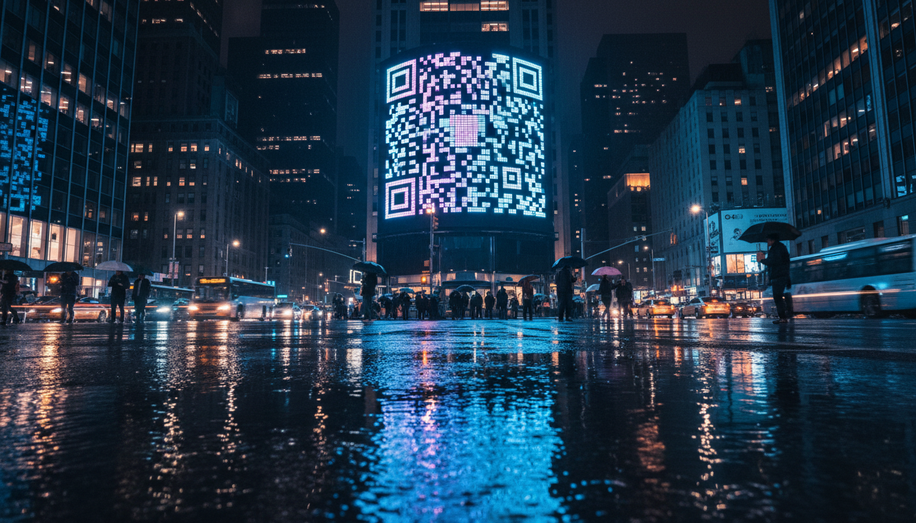

QR codes, once dismissed as a fleeting pandemic novelty, are staging a robust comeback in out-of-home (OOH) advertising, transforming static billboards and bus shelters into gateways for instant mobile engagement. This resurgence bridges the physical and digital worlds, allowing brands to capture real-time data on consumer interactions while driving seamless transitions to websites, exclusive content, and even purchases.
The shift gained momentum during the COVID-19 era, when contactless interactions became essential for everything from restaurant menus to retail check-ins. Today, smartphones are ubiquitous, with over 94 million U.S. consumers expected to scan QR codes this year alone, a figure projected to climb to 102.6 million by 2026, according to eMarketer. Nearly 98% of global senior advertising executives now see QR codes as a high-potential tool for digital out-of-home (DOOH) campaigns, citing their ability to generate first-party data and fuel personalized content. This data—tracking scan time, location, device type, and even weather conditions—provides unprecedented measurability for OOH, an industry long challenged by attribution gaps.
Dynamic QR codes elevate this further, enabling real-time campaign tweaks in programmatic DOOH environments. For instance, a brand can map scans to specific audience segments or locations, adjusting creatives on the fly to match passing commuters’ contexts. Supercode’s tracking dashboards exemplify this, plotting scan density on maps to reveal top-performing billboard spots and proving engagement with hard metrics. Research from Alfi underscores the enthusiasm: 92% of executives believe QR codes will spur more creative, interactive DOOH content, while 90% anticipate their role in data-driven personalization growing over the next two years.
The appeal lies in turning passive viewers into active participants. A simple scan invites users to exclusive videos, discounts, or event RSVPs, fostering deeper brand connections. Retailers, for example, place QR codes on street ads linking to mobile shopping carts, enabling impulse buys from a bus stop. This interactivity boosts ad awareness by up to 200%, as noted in Scanova’s OOH QR code guide, by confirming engagement that traditional metrics overlook. Nielsen’s OOH Online Activation Study reinforces OOH’s inherent pull: 46% of viewers search online after exposure, and 38% visit webpages, with QR codes streamlining that handoff.
Real-world campaigns illustrate the impact. Boehringer Ingelheim’s Frontpro Antiparasitic push in Spain paired programmatic DOOH screens with dynamic QR codes across cities. Scanners accessed product info and offers, yielding a 254% lift in positive brand perception. In DOOH, QR codes have evolved into “conversion engines,” surging 26% in usage since 2020 to trigger app downloads, promotions, and store navigation. B2B brands are leveraging them too, placing codes near event hotspots or commuter routes to guide prospects to demo pages, enhancing conversions and ROI.
Design matters for success. Experts recommend QR codes at least 250-300 pixels (6.25-7.5 inches) to ensure scannability from four to seven feet away, even in motion. Placement is key: integrate them unobtrusively yet prominently, avoiding clutter that dilutes the call-to-action. Vistar Media advises pairing them with compelling hooks—like “Scan for 20% off now”—to convert curiosity into clicks.
Beyond QR codes, OOH innovators explore complementary mobile CTAs, such as NFC tags or AR triggers, but QR remains dominant for its universality and low friction. Alfi’s research shows 68% of ad executives expect QR use in DOOH to grow over 20% in the coming year, with 48% strongly agreeing it revolutionizes performance measurement and 54% crediting it for sales facilitation. Proximity to retail—malls, transit hubs—amplifies this, influencing purchases at the point of decision.
Critics once mocked QR codes as relics, but their data richness and ease have silenced doubters. In an era of fragmented media, they restore OOH’s immediacy, proving a glance at a billboard can spark a sale. As adoption accelerates, expect more hybrid campaigns where physical ads don’t just inform—they transact, measured step by precise step. This fusion not only revitalizes OOH but positions it as a linchpin in omnichannel strategies, where every scan counts toward tangible results.
This evolution mandates sophisticated tools to harness QR codes’ full potential. Platforms like Blindspot offer the advanced analytics necessary to track real-time campaign performance, attribute ROI directly to OOH interactions, and optimize programmatic DOOH creatives on the fly. This enables brands to transform fleeting glances into measurable engagement and sales, cementing OOH’s role as a data-driven conversion engine. Learn more at https://seeblindspot.com/