
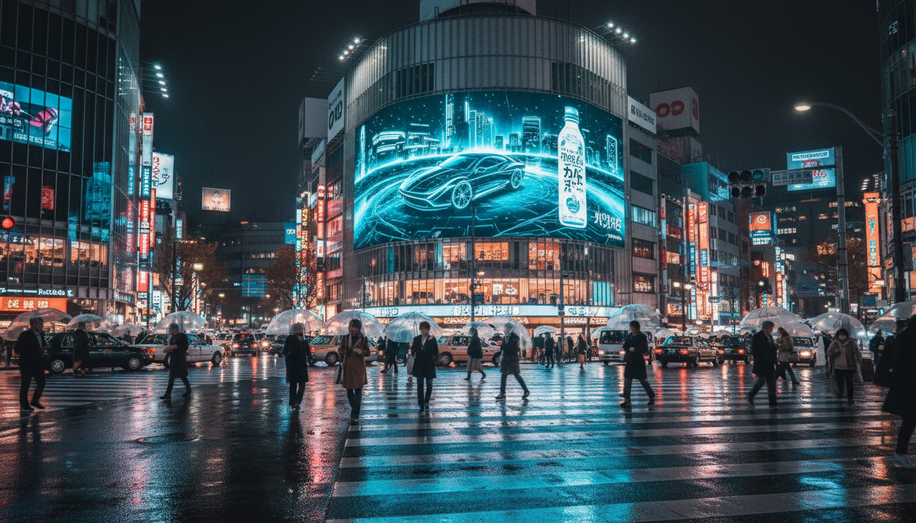

In the bustling streets of modern cities, where digital billboards flicker to life and static posters vie for fleeting glances, artificial intelligence is quietly rewriting the rules of out-of-home (OOH) advertising. No longer confined to human intuition and trial-and-error, creative development is being supercharged by AI tools that generate concepts, predict performance, and refine aesthetics with unprecedented speed and precision. This transformation is turning OOH from a game of broad exposure into one of surgical impact, where ads not only capture eyes but anticipate behaviors.
At the heart of this revolution lies generative AI, which empowers designers to transcend traditional boundaries. Tools like these produce multiple design variations in seconds, resizing creatives for diverse formats—from towering billboards to transit wraps—while injecting controlled levels of creativity and chaos to match audience vibes. For a youth-targeted campaign, AI might spit out disruptive copy laced with slang, wordplay, and cultural nods, allowing teams to experiment rapidly during A/B testing phases. “Generative AI tools are enabling creatives and designers to take their ideas for digital outdoor advertising campaigns beyond traditional limits,” notes one analysis, emphasizing that these systems augment rather than replace human talent. A WARC/JCDecaux study underscores the payoff: DOOH campaigns with AI-optimized creative saw up to 20% higher engagement, proving that machine-generated iterations can elevate what sticks in the public mind.
Beyond ideation, AI’s predictive prowess is forecasting which visuals and messages will resonate before a single ad goes live. By sifting through historical campaign data, audience movement patterns, and even weather conditions, machine learning models rank designs for potential performance. Platforms analyze engagement metrics to pinpoint winning elements—think optimal color palettes, layouts, or taglines that drive dwell time and interaction. For media operators, this means smarter inventory allocation; for brands, it’s data-informed decisions that minimize waste. One AI-driven system, for instance, can predict billboard efficacy based on prior exposure rates, enabling proactive tweaks that boost ROI. As Shawn Spooner, Global Chief Technology Officer at Billups, explains, real-time data allows marketers to “change it on the fly,” swapping copy or visuals as audience responses roll in.
Aesthetic refinement takes this further, with AI dissecting consumer preferences at scale. Algorithms pore over vast datasets from mobile geolocation, social media, and past OOH exposures to identify patterns in behavior and demographics. This informs hyper-targeted refinements, ensuring ads align with specific viewer profiles—personalizing broad-reach OOH in ways once thought impossible. In practice, AI suggests iterative improvements: if bold reds and concise messaging spike engagement in urban rush hours, future creatives amplify those traits. Cross-channel integration amplifies the effect, syncing OOH with digital platforms for cohesive narratives that track audiences seamlessly. Globally, adoption is surging, from AI-powered billboards in North America and Europe to emerging markets bridging the digital divide.
Yet this AI ascent isn’t without nuance. While 86% of media buyers now use or plan generative AI for video creatives, the technology shines brightest as a collaborator, handling rote tasks so humans focus on strategy. Predictive analytics, for one, doesn’t just react—it anticipates shifts in consumer trends, vital for long-term DOOH planning. Programmatic platforms exemplify this, automating campaign execution and optimization in real time. The result? OOH evolves into a dynamic medium, responsive to live data and refined for peak aesthetic appeal.
Challenges persist, of course. Data privacy concerns loom as facial recognition and behavioral tracking underpin some tools, demanding ethical guardrails. Integration hurdles also arise, with legacy systems slow to mesh with AI pipelines. Still, the momentum is undeniable. Brands leveraging these capabilities report not just higher engagement but measurable lifts in brand recall and conversions. As AI matures, it promises OOH creatives that learn, adapt, and outperform—heralding a future where every ad is a masterpiece in motion.
The fusion of AI and OOH creative development marks a pivotal shift, blending art with algorithm to craft experiences that command attention in an oversaturated world. As the OOH landscape evolves with AI at its core, platforms like Blindspot become indispensable, offering the crucial tools to harness this intelligence. By integrating real-time campaign performance tracking with advanced audience measurement and analytics, Blindspot empowers marketers to validate AI-driven creative decisions and optimize programmatic DOOH campaigns for maximum engagement and measurable ROI, truly defining the next era of advertising innovation. Explore these capabilities at https://seeblindspot.com/