
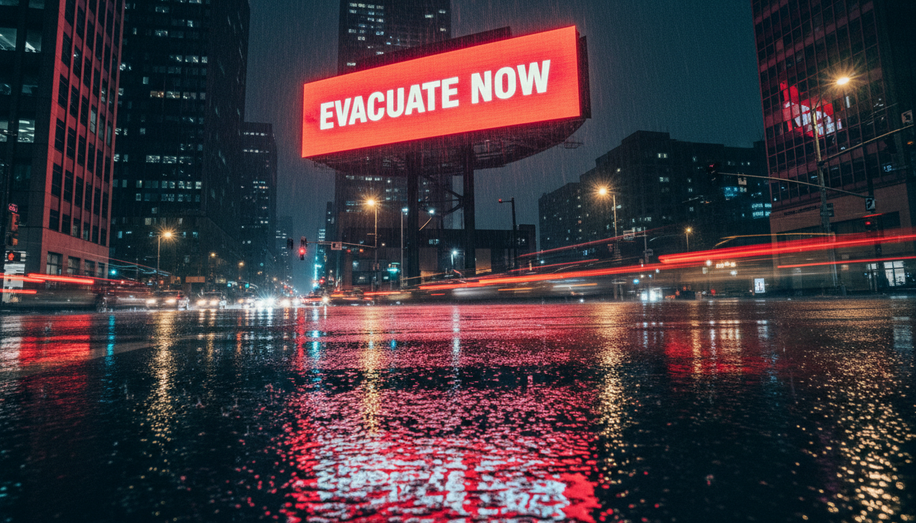

In the heart of every city, where billboards loom over highways and digital screens flicker at bus stops, out-of-home (OOH) advertising transforms into the public square’s megaphone, broadcasting urgent messages that can save lives and shape societies. During public health crises, natural disasters, and social campaigns, OOH stands out as an indispensable channel, reaching millions who are on the move and unable to ignore its persistent visibility. Unlike digital ads that can be scrolled past or muted, OOH commands attention in shared public spaces, delivering critical information when it’s needed most.
Consider the COVID-19 pandemic, when the out-of-home advertising industry swiftly pivoted to amplify the Ad Council’s life-saving messaging. Billboards, transit wraps, and street furniture across the U.S. carried directives on masking, vaccination, and social distancing, leveraging their prime locations to cut through the noise of fragmented media consumption. This wasn’t mere opportunism; it echoed a long tradition of OOH as a public service powerhouse. The Ad Council, a staple in national crises since World War II, has partnered with OOH providers to disseminate PSAs on everything from disaster preparedness to mental health, proving its efficacy in mobilizing action.
Emergencies amplify OOH’s role as a real-time communicator. Digital billboards, in particular, offer flexibility unmatched by static media, allowing governments to update messages instantaneously during wildfires, floods, or terror threats. In northern California amid crisis, Stott Outdoor Advertising blanketed routes with reassurances: restaurants open for takeout, evacuation routes clear, amplifying local authorities when power outages silenced radio and TV. Similarly, the Federal Emergency Management Agency’s (FEMA) Ready campaign, launched with the Ad Council, blanketed OOH networks to urge families to prepare emergency kits and plans, reaching urban commuters who might otherwise overlook email alerts. New York City’s Emergency Management followed suit in 2009 with the Ready New York City initiative, using billboards and transit ads to hammer home personal responsibility: “It’s up to you to make a plan.”
This ubiquity stems from OOH’s core strength—its placement in high-traffic zones like highways, airports, and urban cores, where 95% of adults encounter it daily. Public health campaigns thrive here; during opioid epidemics, SAMHSA’s “Talk. They Hear You” PSAs appeared on bus shelters, directing parents to the 988 Suicide & Crisis Lifeline and sparking conversations that prevent tragedy. Social good efforts, too, gain traction: anti-plastic pollution drives and voter turnout pushes have used striking OOH visuals to evoke emotion and urgency, fostering civic engagement by informing about consultations, workshops, and policy feedback opportunities.
Cost-effectiveness bolsters OOH’s appeal for resource-strapped agencies. Non-profits and governments access donated or low-cost inventory, stretching budgets to blanket communities without the targeting limitations of paid social media. Studies affirm its impact: OOH boosts awareness by 40-70% in public campaigns, driving measurable behaviors like increased 911 calls during crises or higher clinic visits for preventive health. In civic realms, it promotes participation, turning passive viewers into engaged citizens by spotlighting community meetings or social causes.
Yet OOH’s power extends beyond immediacy to cultural resonance. Iconic PSAs—like those warning “Before it’s too late” on environmental threats—linger in collective memory, reinforcing norms long after the crisis fades. During gun violence prevention drives or mental health awareness months, OOH’s bold imagery humanizes statistics, compelling strangers in traffic to reflect and act.
Challenges persist: measurement lags behind digital metrics, and urban clutter can dilute messages. Still, innovations like programmatic digital OOH—geo-targeted and data-driven—are closing the gap, enabling hyper-local crisis responses, such as Amber Alerts on screens near abduction sites. As climate volatility and health threats intensify, OOH’s evolution ensures it remains vital.
Ultimately, in an era of echo chambers, OOH reclaims the public square, unfiltered and unavoidable. It doesn’t just inform; it unites, urging collective vigilance from the commuter gridlocked at rush hour to the pedestrian rushing home. When seconds count, this megaphone ensures no one misses the call.
In this evolving landscape, platforms like Blindspot empower public service organizations and governments to maximize OOH’s life-saving potential. By leveraging advanced programmatic DOOH campaign management, location intelligence for optimal site selection, and real-time campaign performance tracking, Blindspot ensures urgent messages are precisely targeted, instantly updated, and their impact measurably understood, turning every screen into an accountable public megaphone. https://seeblindspot.blindspot.com/