
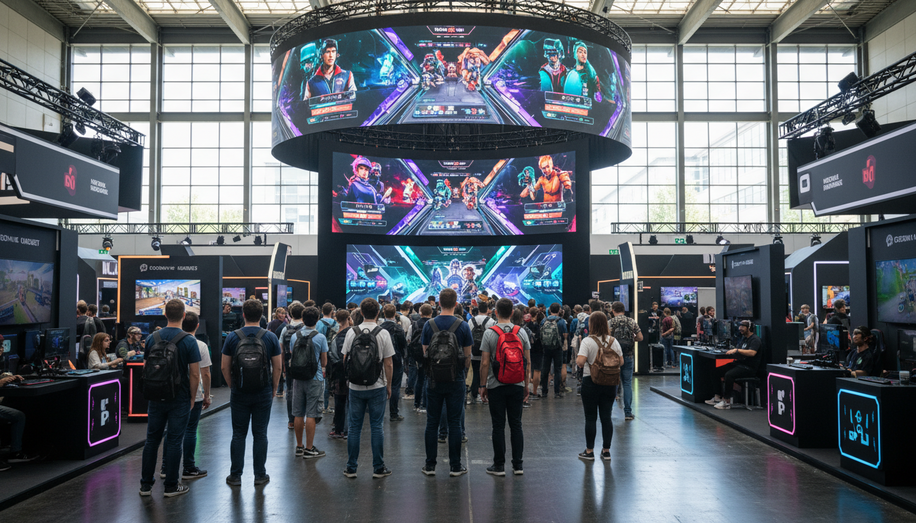

In the electric glow of packed arenas and the bustling streets surrounding them, out-of-home (OOH) advertising is carving out a vital role in esports, bridging the gap between digital passion and physical presence. Esports fans, a demographic defined by their intense engagement with virtual competitions, are proving remarkably receptive to OOH messages, often more so than the general population. This synergy is transforming how brands, teams, and tournaments reach a global audience that lives online but thrives in real-world spectacles.
Consider the scene at major esports events like the League of Legends World Championship or Valorant Champions Tour finals, where stadiums swell with tens of thousands of spectators waving team flags and chanting player names. Here, OOH activations dominate: towering digital billboards flash live match updates, sponsor logos pulse in sync with crowd roars, and immersive installations invite fans to interact with virtual reality setups mimicking in-game environments. These aren’t mere backdrop decorations; they’re strategic touchpoints that capitalize on fans’ heightened emotional investment. Much like traditional sports, esports gatherings create moments of immersion where audiences are “primed to act,” with studies showing nearly 60% of U.S. adults recalling OOH ads for major sporting events and 90% taking subsequent actions such as social sharing or ticket purchases. For esports, this translates to fans snapping photos of dynamic OOH displays, posting them to Twitch chats or TikTok, and driving viral buzz that extends far beyond the venue.
Beyond the arena walls, OOH extends its reach through hyper-local campaigns tailored to fan behavior. Platforms like OOH Sports deploy digital networks within a three-mile radius of esports venues, targeting bars, restaurants, hotels, and convenience stores on tournament days. Imagine a fan grabbing a pre-game beer at a sports bar, where screens cycle ads for energy drinks or gaming peripherals synced to live streams—reinforcing messages seen online and creating a “priming effect” that amplifies recall. YouGov research underscores this potency: avid esports fans in Great Britain notice OOH on trains at rates matching internet ads (67% vs. 65%), and they’re twice as likely as average consumers to search for products on their phones after seeing billboards. In the U.S., that figure jumps to 68% for esports enthusiasts versus 23% for the general population, with many discussing brands with friends immediately afterward.
This effectiveness stems from esports’ unique audience profile: young, tech-savvy, and socially connected, yet craving tangible experiences post-pandemic. As consumers tire of endless digital scrolls, OOH delivers unskippable impact in physical spaces, mirroring the live energy of esports itself. Brands like Red Bull and Intel, long-time sponsors, have mastered this by blending OOH with omnichannel tactics. During the Big Game or esports majors, programmatic digital OOH (pDOOH) updates in real-time—flashing player stats, countdowns to quarterfinals, or post-match celebrations—while integrating social calls-to-action that spur online engagement. One campaign might tease exclusive in-game skins on urban panels, prompting immediate app downloads; another could gamify billboards, challenging passersby to scan QR codes for virtual tournaments, turning static ads into interactive playgrounds.
Outdoor campaigns promoting tournaments and teams further illustrate OOH’s global scalability. Ahead of events like the Esports World Cup in Riyadh or DreamHack festivals, cities light up with massive wraps on buses and skyscrapers, featuring holographic projections of pro players or team rivalries. These not only build hype but also target commuting fans, who encounter ads en route to watch parties. Research from the Outdoor Advertising Association of America highlights how such context-driven OOH fosters authenticity, with fans feeling brands are “joining the conversation” rather than intruding. For teams like FaZe Clan or T1, OOH billboards near airports and train stations welcome international supporters, fostering loyalty among a borderless community.
The data paints a compelling picture of ROI. Esports fans don’t just see OOH—they act on it, searching, sharing, and attending at higher rates, making every impression count in an era where marketing dollars demand precision. As venues like the Intuit Dome or Berlin’s Mercedes-Benz Arena host hybrid esports-traditional sports events, OOH’s role will only expand, blending physical spectacle with digital fervor. Marketers allocating budgets to gaming are wise to prioritize it: in esports, where passion ignites online but endures offline, OOH isn’t just advertising—it’s the arena’s heartbeat, connecting brands to a generation that plays, watches, and lives across worlds.