
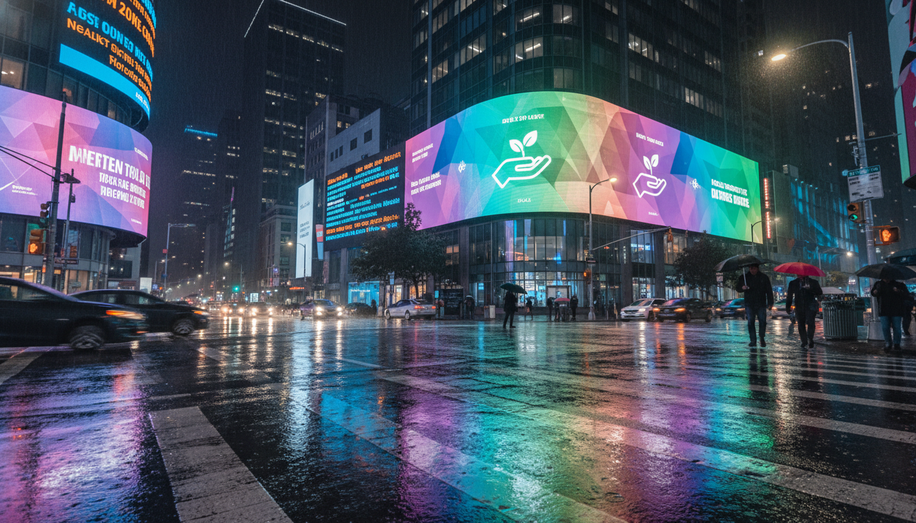

Out-of-home advertising has long been a fixture of urban landscapes, but its role is fundamentally transforming as cities become smarter and more connected. What was once a static billboard on a street corner is now evolving into a dynamic, data-responsive communication tool that integrates seamlessly with city infrastructure, sensors, and real-time information systems. This convergence represents a pivotal moment for the OOH industry, one in which advertising becomes not merely decorative but genuinely intelligent and responsive to urban needs.
The foundation of this transformation lies in the infrastructure that defines smart cities. These connected urban environments generate vast streams of data—from traffic management systems to public Wi-Fi networks—that create unprecedented opportunities for targeted communication. Digital out-of-home (DOOH) screens positioned throughout cities can now tap into this data ecosystem, allowing advertisers to deliver personalized messages in real time based on factors like time of day, weather conditions, and local events. Imagine a transit hub where DOOH screens integrated with passenger flow sensors detect rush hour congestion and adjust their messaging accordingly, or outdoor displays that shift their content in response to unexpected weather patterns. This is no longer speculative; it represents the emerging standard for urban advertising.
The strategic placement of DOOH in high-traffic urban areas ensures maximum visibility and reach, but smart city integration elevates this concept further by enabling synchronized messaging across multiple channels. Advertisers can now create cohesive brand experiences that extend from outdoor displays to mobile platforms and social media, ensuring consistent communication across all touchpoints. This multichannel approach transforms OOH from an isolated advertising medium into a central node within a broader marketing ecosystem. Brands reaching diverse audiences—from city residents to business professionals to visitors—can now tailor their messaging with unprecedented precision.
Data-driven insights form the backbone of these increasingly sophisticated campaigns. By understanding audience behavior and preferences through real-time analytics, advertisers can create campaigns that resonate with their target markets while also aligning with evolving urban dynamics. This represents a fundamental shift in how outdoor advertising operates. Rather than static content designed months in advance, DOOH campaigns can now adapt continuously, maximizing impact through live data integration. The result is advertising that feels less intrusive and more contextually relevant—messages that arrive when and where they matter most to viewers.
Beyond commercial imperatives, the integration of OOH advertising with smart city infrastructure raises important questions about urban design and public benefit. Some smart city designers envision advertising revenue as a crucial component of sustainable urban business models, potentially funding development and infrastructure improvements. This alignment of advertising goals with community needs and city objectives represents a departure from traditional OOH practices, requiring partnerships between advertisers, city planners, and technology providers. When executed thoughtfully, these collaborations can enhance urban landscapes while providing measurable results through advanced analytics.
The technological enablement of intelligent OOH extends beyond simple data collection. AI-powered billboards and interactive installations are transforming urban spaces into immersive brand experiences that engage modern consumers in fundamentally new ways. These systems can recognize patterns, predict consumer behavior, and automatically optimize ad delivery without human intervention—though such capabilities also demand careful consideration of privacy and ethical implications.
As smart cities continue to expand globally, the OOH industry stands at an inflection point. The convergence of advertising and urban infrastructure is no longer a future possibility but an emerging reality. Success will depend on the industry’s ability to leverage technological capabilities responsibly while maintaining focus on genuine audience engagement rather than mere surveillance. Those who navigate this transition skillfully will find that the future of OOH is not simply smarter screens, but screens that serve the genuine interests of the cities and people they inhabit.