

In the shadowed alleys of ancient Egypt, towering stone obelisks carved with hieroglyphics announced laws and decrees to weary travelers, marking the humble genesis of outdoor advertising as a public communicator. These monolithic messages evolved into the hand-painted signs of medieval merchants, simple symbols hawking wares from street corners, but it was the 19th century’s whirlwind of industrialization and urbanization that truly ignited the form. Johannes Gutenberg’s 1450 invention of movable type birthed the handbill, a portable precursor to broader spectacles, while the 1796 perfection of lithography unleashed illustrated posters—vibrant, mass-produced sheets plastered on walls, storefronts, and fences. By the 1830s, Jared Bell in New York scaled these up to 50-square-foot circus posters, the first true billboards, pieced together from larger printed sheets as printing technology advanced.
The mid-1800s solidified outdoor advertising as an industry. In 1860, the leasing of billboard spaces emerged, transforming walls and fences into revenue streams for landowners and structured canvases for brands. Billposters roamed cities, pasting layered posters on any flat surface, their work demanding ever-larger formats to dominate the urban gaze. The 1889 Paris Exposition standardized the iconic 2:1 poster ratio, stitching 24 sheets into seamless giants that became artistic titans towering over thoroughfares. Hand-painted murals reached their zenith here, with skilled artisans transforming blank walls into immersive narratives—bold typography clashing with vivid imagery to seduce passersby. These weren’t mere announcements; they were cultural landmarks, weaving brands into the fabric of daily life amid horse-drawn carriages and burgeoning railways.
The 20th century’s “golden age” in the 1920s and 1930s amplified this artistry. Coca-Cola and Lucky Strike blanketed billboards with modernist flair—sleek lines, punchy slogans, and evocative illustrations that captured the era’s optimism. Automobiles reshaped the canvas: as cars proliferated, roadside ads sprang up to lure drivers with promises of motels, diners, and attractions, turning highways into extended billboards. Mobile variants followed suit; by the 1920s, trucks retrofitted with panels prowled cities, their rolling displays chasing audiences where static signs couldn’t reach. World War II repurposed them for propaganda, peddling war bonds and recruitment with unyielding mobility, while postwar booms saw Marlboro and others exploit America’s road-tripping fervor. Industry bodies like the 1915 National Outdoor Advertising Bureau and 1931 Outdoor Advertising Inc. professionalized the space, standardizing sizes and measuring impact—witness Shirley Cochran’s 1975 Miss America campaign, which skyrocketed her recognition 940% via nationwide billboards.
Cultural ripples were profound. Tobacco brands, banned from broadcast in 1972, flooded outdoor media, their seductive murals normalizing smoking amid societal shifts. Street furniture advertising refined intimacy: bus shelters, benches, and kiosks embedded brands in routines, fostering relevance over bombast. Yet regulations loomed—zoning laws curbed sprawl, demanding ingenuity. Design trends swung from ornate Victorian excess to streamlined modernism, mirroring societal moods: Depression-era restraint gave way to postwar exuberance, then 1960s psychedelia.
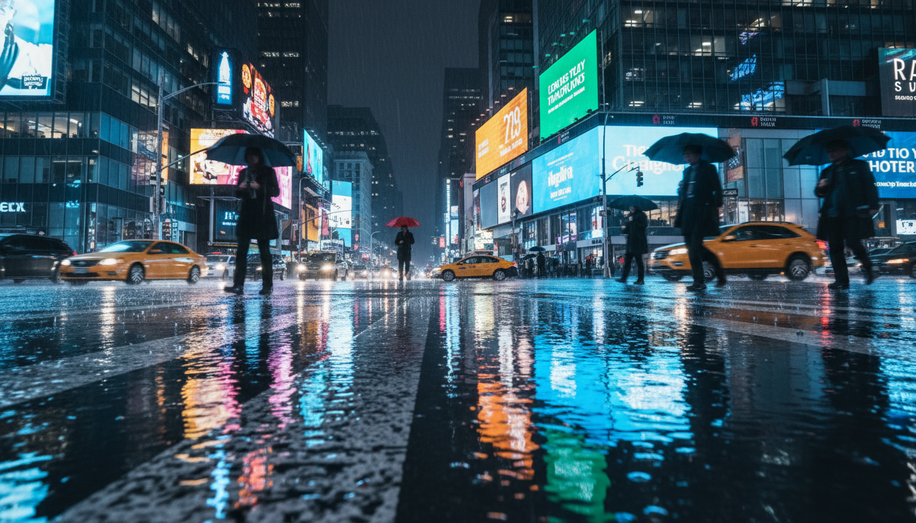
Technological leaps shattered stasis in the late 20th century. Neon lights flickered to life in the 1920s, but digital billboards in the 2000s revolutionized the medium, swapping static paints for LED screens that cycled ads, synced to weather, time, or events. Programmability arrived with data integration—sensors detecting traffic, algorithms targeting demographics in real-time. Hand-painted murals, once labor-intensive masterpieces requiring weeks, now hybridize with projections or augmented reality overlays, blending nostalgia with interactivity. Today’s programmatic screens auction inventory via platforms, optimizing reach like never before; a single digital facade might serve hundreds of campaigns daily, adapting to commuter flows or viral moments.
This evolution underscores OOH’s enduring potency: from chiseled stone to AI-driven displays, it has mirrored human progress, amplifying voices amid motion. Culturally, it has shaped skylines and psyches—Santa Claus’s modern image crystallized on a 1931 Coca-Cola billboard—while design pivoted from handcrafted grandeur to pixel-perfect precision. Challenges persist: privacy debates swirl around data-fueled targeting, and sustainability pushes eco-inks and solar-powered screens. Yet as cities densify and attention fragments, OOH thrives, proving that in an indoor digital deluge, the great outdoors remains the ultimate unskippable stage.
As OOH enters a new era of programmatic sophistication, demonstrating tangible impact and optimizing precise audience engagement becomes paramount. Platforms like Blindspot are pivotal, offering advanced location intelligence and programmatic DOOH campaign management to target audiences with unprecedented accuracy, while robust real-time performance tracking and ROI measurement ensure every impression translates into demonstrable value for brands navigating the modern urban stage. Learn more at https://seeblindspot.com/