
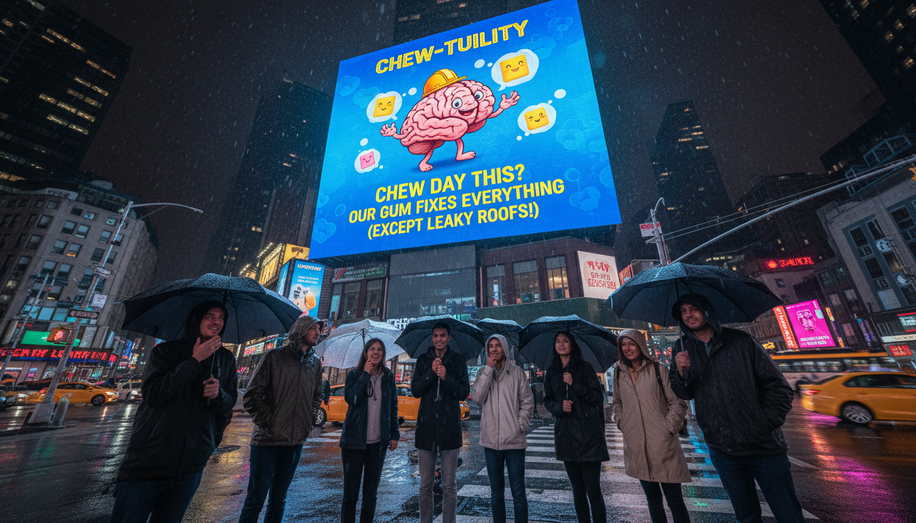

In the fleeting world of out-of-home (OOH) advertising, where commuters glance at billboards for mere seconds amid traffic or urban hustle, humor emerges as a razor-sharp weapon for piercing through the noise. Funny campaigns don’t just sell products; they forge emotional bonds, spark shares, and propel brands into viral territory by transforming static displays into social media goldmines. This alchemy of wit, wordplay, and surprise turns passersby into advocates, proving that laughter is the ultimate currency in an attention-starved landscape.
At its core, humor in OOH thrives on emotional resonance rather than rote memorization. When audiences encounter a clever pun or absurd visual, their brains shift from analytical processing to entertainment mode, triggering endorphins and fostering positive brand associations. Research underscores this: humorous ads boost recall by 47 percent compared to straightforward ones, as laughter lowers mental defenses and enhances retention. Kantar’s global studies confirm that such ads excel in long-term brand building, especially when the joke ties directly to the product rather than overshadowing it. In OOH’s high-visibility arena, this emotional pull is amplified—billboards become unskippable delights that linger in memory long after the drive-by.
Clever wordplay stands out as a billboard staple, delivering punchlines in the split-second window of exposure. Puns like Chick-fil-A’s iconic “Eat Mor Chikin,” scrawled by comically misspelling cows, exemplify this: simple, visual, and instantly shareable, the campaign humanized a fast-food giant and cemented its cultural footprint. Local law firms have mastered cheeky self-deprecation too, with lines like “Injured? Yeah, we thought so” or “Better call us before your ex does,” making staid industries feel approachable and relatable. These quips work because they’re rooted in everyday absurdities—traffic woes, relational mishaps—inviting snapshots and Instagram posts that extend the ad’s reach exponentially.
Unexpected visuals crank the humor dial even higher, leveraging OOH’s physicality for double impact. Exaggeration and situational gags shine here: imagine a Kmart billboard screaming “Everything must go!” only for a smaller sign below to deadpan “except this sign,” a meta-jab that got tongues wagging and feet into stores. Lamar Advertising’s April Fools’ antics on digital boards, peddling fake brands with silly offers, turned public spaces into interactive pranks, boosting engagement through sheer surprise. Pairing these with witty copy creates synergy—humor plus visuals heighten retention, as the brain processes the combo as a memorable event rather than mere info. Netflix redefined this game in Los Angeles, rolling out weekly billboards riffing on show references or traffic sing-alongs, like belting out a tune in gridlock. What started as static OOH evolved into anticipated cultural drops, with fans photographing and sharing, blurring lines between ad and event.
The virality factor is where OOH humor truly soars. A chuckle isn’t private; it’s communal, primed for amplification via smartphones. JcDecaux notes that surprise elements make ads stand out, driving shareability and that elusive “holy grail” of virality—funny messages get noticed, liked, and disseminated because sharing a joke bonds people. Billboards’ real-world positioning adds authenticity: spotted in daily routines, they feel organic, not intrusive, prompting organic buzz. Old Spice’s absurdist visuals, though not pure OOH, illustrate the principle—exaggerated monologues generated 1.4 billion impressions and 125 percent sales spikes by making the brand culturally inescapable. In OOH, this scales effortlessly; a well-placed gag in a busy intersection becomes fodder for TikTok threads or Twitter storms, turning physical inventory into digital perpetuity.
Yet, wielding humor demands precision—it’s high-risk, high-reward. Slapstick or over-the-top exaggeration can flop if it drowns the brand message, alienating viewers or sparking backlash. Success hinges on relevance: the laugh must reinforce the product, not distract. Self-deprecation risks humility veering into incompetence, while puns flop without cultural fluency. Creative teams mitigate this by exploiting OOH’s formats—unexpected placements, like a billboard “interrupted” by guerrilla elements, or digital flips for timely jokes—maximizing surprise without excess words.
Ultimately, humor’s power in OOH lies in its ability to humanize brands amid algorithmic fatigue. By crafting ads that surprise, delight, and invite shares, marketers don’t just capture eyes—they cultivate affinity and conversations that echo far beyond the street. In an era where digital scrolls numb consumers, these witty interventions remind us that the best ads don’t interrupt life; they enhance it, one laugh at a time.