
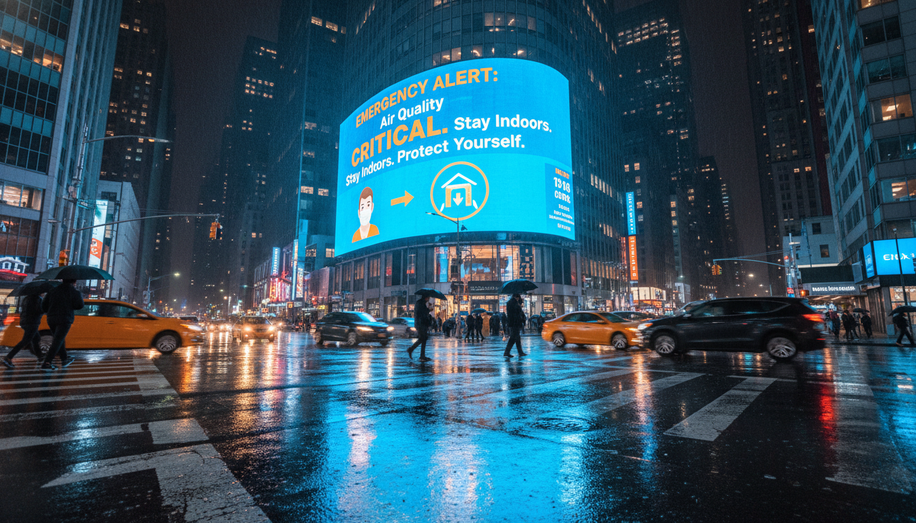

In times of crisis or routine public need, outdoor advertising stands as a steadfast communicator, delivering urgent health alerts, safety warnings, and government announcements directly to communities where people live and move. Billboards towering over highways, transit ads wrapping buses and trains, and posters adorning street furniture cut through the noise of daily life, ensuring messages reach audiences who might otherwise miss them amid fragmented digital habits. This unyielding visibility has made out-of-home (OOH) advertising an indispensable channel for public service campaigns, bridging gaps that other media cannot.
The power of OOH lies in its ubiquity and immediacy. Unlike television spots that require viewers to tune in or online ads that demand screen time, OOH meets people in their natural environments—commuting, walking, shopping—reinforcing critical information multiple times a day. For public health initiatives, this repetition builds awareness and prompts action. Campaigns like “Click It or Ticket,” which promote seatbelt use, or annual flu vaccination reminders leverage bold visuals and concise messaging on billboards and transit wraps to distill complex safety data into memorable calls to action. Government departments amplify these efforts through strategic placements in high-traffic areas, reaching commuters, pedestrians, and travelers across urban and rural divides.
OOH’s reach extends particularly to underserved populations, filling voids left by digital divides. In rural communities or economically disadvantaged regions with limited internet access, physical ads on highways and local transit become lifelines for vital information. Public health drives, such as those urging vaccination or promoting mental health resources, benefit from this broad coverage, engaging demographics that skip traditional media. Non-profits and agencies have long recognized this, with the OOH industry donating over $500 million annually in free space to charitable causes—a tradition dating to the early 1900s. Local companies offer this pro bono inventory on a space-available basis to qualified non-profits, prioritizing those not buying ads elsewhere, which democratizes access to high-impact messaging.
Safety warnings exemplify OOH’s role in times of need. During natural disasters or public emergencies, rapid-deployment digital out-of-home (DOOH) screens and static billboards broadcast evacuation routes, shelter locations, and hazard alerts in real time. Their visual punch—large text, striking imagery, and vibrant colors—ensures clarity even at speed or from a distance, making them ideal for distillate instructions that save lives. Governments harness this for everything from wildfire alerts to traffic safety PSAs, creating a sense of urgency that mobilizes communities. One study of civic campaigns notes how OOH ads not only inform but also foster engagement, boosting participation in public programs by informing citizens of consultations, meetings, and feedback opportunities.
Beyond emergencies, OOH sustains long-term public service goals. Voter turnout drives, anti-smoking initiatives, and environmental awareness efforts thrive on its ability to target specific locales. Political and civic groups increasingly tap OOH for its favorable reception—over 60% of Gen Z and Millennials report influence from such ads, with 61% of adults viewing them positively. This trust stems from OOH’s non-intrusive presence in shared public spaces, positioning messages as community-minded rather than commercial. Agencies report heightened accountability and transparency when OOH informs policy feedback loops, leading to more sustainable outcomes.
The industry’s commitment amplifies these impacts. Free PSA space allows resource-strapped organizations to compete for attention, while programmatic DOOH enables precise, data-driven targeting in high-traffic zones. For instance, health departments place vaccine reminders near clinics or hospitals, driving foot traffic and measurable behavior change. This strategic edge has fueled OOH’s growth, with political ad spend surging alongside a 3.4% revenue increase to $2.78 billion in mid-2024, signaling broader recognition of its efficacy.
Challenges persist, such as inventory competition and measurement nuances, yet OOH’s proven track record endures. It outperforms in visibility and recall for public service messages, especially where trust and action matter most. As communities face evolving threats—from pandemics to climate risks—OOH remains a vital artery for delivering critical intelligence. Governments and non-profits continue to lean on it, not just to inform, but to unite and protect, proving its timeless value in safeguarding the public good.