
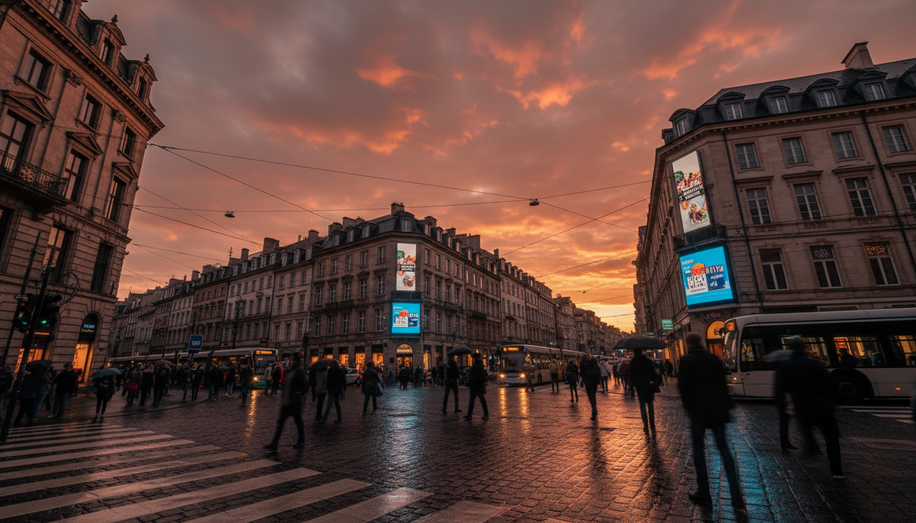

In the bustling streets of Los Angeles County, a series of billboards sprang up in late 2025, boldly proclaiming “Shop Local. Dine Local. Recover Local.” These 23 strategically placed displays—spanning digital premier panels, transit shelters, and printed posters—were not mere advertisements but lifelines for small businesses reeling from devastating wildfires and windstorms. By directing residents to ShopLocal.LA, where they could pledge support and connect with recovering enterprises, the campaign exemplified how out-of-home (OOH) advertising transcends traditional metrics like impressions to ignite tangible economic momentum.
This initiative underscores a broader truth: OOH, when deployed with precision, serves as a catalyst for local commerce revitalization. Unlike digital ads that users can scroll past, OOH commands attention in the physical world—on highways, bus stops, and urban corners where people naturally congregate. Local authorities have long recognized this power, leveraging OOH to promote council initiatives that foster community prosperity. By highlighting economic development programs and spotlighting small businesses, these campaigns stimulate growth, drawing foot traffic to neighborhood shops and eateries that might otherwise languish.
Consider the inherent local DNA of the OOH industry itself. A comprehensive study by iMapData reveals that outdoor advertising is deeply embedded in regional economies, primarily serving small businesses that employ local workers. Advertisers—often mom-and-pop operations—rely on billboards and transit ads to reach nearby consumers, creating a virtuous cycle where OOH revenue supports jobs and, in turn, bolsters the very communities it targets. This symbiosis positions OOH not as an external force but as a homegrown engine, particularly potent in driving urban renewal where economic stagnation threatens neighborhood vitality.
Strategic placement amplifies this impact. In markets with abundant inventory, high-traffic billboards near retail corridors can spike visits to adjacent stores by prompting immediate action—consumers spotting a diner ad en route to work and detouring for lunch. Digital OOH takes it further: with 34% of 2024 spending on dynamic screens, these formats allow real-time tailoring, such as rotating messages for events or promotions that align with local rhythms. Sectors like hospitality, entertainment, and supermarkets poured record investments into OOH that year, achieving $9.1 billion in total revenue, as it proved unmatched for generating foot traffic and consumer engagement. Small businesses, in particular, benefit from this accessibility; a local law firm or restaurant can secure targeted exposure without multimillion-dollar budgets, leveling the playing field against national chains.
Community-focused campaigns elevate OOH from sales tool to revitalization partner. Tailored messaging—resonant with local needs, like post-disaster recovery or cultural festivals—builds trust and relevance, encouraging residents to invest in their surroundings. In LA County, the billboard blitz not only rallied pledges but unlocked marketing incentives and resources for micro-businesses, accelerating their rebound. Councils worldwide echo this: OOH promotes events that pack downtowns, indirectly sustaining vendors and services while enhancing civic pride. Integrated with digital extensions, such as QR codes linking to business directories, these efforts bridge the physical and virtual, turning passive viewers into active patrons.
Urban renewal efforts find a steadfast ally in OOH’s versatility. In declining districts, ads spotlighting redevelopment projects or “shop local” drives can reframe narratives, attracting tourists and investors. Picture faded industrial zones revived by billboards advertising pop-up markets or artisan fairs; visibility breeds buzz, footfall surges, and small enterprises thrive. Even in inventory-scarce areas, creative formats like transit wraps or place-based digital screens ensure reach, proving OOH’s adaptability. The result? Measurable lifts in local spending, job retention, and community cohesion—outcomes that eclipse impression counts.
Critics might dismiss OOH as fleeting, yet data counters this: exposure prompts searches and visits, as people “act on” messages encountered organically during daily commutes. In 2024, OOH’s growth in local services underscored its role in sustaining high streets amid e-commerce dominance. For cities like Yucaipa, California, where economic development hinges on seamless business support, OOH amplifies these goals by broadcasting opportunities far and wide.
Ultimately, OOH’s true measure lies in revitalized storefronts, bustling markets, and renewed urban hearts. By prioritizing community relevance over raw reach, it forges paths from awareness to action, proving indispensable for local economies poised for resurgence. As brands and councils invest more strategically, OOH stands ready to illuminate not just streets, but brighter futures.