
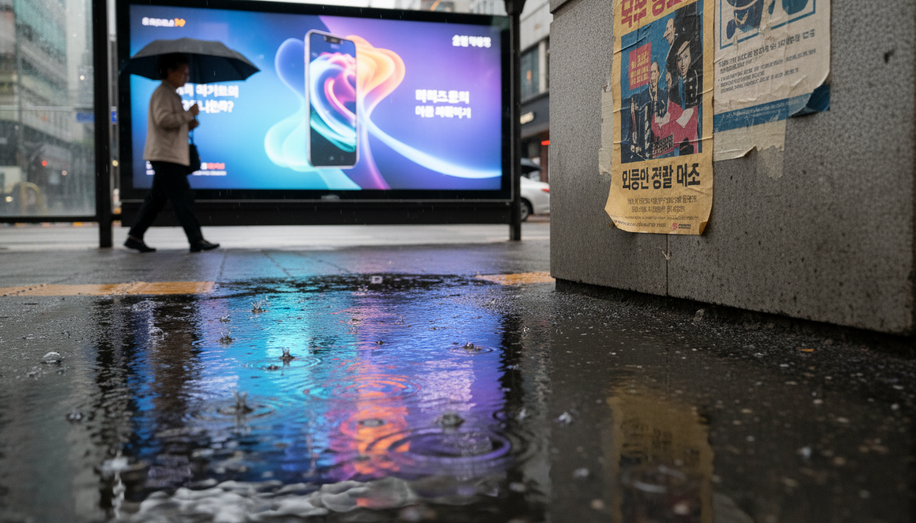

Long before the glow of neon signs or the flicker of digital screens, out-of-home (OOH) advertising echoed through ancient streets in the voices of town criers and the etchings of stone inscriptions. In civilizations dating back to 3000 B.C., Egyptians carved hieroglyphics and erected towering obelisks to proclaim laws, treaties, and royal decrees, turning public monuments into the first enduring billboards of the masses. These primitive displays marked the dawn of OOH, a medium designed to capture attention in shared public spaces where people gathered, traded, and traveled. Painted signs on shop walls in ancient Rome and Greece soon followed, hawking wares to passersby and laying the groundwork for commerce-driven messaging that would evolve over millennia.
The transition to the modern era began with the printing revolution. In 1450, Johannes Gutenberg’s movable type birthed the handbill, but it was the perfection of lithography in 1796 that unleashed the illustrated poster, enabling vivid, mass-produced visuals. By the 1830s, American entrepreneur Jared Bell harnessed this technology to create the first true billboards—50-square-foot posters plastered on walls to promote the Ringling Brothers circus, the “greatest show on earth.” Billposters, those intrepid warriors of the streets, waged fierce battles for visibility, pasting up to 1,000 sheets a day and layering larger prints over rivals’ work in a practice known as wildposting, which persists in urban guerrilla campaigns today. Competition spurred innovation: as urbanization accelerated, advertisers eyed every flat surface, from fences to streetcars, where conductors in the 1830s began leasing space for ads.
The late 19th century solidified OOH’s structure. By the 1860s, dedicated leasing of advertising space emerged, transforming walls and land into revenue streams and birthing purpose-built structures. The International Bill Posters’ Association of North America formed in 1872, standardizing practices amid a boom of some 300 sign-painting firms. At the 1889 Paris Exposition, lithographers stitched 24 sheets into the iconic 2:1 poster format, a blueprint for billboards worldwide. National brands like Palmolive, Kellogg, and Coca-Cola jumped in after 1901, when standardized billboard structures fueled mass campaigns along America’s expanding roads. The Model T’s arrival in 1908 supercharged this growth; highways became prime real estate as motorists cruised past eye-catching enticements for roadside diners and attractions.
Electricity ignited the next leap. Times Square dazzled in the 1910s with its first electric billboard, heralding dynamic illumination. Neon signs lit up cityscapes by the 1940s, their vibrant glow synonymous with urban allure. World War II repurposed mobile billboards—trucks fitted with ad panels since the 1920s—for war bonds and recruitment, proving OOH’s reach in mobilizing nations. Postwar prosperity saw icons like Coca-Cola and Marlboro dominate highways, while transit advertising on buses and shelters expanded in the 1970s. Advancements in printing shifted hand-painted boards to vinyl and computer-generated designs, culminating in a landmark 1975 campaign by Outdoor Advertising Inc. (OAI). Featuring Miss America Shirley Cochrane on nationwide billboards, it boosted her name recognition by 940%, vindicating OOH’s measurable impact.
The digital revolution, unfolding from the early 2000s, shattered static constraints. The first digital billboards appeared in 2005, enabling real-time content swaps and targeted messaging. Pioneered in hubs like Times Square, digital OOH (DOOH) harnessed LED screens for vivid, programmable displays that responded to weather, traffic, or events. Mobile billboards evolved into sophisticated trucks with customizable digital panels, while street furniture, airports, malls, and kiosks integrated screens for seamless networks. By the 2010s, data analytics and programmatic buying fused DOOH with precision, allowing ads to trigger based on audience demographics or behaviors detected via cameras and sensors—without compromising privacy through anonymized aggregation.
Today, OOH transcends isolated displays, forming interconnected urban media networks. Programmatic platforms enable instantaneous campaigns across cityscapes, blending with social media for amplified reach. AI-driven analytics measure dwell time, impressions, and engagement, echoing the 1975 proof-of-concept but at planetary scale. From Egyptian obelisks to AI-orchestrated digital towers, OOH endures as a resilient force, adapting to technological tides while rooted in its primal purpose: commanding public attention where life unfolds. In an era of fleeting digital scrolls, these physical canvases reclaim the gaze, proving that some messages are meant to be unmissable.