
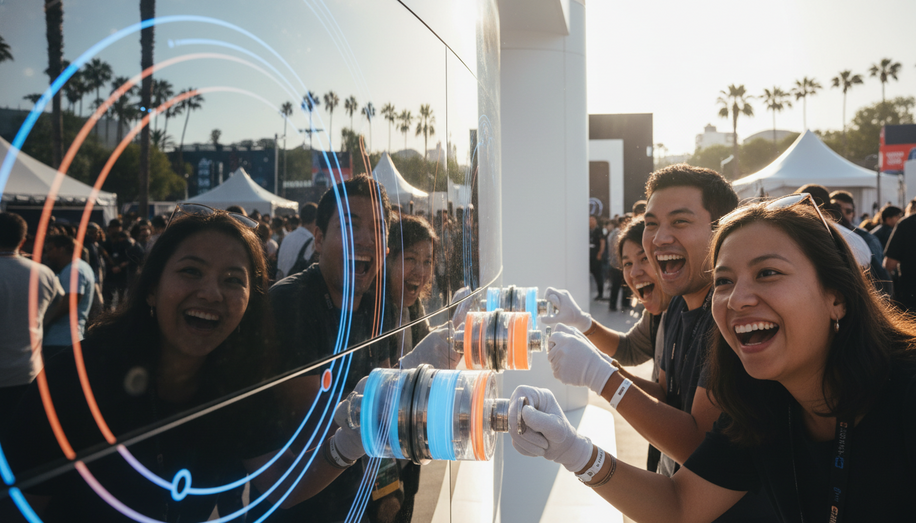

The evolution of out-of-home advertising has reached a pivotal moment. As audiences grow accustomed to passive billboards and standard digital displays, brands are discovering that true engagement requires something fundamentally different: creating spaces where consumers become active participants rather than passive observers. This shift toward what might be called “the public playground” represents a seismic change in how advertisers think about outdoor media, moving beyond simple gamification or QR code campaigns into experiences that demand physical presence and genuine interaction.
The foundation of this approach rests on a simple but powerful insight: interactive OOH works because it transforms the audience relationship. When viewers become participants, they establish a more personal connection with brands while creating more meaningful memories than traditional advertising allows. This audience-centric methodology weaves together the viewer and the message, making engagement an integral part of the experience itself rather than an afterthought. The impact is measurable across multiple dimensions—brand recall improves significantly because interactive experiences stand out against the visual clutter of everyday life, while customer loyalty deepens through these stronger emotional connections.
Beyond gamified elements and digital triggers, innovative brands are exploring technologies that engage multiple sensory channels simultaneously. Sensory-based interactions represent a frontier that few advertisers have fully exploited. Scented panels and tactile surfaces create physical connections that transcend typical digital touchpoints, allowing brands to build stronger relationships by engaging audiences through their senses rather than just their screens. When combined with visual elements, these multisensory experiences become remarkably sticky in consumer memory.
Gesture recognition and voice activation offer pathways to interaction that feel intuitive and personal without requiring physical contact—an increasingly important consideration in public spaces. Inbuilt sensors can detect and respond to viewers’ movements, creating dynamic experiences that adapt in real time to audience behavior. Similarly, voice commands provide a more conversational interface, transforming passive observation into active dialogue between brand and consumer.
Technology companies like Skoda have pioneered touchless interactive experiences at scale, using hand gesture recognition to let consumers explore vehicle interiors and book test drives without physical contact with displays. This approach maintains essential hygiene and safety standards while preserving the sense of direct manipulation and control that makes interaction satisfying.
The sophistication of modern facial recognition and AI-powered personalization has opened entirely new possibilities for relevance. GMC’s campaign for the Acadia SUV demonstrated this potential, using cameras in digital displays to detect audience demographics and emotional responses, then serving one of 30 possible video ads tailored to the specific viewer or group. Rather than treating all passersby identically, these systems recognize that a young single person, a family, or a couple might respond differently to the same message—and they adapt accordingly.
Perhaps most compelling are experiences that combine technology with tangible rewards and sensory engagement. Tata Coffee Gold created an activation that moved beyond screens entirely, using a 3D anamorphic display to show coffee production while filling the space with actual coffee aroma. Participants could enter their names, take selfies that transformed into AI-generated latte art, scan QR codes to save their experience, and receive actual coffee as a reward. This layered approach—combining visual spectacle, personalization technology, sensory elements, and real-world rewards—represents the pinnacle of interactive OOH thinking.
The key insight emerging from these innovations is that truly engaging OOH experiences require designers to think beyond digital screens. They demand consideration of physical space, sensory stimulation, personal agency, and real rewards that extend beyond points or discounts. When brands treat public spaces as genuine playgrounds—places where consumers expect to participate actively—they create the conditions for memorable interactions that traditional advertising cannot achieve. The brands leading this shift are discovering that the most engaging outdoor experiences are those that respect audience intelligence while inviting genuine participation in moments that matter.