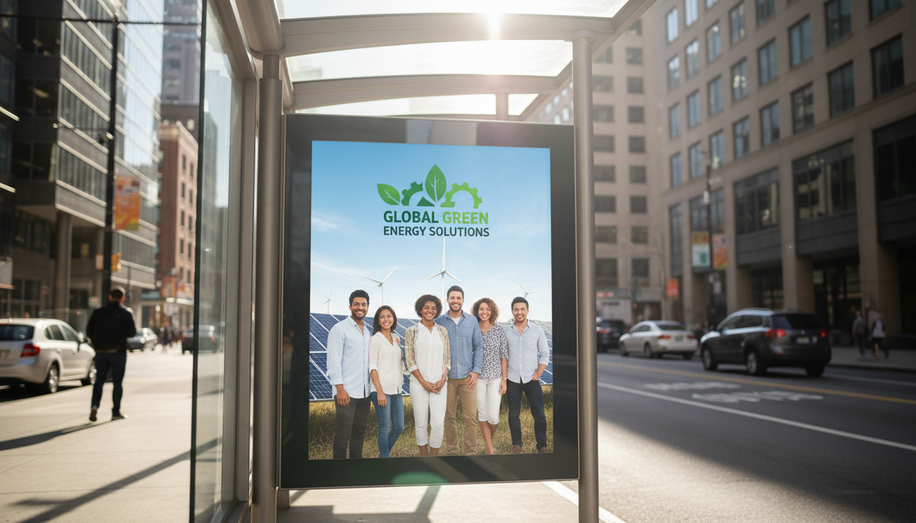

In the bustling world of out-of-home advertising, a quiet revolution is reshaping how brands connect with audiences on the move. Programmatic digital out-of-home (DOOH), or pDOOH, automates the buying, targeting, and delivery of ads across digital screens in public spaces, transforming static billboards into dynamic, data-responsive canvases. No longer confined to manual negotiations and fixed schedules, this technology leverages real-time bidding and audience signals to streamline campaigns, offering media buyers unprecedented agility and precision.
At its core, programmatic DOOH mirrors the automated ecosystems familiar from online display, video, and mobile advertising, but applies them to physical environments like transit hubs, retail venues, and urban screens. Traditional DOOH buying relies on direct deals with media owners, involving sales teams haggling over inventory rates, flight dates, and placements—a process that can take weeks and locks in static creatives for everyone in view. Programmatic flips this script. Buyers access inventory through demand-side platforms (DSPs), where they set targeting parameters, budgets, and creative triggers. Supply-side platforms (SSPs) from media owners then connect this demand to available screens via ad exchanges, enabling automated transactions in open auctions or private marketplaces (PMPs).
This workflow demystifies execution for media buyers. Imagine launching a campaign: instead of phoning agencies for availability or scheduling loops manually, a buyer logs into a DSP—often the same one used for digital channels—and defines criteria like time of day, location proximity to points of interest, weather conditions, or aggregated audience movement patterns. When a screen’s ad slot becomes available, the system evaluates bids in real time. The DSP decides how much to offer based on performance goals, while the SSP selects the winner, delivering the ad almost instantly. Pricing shifts from fixed bookings to cost-per-mille (CPM) models that fluctuate with demand, ensuring budgets align with impressions served rather than unused slots.
The streamlining power shines in real-world efficiency. Programmatic eliminates offline emails, insertion orders, and renegotiations, centralizing everything in one platform for faster activation—often from planning to launch in days, not weeks. A 2025 report from IAB Australia found 75% of agencies adopting pDOOH for its flexible buying, allowing in-flight tweaks like budget shifts or creative swaps without pausing delivery. Brands like Guinness have harnessed this for weather-triggered ads, driving an 18% year-over-year revenue lift by serving contextually relevant messages only to primed audiences. For multi-market pushes or event-tied promotions, adjustments that would cost a fortune via direct buys happen seamlessly through real-time bidding (RTB).
Beyond speed, programmatic DOOH empowers precise targeting that traditional methods can’t match. Fixed buys target broad locations; pDOOH uses contextual signals—dayparting, venue types, traffic data, or local events—to serve ads when and where they matter most. Dynamic creative optimization takes it further: ads can change based on triggers, like swapping sunny-day promotions for rainy alternatives, without identifying individuals or relying on personal data. This data-driven relevance boosts engagement; retargeted programmatic ads, for instance, achieve click-through rates up to 10 times higher than standard display, with 70% of consumers more likely to convert after seeing tailored messages. Foot traffic lift, brand salience, and sales attribution become verifiable, closing the measurement gap that long plagued OOH.
For media buyers, the advantages stack compellingly. Budgets allocate smarter, favoring high-value impressions over blanket coverage—partial share of voice (SOV) timed for specific audiences, not 100% saturation for all passersby. Self-serve DSP controls let buyers adjust bids and pacing on the fly, extending programmatic strategies across channels for true omnichannel synergy. While direct buys still excel for premium, long-term commitments with custom creatives, programmatic dominates short-term, targeted activations, and many brands blend both: a foundational direct campaign layered with pDOOH for tactical boosts.
Yet, myths persist. Programmatic isn’t always cheaper—CPM rates vary with targeting specificity and demand—but its ROI stems from efficiency and outcomes, not rock-bottom pricing. Nor is it a separate channel; it’s an evolution of DOOH, using machine learning to automate planning, selling, and measuring across the ecosystem. As screens proliferate and data integrations deepen, pDOOH positions OOH as a smart extension of digital media, retaining its massive-scale stopping power while adding real-time smarts.
Media buyers embracing this shift find campaigns not just easier to execute, but exponentially more effective. In an era of fragmented attention, programmatic DOOH delivers ads that meet audiences in the moment, proving that the future of out-of-home is as automated as it is unmissable.