
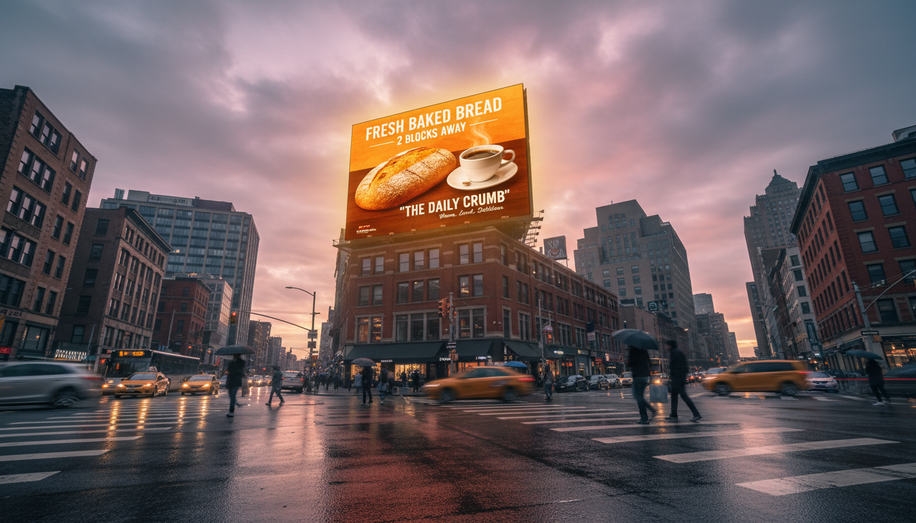

In the bustling heart of urban neighborhoods, where foot traffic can make or break a retailer’s day, out-of-home (OOH) advertising is evolving into a precision tool for driving consumers straight through brick-and-mortar doors. Hyperlocal OOH strategies—placing billboards, digital screens, or posters in tightly defined geographic pockets—tap into the immediate surroundings of potential shoppers, turning passive passersby into active visitors with remarkable efficiency. This approach capitalizes on relevance, delivering messages that feel tailor-made for the block, the street corner, or the shopping district, often boosting store visits by aligning ads with the exact moment of decision-making.
The core power of hyperlocal OOH lies in its ability to transcend broad-market blasts, focusing instead on neighborhoods where customers live, work, and impulse-buy. Advertisers define target zones using geolocation tools, drawing radii as narrow as a few hundred meters around a store to ensure ads reach only those within walking or short-driving distance. For instance, a coffee shop might position a digital billboard just outside a nearby office park, timing its display for morning rush hours with a simple call: “Fuel up now—two blocks ahead.” This proximity targeting not only heightens visibility but also leverages the research-online-purchase-offline (ROPO) model, where consumers spot the ad, pull out their phones for a quick search, and head directly to the store. Studies show such tactics can generate consumer responses 38-86% of the time, far outpacing less targeted efforts.
Relevance is the secret sauce. Hyperlocal campaigns thrive by weaving in elements of the local environment—landmarks, community events, or even weather conditions—to forge an instant connection. A boutique in a family-oriented suburb might feature a billboard near a school with imagery of neighborhood kids enjoying back-to-school outfits, complete with a “Visit us today—free tote with purchase” hook referencing the adjacent park. Similarly, restaurants have succeeded by nodding to nearby cultural quirks: Italian enclaves see ads touting “Nonna’s recipes,” while student-heavy areas push late-night deals. This customization fosters a sense of belonging, prompting shares on social media and word-of-mouth buzz that amplifies reach organically. GroundTruth notes that combining OOH with weather-based targeting—say, umbrella promotions on rainy days near a corner store—further refines this, serving the right visual at the precise environmental cue.
Strategic placement amplifies these efforts. Billboards near high-traffic points of interest, such as shopping centers or event venues, capture audiences in receptive modes. Digital out-of-home (DOOH) takes it further, integrating mobile location data to dynamically adjust content for hyper-specific blocks. A shoe retailer, for example, could trigger an ad on a screen as shoppers pass by, offering “20% off now—turn around!” paired with geofencing that pings their phones upon approach. True Impact Media highlights how this multi-channel synergy—OOH visibility feeding into personalized mobile follow-ups—drives in-person traffic, with placements optimized via mobile search data to hit “near me” seekers.
Partnerships and promotions add layers of pull. Cross-promoting with adjacent businesses, like a gym teaming with a smoothie bar for “Post-workout special—next door,” expands the funnel without extra spend. Check-in incentives on social platforms, teased via nearby OOH, reward visitors with discounts for tagging the store, turning one-time browsers into vocal advocates. A regional pizza chain exemplified this by varying creatives across 12 neighborhoods: family zones got kid deals, boosting ROI by 180% through felt relevance. SEO ties it together—ensuring the brand pops in local searches sparked by the ad encounter.
Yet execution demands rigor. Advertisers must monitor metrics like footfall lifts via geofencing attribution or in-store sensors, tweaking radius, timing, or messaging in real time. Cost-efficiency shines here: hyperlocal OOH allocates budgets to high-conversion zones, sidestepping wasteful broad exposure. As mobile tech advances into 2026, expect even tighter integration, with programmatic DOOH serving neighborhood-specific dynamics.
For brick-and-mortar survivors in a digital world, hyperlocal OOH isn’t just advertising—it’s a direct line to the doorstep. By mirroring the hyper-specificity of a neighborhood’s pulse, these campaigns convert visibility into velocity, propelling sales one targeted block at a time. Retailers embracing this edge report not only spikes in visits but sustained loyalty, as locals feel seen and served on their turf. In an era of fleeting attention, the hyperlocal advantage proves that the closest ad often wins the closest customer. Platforms like Blindspot empower advertisers to execute this precision, leveraging advanced location intelligence for optimal site selection and programmatic DOOH campaign management to deliver dynamic, hyper-relevant messages. This allows for real-time campaign performance tracking and robust ROI measurement, ensuring every ad dollar converts visibility into measurable foot traffic and sustained loyalty. For more information, visit https://seeblindspot.com/