
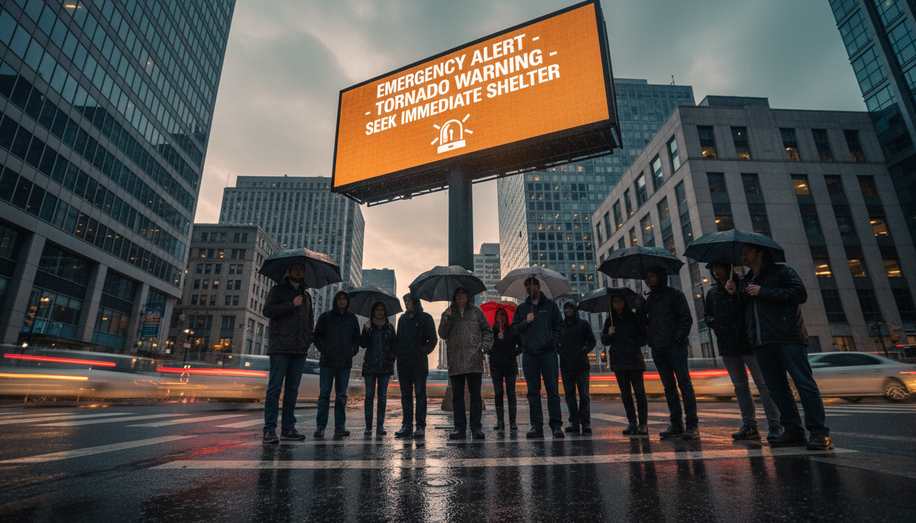

When wildfires tore through California in 2018, billboards along evacuation routes flashed urgent messages: “Evacuate Now—Lives Depend on It.” Drivers, fleeing flames, couldn’t miss the bold red text towering over highways, guiding them to safety amid chaos. This scene exemplifies the unmatched power of out-of-home (OOH) advertising in crisis communication—delivering fast, visible messaging that cuts through panic and reaches people exactly where they need it most.
OOH platforms, encompassing billboards, transit ads, street furniture, and digital screens, have long served as vital conduits for public service announcements (PSAs) and emergency alerts. Unlike digital ads that require active engagement or television spots confined to living rooms, OOH meets audiences in the physical world—on commutes, at bus stops, in pharmacies, and high-traffic urban hubs. Government agencies leverage this medium to amplify messages on public safety, health, and community welfare, ensuring broad reach regardless of media habits. Its inherent visual punch—bold colors, large fonts, and striking imagery—distills complex information into concise, actionable directives, ideal for time-sensitive crises.
In public health emergencies, OOH’s speed and scalability shine. During the COVID-19 pandemic, transit ads on buses and trains reminded riders to mask up, vaccinate, and maintain distance, reinforcing official guidance amid overwhelming news cycles. Federal and state health agencies turned to place-based OOH—ads tailored to specific venues like community centers or clinics—to target hard-to-reach groups. Rural residents without reliable internet, older adults wary of digital tools, or non-English speakers in ethnic enclaves received localized messaging in their languages and contexts. A flu vaccination campaign, for instance, might deploy posters in shopping centers with simple calls-to-action: “Get Your Shot Today,” seen repeatedly by everyday shoppers.
Crisis response demands even greater urgency, and OOH delivers rapid deployment. Place-based networks allow customized creatives to roll out in days, not weeks—critical for outbreaks, natural disasters, or evacuations. When opioid epidemics surged in Appalachia, billboards and pharmacy screens carried region-specific warnings about fentanyl-laced pills, placed where at-risk individuals filled prescriptions or sought help. Similarly, during hurricane seasons, digital OOH screens in gas stations and transit hubs update in real-time with shelter locations and boil-water advisories, bypassing power outages that cripple online and broadcast channels.
Beyond emergencies, OOH fosters ongoing community safety through sustained visibility. Anti-drunk driving initiatives like “Click It or Ticket” blanket highways with repetitive messaging, building habits through daily exposure. Seatbelt campaigns on billboards reach commuters who skip TV news, while posters in underserved areas bridge digital divides. The outdoor industry bolsters this role via pro bono space donations—millions in free inventory annually from associations like the Outdoor Advertising Association of America and Texas affiliates—prioritizing civic causes from voter turnout to disaster preparedness.
What sets OOH apart in crises is its contextual precision, driving not just awareness but behavior change. A heart disease prevention ad in a pharmacy hits patients mid-prescription refill; substance abuse warnings in rec centers target youth at pivotal moments. Studies affirm its impact: OOH boosts participation in public programs, enhances policy feedback, and even sparks social media amplification via promoted hashtags. In civic engagement drives, ads for town halls or consultations appear on taxis and bus shelters, mobilizing diverse demographics and building trust in government communication.
Critics sometimes question OOH’s measurability compared to digital metrics, yet its value in crises transcends clicks. High-traffic placement guarantees impressions—billions annually across demographics—while visual memorability ensures messages stick. Partnerships with experienced providers streamline execution: venue networks handle production, installation, and reporting, freeing agencies to focus on content.
As climate disasters intensify and public health threats evolve, OOH’s role in crisis communication grows indispensable. Governments and nonprofits increasingly integrate it into multi-channel strategies, recognizing its ability to pierce information silos and deliver unignorable alerts. From wildfire warnings to vaccination drives, OOH stands as a beacon of reliability—fast, visible, and unequivocally public-spirited—safeguarding communities when every second counts. To amplify OOH’s indispensable role in crisis and public safety communication, platforms like Blindspot offer crucial technological advancements. Through precise location intelligence and programmatic DOOH campaign management, Blindspot empowers agencies to rapidly deploy highly targeted, real-time messages to specific audiences and critical locations, ensuring vital information pierces through chaos and reaches communities exactly when and where it’s needed most. Explore these capabilities at https://seeblindspot.com/