
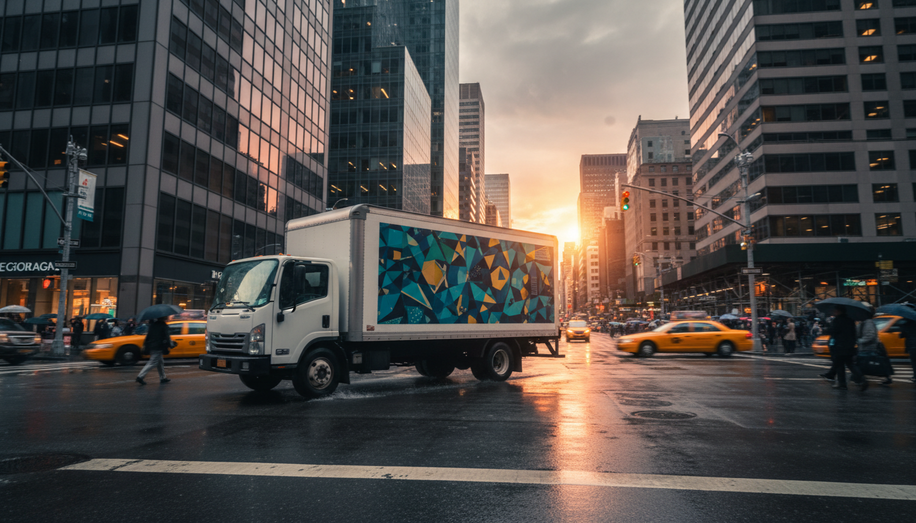

In the bustling arteries of modern cities, where static billboards fade into the urban haze, a new breed of advertising is accelerating ahead: mobile billboards powered by ride-share vehicles, delivery trucks, and custom units. These dynamic platforms are reshaping out-of-home (OOH) advertising, delivering brand messages directly to audiences on the move, from congested highways to neighborhood corners. No longer confined to fixed locations, they chase consumers wherever life unfolds, turning everyday commutes into captive viewing opportunities.
The roots of this revolution trace back to the early 20th century, when automobiles first rolled out as makeshift ad carriers. In the 1920s, motorized trucks became the pioneers of mobile OOH, transforming roads into rolling canvases for local businesses. Fast-forward to the 2000s, and digital innovation ignited explosive growth. High-resolution LED screens debuted on trucks, enabling vivid videos, real-time content swaps, and multiple ad rotations in a single outing. By the 2010s, these vehicles had surged in popularity across entertainment, retail, and automotive sectors, prized for their ability to infiltrate high-traffic zones and events that static signs could never touch.
Today, the trend has democratized further, enlisting ride-share cars and delivery fleets—think Uber vehicles or Amazon vans—as unwitting billboards. Companies wrap these workhorses in branded graphics or equip them with slim LED panels, leveraging their predictable routes through dense populations. Custom mobile units, often vintage trucks retrofitted with dazzling displays, add flair; one notable example is the Greenhouse truck, a LED-clad relic that zips through city streets, parks at storefronts, or anchors events, blending nostalgia with cutting-edge tech. This fleet diversity maximizes reach: ride-shares hit suburban sprawl, delivery trucks blanket logistics hubs, and bespoke rigs target festivals or parades.
What sets mobile billboards apart is their unmatched agility and engagement. Unlike roadside hoardings ignored by speeding drivers, these roam where audiences gather—business districts, stadiums, or protest routes—ensuring prolonged exposure. Digital iterations shine here: remote updates allow instant tweaks for flash sales or trending topics, while interactive features like social media QR codes or live feeds bridge physical and digital worlds. Eye-tracking studies and GPS data affirm their potency; campaigns report high recall rates, with movement amplifying memorability—viewers can’t scroll past a 40-foot LED spectacle barreling alongside them.
In 2024, the sector hit stride, with LED trucks leading a digital uprising. Providers logged 200,000 YouTube views touting successes: Fortune 500 product launches buzzing urban cores, political hopefuls blanketing swing districts, and event promoters spiking ticket sales. A $37 billion market beckons, as brands tap fleets for hyper-targeted hits—navigating specific ZIP codes or demographics with surgical precision. Sustainability edges in too; digital swaps cut print waste, and energy-efficient LEDs align with green mandates.
Yet, challenges persist. Regulations vary by city—some cap brightness or routes to curb light pollution—demanding savvy navigation. Measuring ROI, once elusive, now relies on GPS logs, impression software, and QR redemptions, yielding concrete metrics static OOH struggles to match. Globally, adoption spans megacities to rural byways, with Asia and Europe accelerating via AR-enhanced trucks that overlay virtual try-ons for passersby.
Looking ahead, the mobile billboard revolution promises bolder horizons. Compact, lightweight displays with VR integrations could turn trucks into immersive pods, while AI optimizes routes for peak density. Ride-share partnerships may standardize the model, wrapping thousands of vehicles in a networked ad grid. For OOH pros, this isn’t just evolution—it’s domination. In a fragmented media landscape, these street-level nomads deliver unskippable impact, proving that the best ads don’t wait for the audience; they pursue it relentlessly. As urban mobility densifies, vehicle-based OOH stands poised to claim the roads as its empire, one mile at a time.