
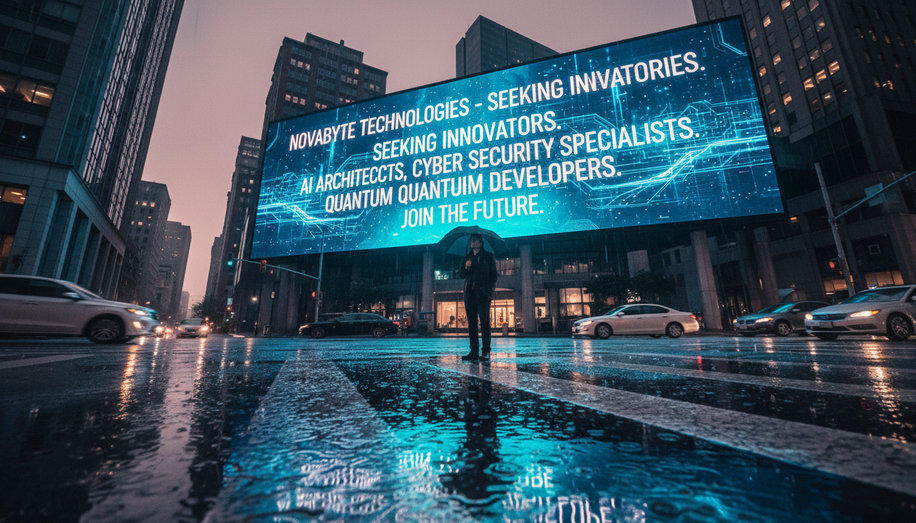

In the fiercely competitive job market of 2026, where skills shortages persist and top talent fields offers from multiple suitors, companies are turning to out-of-home (OOH) advertising as a powerful recruitment weapon. Far beyond traditional online job boards, OOH deploys massive digital billboards, bus shelters, and urban projections to broadcast job openings and employer branding messages directly to passive audiences—commuters, shoppers, and city dwellers who might otherwise scroll past digital ads. This unmissable medium cuts through digital fatigue, delivering high-impact visuals in high-traffic zones to spark immediate interest and drive applications.
Recruitment leaders have long treated talent acquisition like marketing, but in 2026, that analogy is literal. Talent teams now operate as sophisticated marketing departments, using data-driven OOH campaigns to track application sources and optimize spend, much like optimizing ad ROI for consumer products. A prime example is the shift to skills-based hiring, where companies widen their talent pools by advertising roles emphasizing capabilities over credentials. Digital OOH screens in transit hubs flash bold headlines like “Master Coders Wanted: Show Us Your Skills, Not Your Diploma,” paired with QR codes linking to interactive assessments. This approach not only attracts non-traditional candidates but also boosts brand recall by up to 30 percent through guerrilla-style placements, such as pop-up job fairs or AR-enabled bus ads that let passersby scan and simulate a day on the job.
Employer branding campaigns amplify this effect, transforming OOH into a year-round storytelling platform. In a hyper-connected era, a compelling narrative—”Why join us?”—acts as a magnet for inbound talent aligned with a company’s mission. Tech giants and consultancies lead here, launching immersive campaigns on programmatic digital out-of-home (DOOH) networks. These platforms enable real-time personalization: screens near tech districts display “AI Engineers: Build the Future with Us” during rush hour, switching to weather-triggered messages like “Rainy Commute? Warm Up Your Career Indoors at Our Innovation Lab” to heighten relevance. Programmatic buying slashes cost-per-thousand impressions (CPM) by up to 25 percent compared to manual processes, allowing stretched HR budgets to cover prime locations like shopping districts and entertainment centers, where mobility data reveals peak dwell times.
Creative execution is key to standing out amid urban clutter. OOH demands instant impact: high-contrast visuals, massive legible fonts, and concise copy tailored to psychographics—age, interests, commuting habits. Manufacturing firms targeting skilled trades, for instance, use dynamic displays in industrial zones with vivid imagery of hands-on work, overlaid with calls-to-action like “Trade Your 9-5 for Real Impact—Apply Now.” Integration with mobile and social channels supercharges results; geo-fencing retargets QR scanners with LinkedIn ads or personalized emails, while branded hashtags encourage shares of “selfie challenges” at interactive kiosks. Industry data underscores the payoff: interactive OOH boosts dwell time by 20 to 40 percent and overall engagement by up to 20 percent via A/B testing of creatives.
Real-world successes illustrate the strategy’s potency. A Fortune 500 retailer in 2025 ran a spring OOH blitz on digital billboards, featuring seasonal motifs of growth—blooming flowers morphing into career ladders—promoting logistics roles with QR-linked career pages. The campaign, timed to peak commuter flows and local events, generated a 42 percent ROI lift through long-term synergies with digital retargeting, per Nielsen cross-media studies. Similarly, consultancies have projected holographic job previews onto city buildings, inviting AR interactions that go viral on social media, drawing applicants who self-select based on authentic employer vibes.
Yet OOH’s edge lies in its mass reach paired with precision. Heatmaps and real-time analytics pinpoint high-traffic spots—bus shelters near affluent neighborhoods for executive searches, or entertainment venues for creative roles—ensuring messages hit receptive eyes. In a market where 2026 forecasts predict hyper-local targeting and immersive tech dominance, OOH evolves with smart city integrations, delivering data-driven content that adapts to traffic surges or events. This isn’t scattershot advertising; it’s surgical, with retargeting keeping warm leads engaged across channels.
Challenges remain, including budgeting across formats and measuring elusive metrics like brand perception shifts. Still, as recruitment marketing trends toward AI-optimized visibility, OOH proves indispensable for manufacturing, tech, and trades hiring. Companies ignoring it risk invisibility in a sea of digital noise. By blending bold creativity, tech integration, and relentless data refinement, OOH doesn’t just post jobs—it builds desire, positioning employers as destinations for the talent that shapes tomorrow’s workforce.