
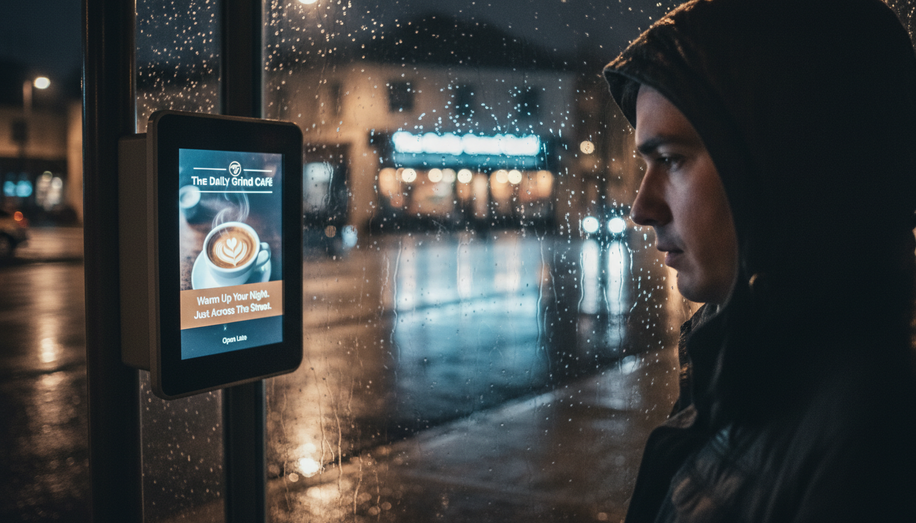

In the bustling corridors of urban life, where commuters rush past coffee shops and shoppers linger near boutique storefronts, small format digital out-of-home (DOOH) displays are redefining precision advertising. These compact screens—think bus shelters, elevator panels, and convenience store kiosks—harness the power of proximity to deliver hyper-targeted messages to niche audiences at the exact moment they matter most. Unlike sprawling billboards that cast wide nets, small format DOOH thrives on intimacy, positioning brands mere feet from points of interest like retail entrances or transit hubs, where decision-making happens in real time.
This strategic edge stems from DOOH’s inherent flexibility. Advertisers can deploy dynamic content that updates instantly based on time, weather, or location data, ensuring relevance in hyper-local contexts. For instance, a café might trigger morning promotions for breakfast deals on nearby bus shelter screens as commuters eye their first coffee stop, shifting to evening happy hours when the same audience seeks post-work unwind spots. Such contextual precision boosts engagement; studies show DOOH with timely messaging increases viewing time, ad recall, and even sales by 16%. Small formats amplify this by infiltrating everyday micro-environments—elevators in office towers for professionals, store-endcaps for impulse buyers—creating unavoidable touchpoints that digital ad blockers can’t evade.
Hyper-local targeting elevates the game further. Geofencing technology activates ads when potential customers enter predefined zones around points of purchase, bombarding them with tailored promotions on proximate displays. A fitness brand, for example, could hit gym-goers with protein shake offers on screens outside health clubs, while a bookstore targets parents near school gates with back-to-school reads. This granularity allows small businesses to punch above their weight, focusing budgets on specific demographics without wasteful broad strokes. Mobile billboards and city-specific placements in markets like the Carolinas extend this reach, enabling startups to zero in on regional niches cost-effectively.
Cost remains a compelling draw. DOOH’s CPMs hover between $2 and $15, rivaling premium connected TV while sidestepping production hassles of print or vinyl—no physical materials mean swift launches and iterations. Smaller screens in high-traffic nooks often command lower rates than iconic giants, yet deliver superior frequency and reach through repeated exposures across a consumer’s day. Programmatic platforms add agility, letting advertisers swap creatives, tweak targeting, or pause campaigns on the fly, mirroring digital channels but with tangible presence. For budget-conscious brands, this translates to amplified ROI; one analysis pegs OOH returns at 495%, especially when synergizing with online efforts to drive search and social lifts.
Beyond economics, proximity fosters deeper connections. Vibrant LED screens showcase motion-rich stories in seconds, embedding brands in memory during purchase-proximate moments. Interactive elements like QR codes on elevator displays spur immediate scans for directions to nearby stores or online deals, bridging OOH to digital funnels. Environmentally, energy-efficient LEDs cut power use, appealing to eco-aware consumers while trimming operational costs. In high-traffic veins like shopping districts or downtown cores, these displays generate massive impressions—up to millions weekly—across diverse yet pinpointed audiences.
Critics might dismiss small formats as secondary to majestic billboards, but data flips the script: smaller units often yield better reach and frequency by weaving into daily routines, from parking lots to pedestrian paths. Mixing formats—billboards for awareness, shelters for conversion—maximizes touchpoints, with simple, bold creatives ensuring readability at a glance. Real-world wins abound; brands report 48% higher digital ad interactions post-OOH exposure, as unskippable visibility primes consumers for multi-channel engagement.
As cities densify and consumer paths fragment, small format digital OOH stands as a tactical powerhouse. It doesn’t shout from afar; it whispers persuasively at arm’s length, turning proximity into persuasion. For niche players eyeing loyal niches—local retailers, service pros, event promoters—this medium unlocks hyper-local dominance, proving that in advertising, closeness conquers scale.