
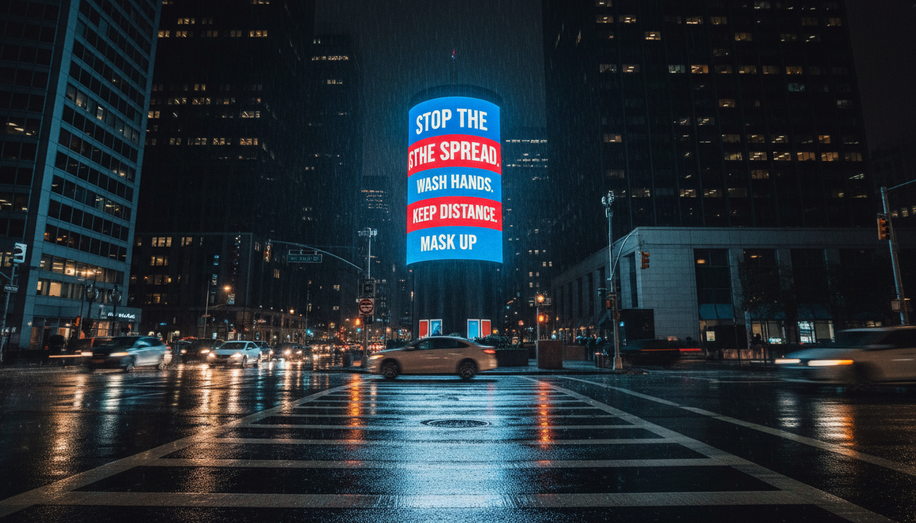

In the chaos of a natural disaster or public health emergency, when power grids fail and digital networks falter, out-of-home (OOH) advertising emerges as a lifeline for rapid crisis communication. Mobile LED trucks and digital billboards cut through the fog, delivering real-time evacuation routes, shelter locations, and safety instructions to populations cut off from smartphones and screens. Their unmissable visibility—bright, high-definition displays that pierce smoke, darkness, or crowds—ensures urgent messages reach everyone, from urban commuters to remote communities, often faster than traditional broadcasts.
This pivotal role of OOH in crises stems from its inherent strengths: immediacy, mobility, and ubiquity. Unlike static websites or social media feeds vulnerable to outages, OOH assets like billboard trucks act as “modern-day town criers,” navigating debris-strewn streets to broadcast evolving updates on hurricanes, floods, or earthquakes. During wildfires, for instance, these trucks prowl threatened zones, mapping fire perimeters, safe exits, and relief points in vivid visuals that demand attention even amid panic. Public health campaigns amplify this power; in pandemics, they spotlight vaccination sites, testing protocols, and hygiene guidelines, countering misinformation with authoritative, on-the-ground clarity accessible to those without internet.
Consider the mechanics of deployment. Crisis response demands swift action: assess severity, activate a dedicated team, and roll out a communication plan prioritizing transparency and timeliness. OOH fits seamlessly here, with trucks deployable in hours—far quicker than printing flyers or erecting fixed signs—positioning in high-traffic hubs like parks, shelters, or jobless neighborhoods during economic downturns to flash aid programs and employment leads. Their cost-effectiveness shines too; one vehicle covers vast ground with minimal resources, parking strategically for repeated views by foot traffic, unlike fleeting highway billboards. Larger formats outperform smaller ones, drawing eyes and spurring 17% higher brand engagement when integrated with other channels, a principle that translates directly to crisis messaging where recall can mean survival.
Real-world exigencies underscore OOH’s edge over digital alternatives. Social media accelerates crises through viral negativity but crumbles without connectivity; OOH enduring, reaching the digitally disconnected. In blackouts or network blackspots, these mobile beacons guide crowds to safety, their screens updating in real time as situations shift—evacuation tweaks, health alerts, or economic recovery tips. Economic crises benefit similarly: trucks in high-unemployment areas broadcast job fairs and assistance details, bridging gaps for underserved groups and fostering stability.
Effective execution hinges on core principles: consistent, empathetic messaging across channels, with OOH as the unfiltered anchor. Transparent first statements—detailing actions, timelines, and apologies where needed—shape narratives, hosted on billboards for inescapable impact. Internal collaboration fuels this: cross-departmental teams align on protocols, monitoring sentiment via real-time alerts to preempt escalation, then channeling unified info through OOH’s broad reach. Predefined plans, including spokespersons and stakeholder protocols, ensure coherence, turning potential reputational pitfalls into trust-building opportunities.
Public health initiatives reveal OOH’s scalability. Vaccination drives or pandemic guidelines thrive on its visual punch; parked trucks near community centers loop simple, bold directives—”Mask Up, Get Vaccinated Here”—seen repeatedly by diverse audiences. Studies affirm OOH’s potency: when creative and integrated, it boosts engagement and business outcomes, principles amplified in crises where every impression combats rumor. Larger exterior bus ads, for example, eclipse interior ones in drawing responses, ideal for transit-heavy evacuations.
Yet OOH’s crisis prowess demands preparation. Agencies must embed it in crisis blueprints: train teams, secure mobile fleets, and test integrations with alerts systems. Proactive vigilance—scanning for risks—pairs with post-event reviews to refine tactics, safeguarding not just publics but brand integrity amid scrutiny. In an era of 24/7 news cycles, where delays breed distrust, OOH’s rapid response fortifies these efforts, proving its evolution from mere advertising to essential public service.
As climates destabilize and health threats persist, OOH’s role in crisis communication only grows. Its tangible presence—trucks rumbling through ravaged streets, billboards glowing in the gloom—delivers not just information, but hope and direction when all else fails. For governments, agencies, and responders, it’s no longer optional: in the race against chaos, OOH is the swiftest messenger. Platforms like Blindspot are poised to enhance this capability, offering real-time campaign performance tracking and location intelligence to strategically deploy and optimize crisis messages precisely where they’re needed most. This ensures critical updates cut through the noise with unparalleled speed and effectiveness, reaching vulnerable communities instantly. Learn more at https://seeblindspot.com/