
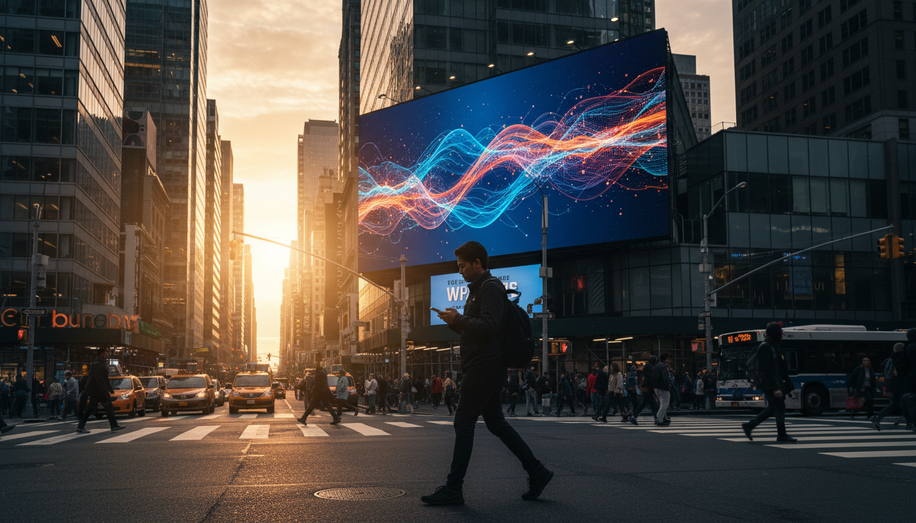

In the bustling corridors of urban life, where billboards command attention from commuters and shoppers alike, a quiet revolution is bridging the gap between static outdoor displays and the dynamic world of digital screens. Geofencing technology, by drawing virtual boundaries around out-of-home (OOH) advertising sites, captures the mobile devices of passersby and retargets them with personalized digital ads, transforming fleeting impressions into measurable conversions. This fusion not only amplifies OOH’s reach but also creates seamless omnichannel experiences that drive e-commerce sales and brand loyalty.
The mechanics are elegantly straightforward yet powerfully precise. Advertisers first define geofences—virtual perimeters drawn via mapping software around key OOH assets like billboards, bus shelters, or transit hubs. These zones, calibrated to match viewing distances and traffic patterns, leverage GPS for broad outdoor coverage, Wi-Fi for pinpoint accuracy in high-density areas, or even RFID for specialized setups. As smartphones enter these boundaries, location services detect them anonymously through mobile advertising IDs, building audience segments without compromising privacy. Programmatic platforms then serve tailored mobile ads—via apps, social media, or display networks—reinforcing the OOH message with calls to action, discounts, or product details.
Consider a commuter glancing at a billboard promoting a new sneaker line during rush hour. Hours later, while scrolling Instagram at home, that same person encounters a dynamic ad for the shoes, complete with a limited-time offer. This sequential messaging builds on the initial awareness sparked by OOH, guiding consumers from discovery to purchase. E-commerce brands, in particular, thrive on this synergy, as geofencing turns passive exposure into active online journeys, boosting engagement rates and ROI by focusing budgets on proven prospects rather than broad sprays.
Real-world campaigns underscore the potency of this approach. A regional marina, targeting summer boat rentals, geofenced nearby lakes, campgrounds, and events, then blasted mobile display ads with time-sensitive promotions. The result: 2.7 million impressions, a 0.61% click-through rate surpassing benchmarks, and a 35% surge in weekend bookings. Similarly, agencies like The Remnant Agency pair premium OOH placements with geofencing to track foot and vehicle traffic, enabling data-driven optimizations that quantify offline impact in online metrics. Wilkins Media extends this by geofencing not just ad units but competitor stores or events, retargeting in real-time or banking data for later blasts.
Beyond retargeting, geofencing unlocks deeper analytics and agility. Location data reveals audience demographics, dwell times, and movement patterns, informing smarter OOH placements and budget shifts. Real-time adjustments allow brands to tweak digital creatives based on live performance, creating feedback loops that refine both channels. For outdoor enthusiasts, brands geofence trailheads, golf courses, or gear shops to intercept high-intent users with contextual ads, blending location precision with programmatic scale.
Challenges persist, of course. Optimal geofence sizing demands expertise to avoid overreach—too broad, and you dilute relevance; too narrow, and you miss genuine exposures. Privacy regulations require anonymous handling of IDs, and not all devices share location data, capping reach to opt-in users. Yet, as smartphone penetration nears universality and programmatic ecosystems mature, these hurdles fade. Agencies now integrate geofencing seamlessly with Google Ads, Facebook pixels, or DSPs, scheduling dayparted retargeting to align with consumer routines.
The payoff is transformative for OOH, long criticized for its “spray-and-pray” reputation. Geofencing injects measurability, proving that a billboard sighting correlates to a 20-30% lift in digital conversions, per industry benchmarks. It elevates OOH from awareness builder to full-funnel powerhouse, where street-level sparks ignite screen-based sales. For brands, this means higher yields from legacy inventory; for advertisers, it’s a blueprint for hybrid campaigns that outpace pure digital rivals.
Looking ahead, as 5G and edge computing sharpen location accuracy, geofencing will evolve further—perhaps incorporating AR overlays triggered by OOH proximity or AI-predicted paths from ad exposures. Publications like this one herald its rise, but the true testament lies in the data: campaigns blending street and screen don’t just coexist; they dominate. In an era demanding proof over promise, geofencing hands OOH the metrics to claim its digital throne, ensuring every glance translates to growth.