
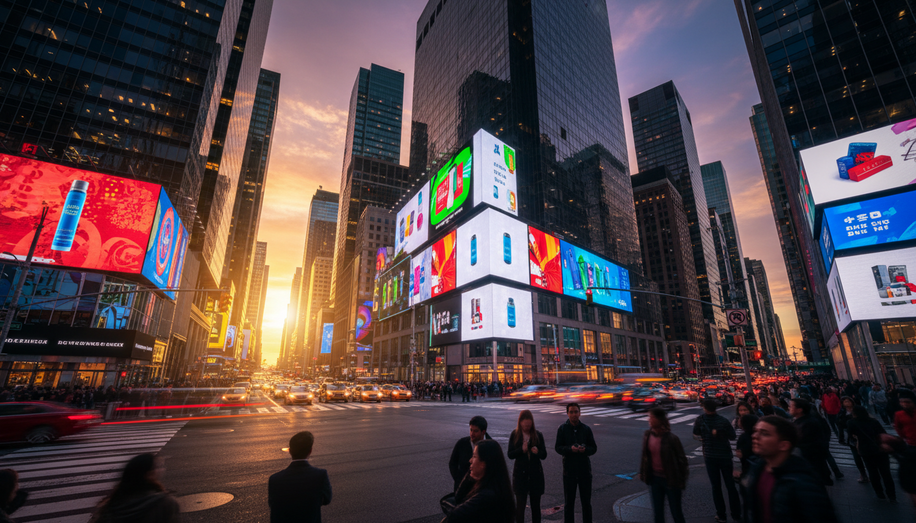

In the split-second world of out-of-home (OOH) advertising, success hinges on mastering the glance and the gaze. Drivers hurtling past at 60 miles per hour have mere 1-2 seconds to register a billboard, while pedestrians lingering at a bus stop might afford 10 seconds or more of scrutiny. This duality demands creative designs that deliver an instant visual punch for fleeting viewers yet unfold layers of intrigue for those who pause, blending simplicity with subtle sophistication.
The foundational principle is uncompromising readability. High-contrast color palettes—dark text on light backgrounds or vice versa—cut through urban clutter and ensure legibility from afar. Limit schemes to two or three bold hues, such as red, blue, or yellow, which seize attention without overwhelming the eye. Large, sans-serif fonts dominate, with messaging capped at seven words or fewer to allow comprehension in a blink. A single focal image anchors the composition, processed by the brain faster than text, conveying the core idea before details register. This “glance architecture” respects the reality of high-speed exposure: studies affirm that bold shapes, ample negative space, and the rule of thirds for positioning key elements maximize impact on highways or bustling avenues.
Yet effective OOH transcends the glance by rewarding the gaze. For pedestrians and transit riders, who encounter ads repeatedly in contextual settings, designs incorporate storytelling nuance. Simple transitions in digital out-of-home (DOOH) formats—avoiding frenetic animations—reveal evolving narratives across frames, maintaining consistent messaging while building emotional resonance. Personalization amplifies this: real-time data adjusts content for time, weather, or local events, turning a static glance into a dynamic conversation. A rain-soaked screen might swap to umbrella promotions, or event-tied visuals could shift during rush hour, fostering relevance that lingers.
Interactivity bridges the gap further, extending dwell time by 20 to 40 percent according to industry metrics. Touch-enabled kiosks or AR overlays invite engagement, transforming passive passersby into participants without distracting drivers. For high-speed contexts, restraint rules: subtle gamification or QR codes appear only on second look, placed per eye-tracking insights—like the bottom-right corner for 10 percent logo real estate—to boost recall without clutter. Static formats demand similar discipline; biodegradable vinyl or recycled paper banners use one powerful graphic to hook fast viewers, then reveal layered messaging up close, aligning with sustainability trends where 72 percent of consumers favor eco-brands.
Contextual placement sharpens this dual optimization. Billboards in mass-visibility highway corridors prioritize punchy simplicity—large type, high-contrast, no fine print—while street furniture in pedestrian zones layers in multilingual text or inclusive icons for broader accessibility. Transit ads leverage repetition for brand recall, their proximity rewarding repeated gazes with tactile or audio cues for diverse audiences. A/B testing refines these choices: rotating creatives via DOOH analytics identifies winners, with tested designs lifting engagement by up to 20 percent over unoptimized statics.
Real-world execution underscores these practices. Solar-powered DOOH in city centers not only cuts environmental impact but delivers crisp visuals that pop at distance and sustain pedestrian interest through adaptive content. Brands like those pioneering plant-based billboards pair stark imagery for drivers with detailed calls-to-action visible to walkers, harmonizing speed and scrutiny. Hyperlocal smart billboards, armed with sensors and AI, tailor outputs to traffic flow—snappy bursts for vehicles, nuanced promotions for foot traffic—minimizing waste and maximizing resonance.
Challenges persist in this glance-gaze balance. Overloading with text or motion risks alienating both audiences; cleverness must yield to clarity. Yet 2026 forecasts signal triumph: DOOH poised to claim over 40 percent of outdoor spend, driven by these precise designs. Creatives who calibrate for velocity and velocity alike craft OOH that doesn’t just interrupt the journey but elevates it, forging connections that endure beyond the street.
Navigating this intricate balance of instant impact and layered intrigue demands sophisticated data and real-time adaptability. Platforms like Blindspot precisely address this by providing location intelligence for optimal site selection, coupled with programmatic DOOH management and real-time performance tracking that calibrates content for both high-speed glances and prolonged gazes, ensuring every ad placement maximizes relevance and engagement across diverse viewing contexts. This empowers brands to refine their dual-audience strategies, translating fleeting views into lasting connections. https://seeblindspot.com/