
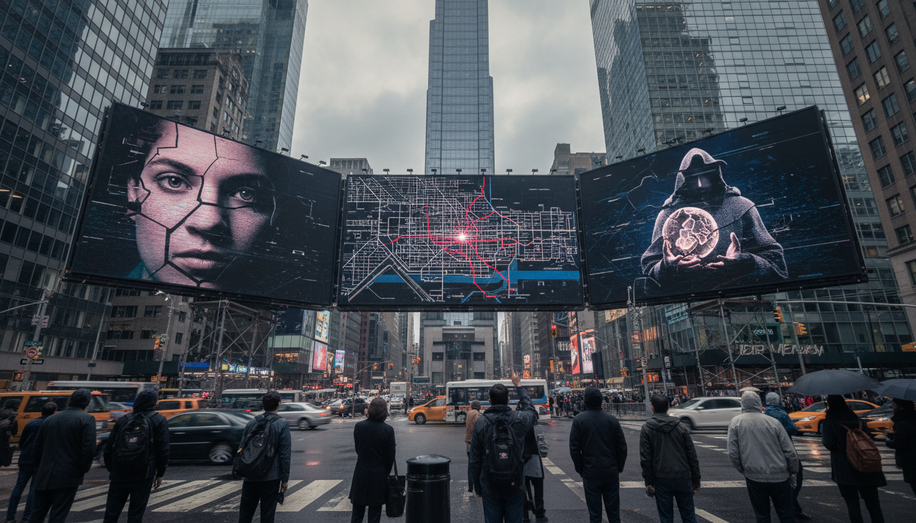

In the golden age of American highways, Burma-Shave revolutionized out-of-home advertising with a simple yet ingenious tactic: sequential billboards strung along rural roads, each unveiling a line of a rhyming jingle that drivers pieced together mile by mile. “Ben met Anna, Made a hit, Neglected beard, Burma-Shave,” read one classic series, turning monotonous drives into interactive stories that etched the brand into public memory for nearly a century. This early mastery of teaser campaigns demonstrated the power of OOH to build suspense, a strategy that has evolved with digital billboards into sophisticated, multi-phase narratives capable of captivating urban audiences and driving measurable engagement.
Today, teaser campaigns thrive by fragmenting a brand’s message across placements, timelines, and even sensory experiences, compelling passersby to anticipate the next reveal. Unlike static ads that shout once and fade, sequential OOH unfolds like a serialized drama, leveraging the natural rhythm of commutes or city strolls to foster curiosity. Planners meticulously map traffic flows—highway boards spaced miles apart for cars zipping at 70 miles per hour, or clustered digital displays in urban hubs that rotate creatives hourly—to ensure audiences encounter the story in logical order. This choreography transforms fleeting glances into lingering intrigue, as each panel cues the last, reinforcing associative learning that boosts brand recall far beyond single exposures.
Consider the Audi versus BMW “billboard war,” where rival luxury marques traded escalating taunts across Chicago intersections: BMW’s initial jab at Audi’s Quattro all-wheel drive prompted a swift Audi retort mocking BMW’s engine size, escalating into a public spectacle that dominated local buzz without ever naming products directly. The exchange built hype through rivalry, drawing media coverage and social shares as drivers debated the next volley. Similarly, modern digital networks enable time-based teasers, like a concert promoter’s progression from “Something Big Is Coming” to “Guess Who’s Back” and finally “Tickets On Sale Now,” each phase rotating weekly to reward repeat viewers. These campaigns excel by pacing reveals to dwell time—quick hits for fast-moving traffic, drawn-out arcs for pedestrian zones—ensuring the narrative resonates without overwhelming.
Digital out-of-home (DOOH) amplifies this art form with real-time adaptability, turning static suspense into dynamic immersion. Disney’s Percy Jackson Season 2 promotion in Hollywood featured a 4D billboard that synced splashing water, mist, and fountains to trailer footage, teasing the watery chaos of the series in a literal splash that drenched sidewalks and sparked viral videos. Brands like HOKA took it further, converting a Manhattan block into a temporary desert for the Mafate X shoe launch, complete with heat, wind, native plants, and a treadmill feeding real-time Unreal Engine visuals of Joshua Tree trails—runners’ strides dictating the scenery from dawn to dusk over 48 hours. Such experiential teasers extend the narrative beyond visuals, engaging senses to heighten anticipation for product drops or events.
Environmental causes have also harnessed sequential OOH for urgent storytelling. Aktion Baum’s “Trick or Tree?” Halloween campaign blanketed Germany with DOOH screens evoking retro VHS horror: eerie forests vanishing into barren futures, each ad escalating the dread with clear calls-to-action via QR codes for tree-planting donations. The phased rollout—building from subtle unease to stark warnings—mirrored horror tropes, prompting shares and conversions by tying seasonal fright to real-world stakes. McDonald’s weather-responsive DOOH flipped this for commerce, swapping creatives in real time: McFlurrys beaming during heatwaves, hot coffee in downpours, each contextual twist teasing craveable relevance that felt personal amid mass exposure.
Even service brands weave reliability into ongoing sagas. An Oklahoma HVAC company phased its digital billboards seasonally—”Stay Cool This Summer” in spring, “Oklahoma Heat? We’ve Got You Covered” mid-season, “Time to Warm Up Again” in fall—evolving the message while anchoring trust in consistent branding. This approach not only sustains attention but spikes online searches, as intrigued viewers connect offline fragments to digital discovery.
The resurgence of these tactics owes much to DOOH’s measurability: rotation analytics track view times, QR scans, and content completions, allowing mid-campaign tweaks for optimal pacing. Yet success hinges on brevity and emotion—short “chapters” of five to six parts, evoking journeys from curiosity to climax, placed on less-saturated routes where they stand out. Pepsi Max’s AR bus shelter illusions—UFOs invading London stops, tigers prowling benches—exemplified this, turning wait times into shareable surprises that extended the teaser offline to social feeds.
In an era of ad fatigue, sequential OOH narratives reclaim attention by making audiences co-authors, piecing together the puzzle across drives, walks, and scrolls. From Burma-Shave’s jingles to Disney’s deluges, these campaigns prove that hype isn’t announced—it’s unveiled, one tantalizing fragment at a time, forging bonds that static media can’t match.
In this intricate landscape of serialized OOH, platforms like Blindspot are proving indispensable. They empower brands to precisely choreograph multi-phase narratives across strategically selected locations using programmatic DOOH campaign management, ensuring optimal pacing and sequential impact, while real-time performance tracking and audience measurement provide the granular insights needed for continuous optimization and measurable ROI. Explore how to master your narrative reveals at https://seeblindspot.com/