
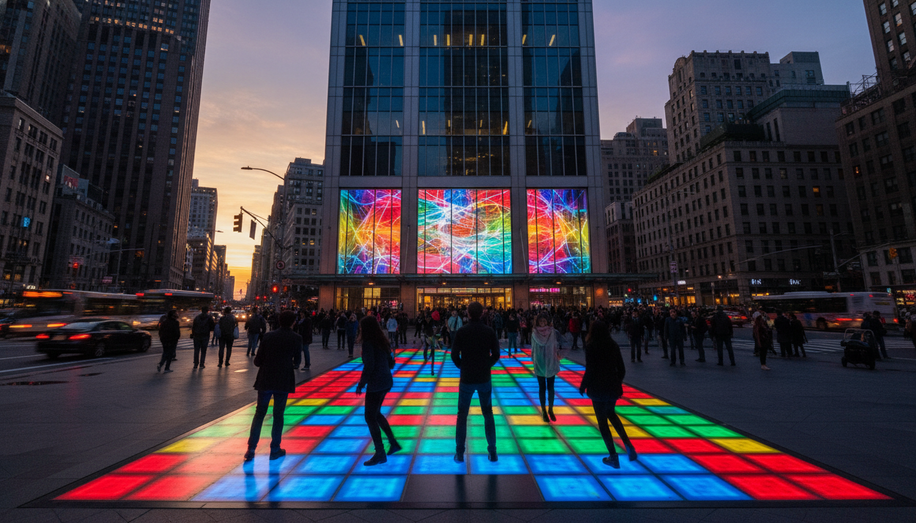

In the bustling streets of urban landscapes, out-of-home (OOH) advertising is shedding its static skin, evolving into playful arenas where pedestrians become unwitting players in brand-driven games. Far from depending on augmented reality overlays or scannable QR codes, innovative campaigns are harnessing the raw power of physical participation—sidewalk trails, human pyramids, and pop-up challenges—to ignite curiosity and forge lasting connections. These low-tech gambits transform passive glances into active adventures, proving that gamification thrives on human instinct rather than high-tech crutches.
Consider the simple genius of step challenges etched into city sidewalks. Brands like those pioneering decal pathways invite walkers to follow a trail of footprints, chalk outlines, or painted milestones, promising rewards like discounts for completing a set number of paces. “Follow the footprints for 15 steps to win 15% off,” one such activation beckons, turning a mundane commute into a micro-quest that taps into our primal urge for achievement and movement. Without apps or screens, these setups rely on bold visuals and clear instructions, drawing crowds organically as participants count aloud or recruit friends, amplifying visibility through sheer social momentum. The result? Deeper engagement, as bodies in motion imprint the brand deeper into memory than any billboard ever could.
This participatory ethos extends to trivia trails, where sequential pavement markers dole out clues or riddles tied to a product’s story. Pedestrians piece together brand lore step by step, unlocking a punchline or prize at the finale—perhaps a coupon tucked under a loose tile or handed out by nearby promoters. In the Netherlands, PLUS supermarkets scaled this concept town-wide, reimagining Monopoly across streets and storefronts; residents bartered for “properties” via physical tokens collected at OOH sites, sparking neighborhood chatter and real-world trades without a single digital prompt. Such analog puzzles foster community buzz, as solvers share triumphs on social media, extending the campaign’s reach far beyond the pavement.
Physical feats take gamification to exhilarating heights, demanding teamwork and spectacle. Lithuanian chocolate brand Pergalė mastered this with towering OOH panels featuring a button perched just out of reach. Passersby formed human pyramids—strangers stacking into precarious towers—to press it and claim free samples, turning a bus stop into a collaborative circus. The delight of collective triumph, captured in spontaneous photos, generated organic shares and embodied the brand’s indulgent, shareable joy. Similarly, RCBC’s financial literacy push in the Philippines used oversized sidewalk puzzles—jigsaws depicting money tips—that groups assembled collaboratively, rewarding completion with printed fact sheets. These tactile challenges thrive on the unpredictability of public spaces, where one person’s hopscotch square becomes another’s photo op.
Pop-up playgrounds elevate the concept further, commandeering alleys or plazas with interactive installations. HOKA’s Manhattan desert track dumped tons of sand onto pavement, installing a treadmill synced to projected landscapes that shifted with each runner’s pace—dawn to dusk in minutes—without VR goggles or apps. Participants tested Mafate X sneakers amid wind machines and rock piles, blurring ad and athletic trial into an unforgettable exertion. Meanwhile, massive 3D cat sculptures by Dreamies scaled London facades, mimicking real feline antics to bait photo ops; passersby posed mid-climb, turning the city into a viral playground that illustrated “Cats Will Do Anything” for treats. Lego portals at bus stops invited kids (and adults) to mimic emerging whales or monsters with their bodies, aligning poses for instant gratification—no tech required.
These campaigns excel because they weaponize psychology: the dopamine hit of progress, the social pull of competition, the thrill of scarcity. Gamification here boosts recall through multisensory involvement—touching, stacking, racing—outpacing traditional OOH’s visual-only punch. Brands report measurable wins: heightened foot traffic, social amplification from bystander witnesses, and conversion lifts from on-site redemptions. Nike’s Reactland, though AR-tinged, echoed this by gamifying sidewalks into running paths, spiking product trials via physical play. Critics might worry about clutter or permissions, yet successes like Spotify Wrapped or Duolingo’s habit loops show gamified experiences stick culturally, with OOH as the public gateway.
Execution demands precision: scout high-traffic zones like parks, transit hubs, or gyms where movement reigns. Seed the fun with street teams priming crowds, then track via unique promo codes or staffed redemption points. Promote via whispers—local radio teases, influencer hunts—to build anticipation without digital dependency. In a post-pandemic world craving connection, these analog games remind us that OOH’s true edge lies in the tangible: a shared laugh over a toppled pyramid, a high-five at journey’s end. As brands level up, the streets themselves become the ultimate game board, proving play needs no pixels to captivate.
As these innovative OOH strategies redefine public spaces as playgrounds, optimizing their impact requires more than just creativity; it demands precise execution and measurable insights. Platforms like Blindspot are essential for harnessing this potential, providing crucial location intelligence to identify prime interactive zones and robust ROI measurement to track engagement, foot traffic, and conversion lifts from these dynamic, low-tech campaigns, ensuring their playful successes translate into undeniable business value. Explore how at https://seeblindspot.com/