
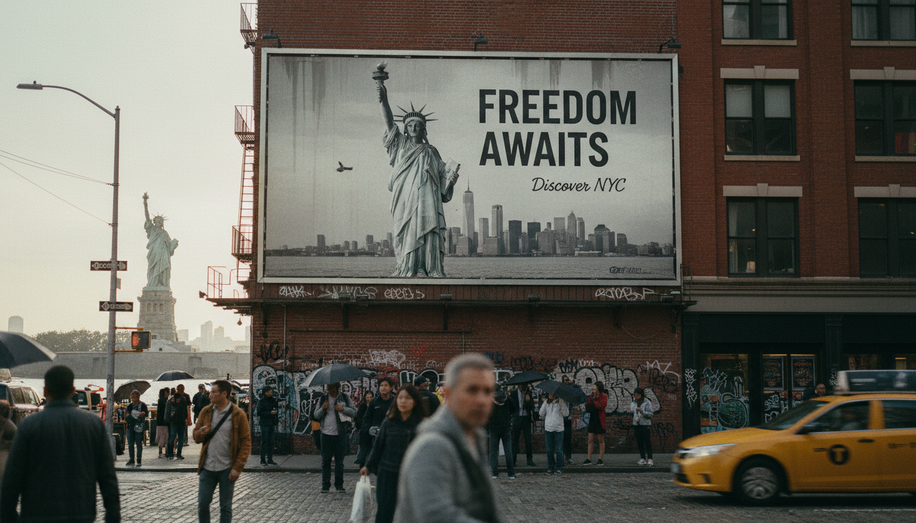

In the bustling heart of Times Square, a massive 3D billboard once materialized the Starship Enterprise from Star Trek, hovering dramatically amid the neon chaos, drawing crowds of Trekkies and tourists alike to snap photos and share the spectacle online. This wasn’t mere spectacle; it was a masterclass in contextual out-of-home (OOH) advertising, where the creative didn’t just interrupt the environment—it became one with it, leveraging the iconic landmark’s sci-fi allure to amplify a brand’s message. Contextual OOH thrives on this principle: aligning ads hyper-precisely with their immediate surroundings—be it local culture, landmarks, weather, or fleeting events—to forge deeper emotional resonance and drive measurable impact.
The power of such alignment lies in its ability to transform passive glances into active engagements. Traditional OOH formats like billboards, street furniture, and transit ads have long dominated high-traffic zones, but digital out-of-home (DOOH) elevates the game with real-time adaptability. Consider Coca-Cola’s 2016 bus shelter campaign in Singapore, where interactive screens let passersby pose with Coke filters to generate shareable GIFs, redeemable via QR codes for free drinks. Positioned at transit hubs teeming with commuters, the setup tapped into the daily ritual of waiting, turning a mundane moment into a playful, rewarding interaction that spiked social media buzz and voucher redemptions. Clear Channel, the partner, reported heightened engagement, proving how environmental context—here, the shelter’s captive audience—multiplies creative efficacy.
Weather emerges as another potent contextual trigger, syncing ads to the whims of the atmosphere for uncanny relevance. Guinness in Australia dubbed itself the “Brewery of Meteorology,” deploying DOOH screens that activated only when temperatures plunged, targeting spots near pubs where chilled patrons sought warmth. Similarly, Rain-X timed its windshield treatment ads to coincide with downpours, appearing seamlessly as rain lashed windshields, while Aperol Spritz summoned spritz visuals precisely when thermometers hit 66°F (19°C) near social hotspots. These campaigns didn’t shout; they whispered in sync with the elements, boosting perceptions—Guinness solidified its winter staple status, Aperol linked irrevocably to sun-soaked bliss. Data underscores the wins: Mad Mex’s programmatic DOOH, tailored monthly to local sales drivers like taste or value, reached 2.9 million and lifted store sales by 9%.
Landmarks and local culture offer equally fertile ground for resonance. McDonald’s “walk-thru” billboards in 2021 London neighborhoods mimicked food trucks amid social distancing mandates, letting pedestrians order McFlurries directly through the structure for instant gratification. Echoing the era’s isolation, Bumble’s yellow digital billboards in 2020 humorously nodded to pandemic weirdness—”Let’s make 2020 less weird together”—fostering relatability in a time of disconnection. New Balance took national pride as its canvas, shifting DOOH creatives mid-race to celebrate Dutch sprinter Femke Bol’s Budapest victory, blanketing screens with triumphant imagery that made the brand feel like a co-conspirator in the glory. Proximity targeting sharpened these efforts; Jack in the Box zeroed in on a 2-mile radius around its outlets, deploying mouthwatering visuals of Cheddar Loaded Cheeseburgers near rival eateries to lure 1.3 million footfalls.
Even static OOH can punch above its weight when contextually attuned. JUST Egg’s DOOH near grocery stores and shopping centers riffed on egg price spikes, with timely messaging that felt prescient rather than pushy, easily updated digitally post-crisis. Roku leaned into holiday tensions with billboards quipping about escaping in-laws via streaming, placed in high-traffic spots and swiftly refreshed post-season to stay fresh. These examples illustrate a broader evolution: from broad blasts to micro-localized precision, where OOH creators scout environments like journalists on a beat, weaving in cultural cues or events for authenticity.
The results speak volumes. Contextual alignment doesn’t just capture eyes; it cultivates affinity. NeoPangea’s hyper-targeted placements for “The Misery Index” TV show used jarring, locale-specific DOOH at bus stops and kiosks to preview the chaos, hooking fleeting attention spans with previews tuned to urban commuters’ daily grind. Star Trek’s Times Square docking created organic social amplification, as bystanders became unwitting promoters. In an attention economy scarred by digital fatigue, this approach restores OOH’s tactile magic—ads that feel personal, prescient, even conspiratorial.
Yet execution demands rigor. Success hinges on data-driven insights: programmatic platforms for weather or sales triggers, proximity geofencing, and dynamic creative optimization. Brands must audit sites for cultural fit—avoiding tone-deaf clashes—while blending interactivity, like QR codes or AR, to bridge OOH to mobile. Agencies like JCDecaux champion “contextual targeting” sans heavy tech, as in Coca-Cola’s personalized urban plays.
As urban landscapes densify and DOOH networks expand, the art of contextual OOH points to a future where ads anticipate needs before they’re voiced. In Singapore’s rainy transit waits, Australia’s winter chills, or London’s distanced streets, these campaigns prove environment isn’t backdrop—it’s the co-star. By designing for the now, brands don’t just advertise; they inhabit the moment, etching messages into memory with resonant precision.