
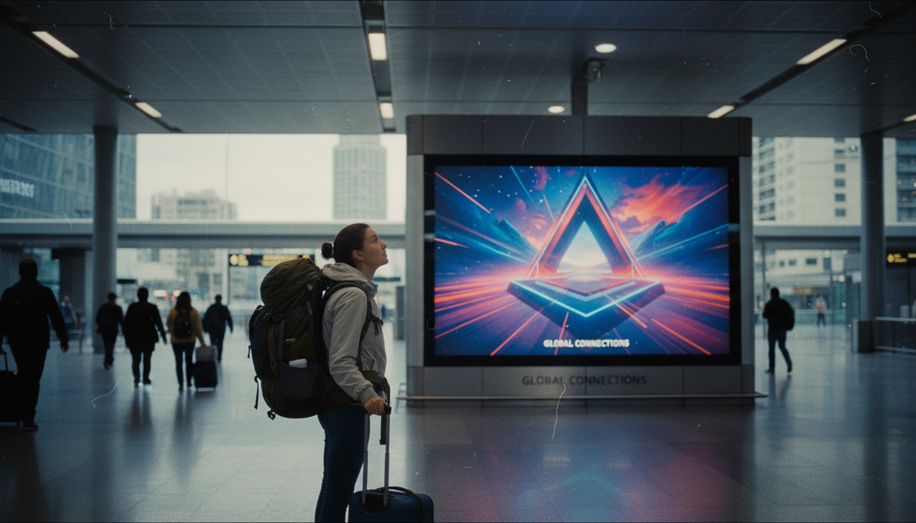

In the bustling terminals of tomorrow’s airports, static billboards are giving way to immersive experiences that transform fleeting moments of wait time into unforgettable brand encounters. As global air travel surges—with passenger traffic projected to grow 4.9% year-over-year in 2026, led by Asia-Pacific’s 7.3% expansion—airports are evolving from mere transit hubs into vibrant commercial ecosystems ripe for innovative out-of-home (OOH) advertising. The airport advertising market, valued at USD 4.78 billion in 2026, is on track to reach USD 8.36 billion by 2035 at a 6.1% CAGR, fueled by rising tourism, longer dwell times, and technological leaps like 5G and AI.
This shift marks a profound departure from traditional displays. Once limited to passive posters in lounges or baggage claim areas, airport OOH is now leveraging digital out-of-home (DOOH) networks, interactive kiosks, and augmented reality (AR) to create personalized passenger journeys. Clear Channel Airports exemplified this in May 2024 at Los Angeles International Airport, launching a campaign that fused AR with large digital displays, allowing travelers to interact with virtual elements overlaid on physical screens for immersive storytelling. Such innovations turn ads into dynamic gateways, capturing high-intent audiences—business travelers and frequent flyers—who are twice as likely to hold AI decision-making power in their companies.
At the heart of this evolution is interactivity, which boosts engagement far beyond static formats. Interactive digital displays, equipped with touch-sensitive surfaces, QR codes, motion sensors, and even social media integration, invite passengers to play games, scan for exclusive offers, or share content in real time. A Nielsen study commissioned by Clear Channel Outdoor revealed that 82% of frequent flyers read airport ads, 61% recall them, and 45% scan QR codes—a 6% jump from 2022—while 36% visit brand social media sites post-exposure. These metrics underscore how immersive OOH drives action across the marketing funnel, from awareness to conversion, in environments where passengers are captive and motivated.
Data-driven precision amplifies this impact. Airports now harness travel intent signals—drawing from origin, destination, airline, and booking data—to target in-market travelers before they even arrive. Complementing online channels like display ads, connected TV (CTV), and social media, DOOH placements in terminals deliver real-time updates via high-definition screens, promoting concessions, parking, or lounges with geo-targeted relevance. Global Eagle’s early 2024 partnerships with U.S. airports introduced AI-powered analytics for behavioral insights, enabling hyper-personalized messaging based on demographics and preferences. In high-traffic hubs, 5G enables seamless live content streaming, turning ads into adaptive experiences that respond to crowd flow or flight delays.
Looking ahead, 2026 heralds even bolder frontiers. Interactive displays and 3D billboards are surging, with digital adoption surpassing 36% in major airports, replacing legacy statics with AR overlays and holographic projections. Smart signage, as previewed at FTE Global 2025 sessions, integrates AI for content optimization, influencing passenger behavior while balancing efficiency and revenue—think dynamic wayfinding that doubles as branded entertainment at Dallas Fort Worth International. Sustainability enters the fray too, with sensor-equipped “smart billboards” using GPS and AI for hyperlocal targeting, minimizing energy waste while maximizing reach.
These strategies resonate because they align with the modern traveler’s mindset. Amid pent-up demand and airport modernizations, passengers crave experiences that enhance their journey, not interrupt it—from inspirational videos spotlighting luxury amenities to gamified retail promotions. Frequent flyers, in particular, seek resonant content in their hometown airports, favoring ads that evoke adventure or convenience. Brands ignoring this miss a premium, uncluttered space where dwell times extend engagement, yielding superior ROI compared to fragmented digital alternatives.
Yet success demands collaboration. Airports must align with tenants on goals—retail traffic, airline co-marketing, or brand equity—then optimize via real-time revenue data. For advertisers, the playbook is clear: layer DOOH with intent-based digital campaigns, measure QR scans and footfall lifts, and iterate swiftly. As one industry leader notes, airport media inspires action at moments of peak intent, positioning brands to thrive in this high-growth arena.
The future of airport advertising is no longer about visibility alone; it’s about crafting journeys that linger in memory long after the gate call. With technology democratizing immersion and travel volumes soaring, OOH innovators who embrace this paradigm will not just advertise—they’ll redefine how brands connect with the world’s most mobile audience.