
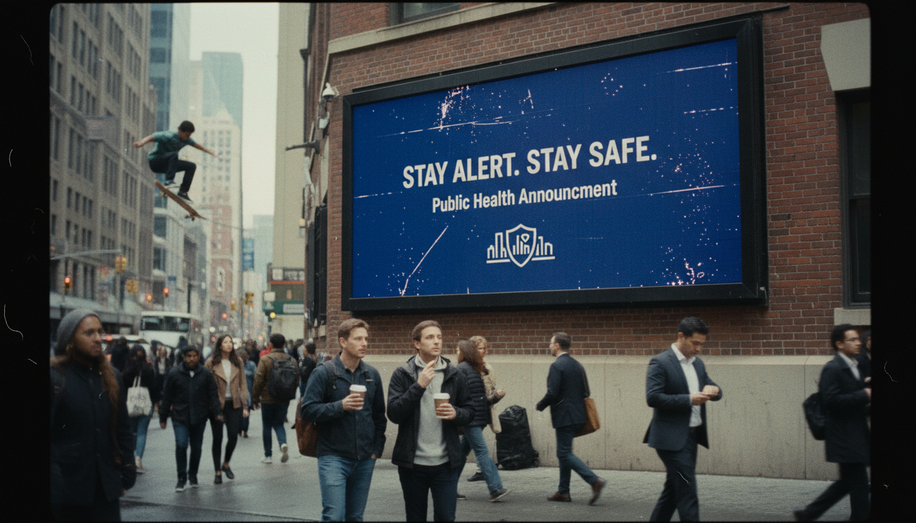

In an era of escalating natural disasters and public health threats, out-of-home (OOH) advertising displays have emerged as a vital conduit for emergency alerts and community messaging, transforming commercial billboards into tools of public service. High-visibility digital billboards, positioned along highways and in urban corridors, deliver real-time warnings on weather hazards, evacuation routes, and shelter locations, reaching millions of drivers and pedestrians who might miss mobile notifications. This civic role underscores OOH’s unique advantage: its inescapable presence in everyday commutes, ensuring messages penetrate even when people are on the move and distracted.
Florida’s partnership between the Florida Outdoor Advertising Association (FOAA) and the State Division of Emergency Management exemplifies this potential. More than 50 digital billboards statewide, stretching from Pensacola to Pompano Beach, stand ready to broadcast urgent information within four hours of an emergency declaration. State officials can request targeted postings—such as hurricane evacuation routes or road detours—via a streamlined process involving geographic information systems to select optimal locations. Once approved, messages appear in standardized templates, with provisions for rapid modifications or cancellations as conditions evolve. Amy Bogner, FOAA’s Communications and Public Service Director, emphasized the initiative’s reach: “We help our 18 million residents and visitors stay safe during emergencies.” This public-private collaboration not only aids resource allocation for emergency managers but also highlights OOH’s capacity to serve diverse populations, including non-residents vulnerable during events like hurricanes, wildfires, or infectious disease outbreaks.
The effectiveness of such systems aligns with broader research on public alert mechanisms. Studies show that timely warnings, including those from visual displays, can save lives and minimize losses by prompting protective actions. For instance, Wireless Emergency Alerts (WEAs) have credited with preventing injuries during a 2012 tornado in Elmira, New York, where residents sought shelter after receiving notifications, and a similar alert evacuated 34 people from a Connecticut sports complex. While mobile alerts dominate modern dissemination—reaching over 95 percent of respondents in recent surveys—OOH complements them by targeting motorists and bypassing reliance on personal devices. Messages emphasizing protective actions, hazard impacts, and resilience, often in bold all-caps formats, prove most shareable and actionable, amplifying their reach through social retransmission.
OOH’s integration with federal frameworks like the Integrated Public Alert and Warning System (IPAWS) further elevates its role. Directed by FEMA, IPAWS enables geo-targeted blasts across WEAs, the Emergency Alert System (EAS) for broadcast media, and NOAA Weather Radio, delivering over 600 alerts monthly for disasters, AMBER Alerts, and local responses. Companies like Daktronics have automated this for digital billboards via Venus Control Suite, allowing operators to opt into IPAWS feeds for seamless emergency overrides without manual intervention. In Florida’s model, FOAA coordinates press releases to publicize activations, recognizing participating companies and fostering industry-wide buy-in. This not only builds public trust but also positions OOH as a resilient channel when power outages or network congestion hinder digital alternatives.
Beyond disasters, OOH excels in public health campaigns and community announcements, where sustained visibility drives behavior change. During the COVID-19 pandemic, billboards conveyed vaccination sites and masking guidelines, reaching demographics less engaged with social media. Research indicates that clear, location-specific messaging—paired with maps or icons—elicits stronger responses than alerts alone, as seen in studies where visual cues combined with directives prompted evacuation compliance. For routine civic needs, such as road closures or missing persons alerts, OOH provides hyper-local precision; a billboard near an interstate can direct traffic in real time, reducing congestion and enhancing safety.
Critics might argue that OOH’s commercial roots dilute its authority, yet evidence counters this: traditional weather warnings often rate higher in perceived credibility than sensational variants. Public-private partnerships mitigate costs, with donated ad space ensuring scalability. Florida’s policy encourages all digital inventory owners to join, creating a statewide network that could model national expansion. As climate risks intensify—hurricanes battering coasts, wildfires scorching inland—OOH’s static yet dynamic presence offers a low-tech reliability amid failing cell signals or siren limitations.
Challenges remain, including message fatigue and ensuring multilingual accessibility, as protective actions correlate with language proficiency and prior exposure. Yet, OOH’s evolution toward automation and integration promises greater impact. By 2026, FEMA’s IPAWS strategic plan aims to reinforce these ecosystems through industry collaborations, potentially embedding OOH as a standard layer. In crises, when seconds count, these displays don’t just advertise—they alert, unite, and protect, proving that OOH’s highest yield is measured not in impressions, but in lives preserved.