
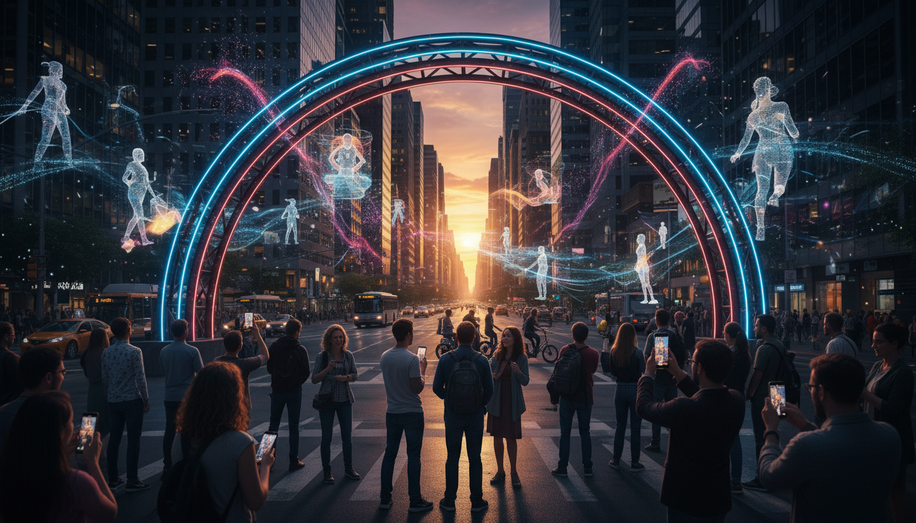

In the bustling heart of urban landscapes, out-of-home (OOH) advertising is undergoing a profound evolution, transforming static billboards into dynamic portals that fuse physical environments with digital wonder. No longer mere visual interruptions, these campaigns now craft immersive experiences where passersby become active participants, blurring the lines between reality and augmented realms to forge lasting brand connections.
This rise of experiential OOH reflects a seismic shift driven by technological leaps like augmented reality (AR), 3D displays, and interactive screens. Digital out-of-home (DOOH) formats, projected to capture over 40% of total OOH ad spend in 2026, enable real-time content adaptation based on weather, time of day, or audience demographics, turning public spaces into responsive canvases. Strategic placements in high-traffic zones—city centers, transit hubs, retail areas, and even smart city infrastructure like bus shelters and bike racks—maximize reach amid rapid urbanization and heightened consumer mobility. Here, physical installations meet digital calls-to-action, inviting interaction that extends far beyond the street.
Consider the power of AR overlays on bus shelter ads or building facades, where smartphone users scan a QR code to unlock virtual layers that animate the scene. A global beverage brand’s 2025 AR-enabled billboard, for instance, invited viewers into interactive storytelling, yielding a 30% lift in brand recall as participants shared their encounters on social media. These moments encourage dwell times to surge by 20 to 40%, as motion-sensing screens and touch-enabled kiosks prompt gamified challenges, product demos, or selfie contests. The result? Shareable content that amplifies reach organically, with 56% of consumers discussing memorable OOH ads and 26% visiting brand websites directly in response.
Guerrilla and experiential tactics amplify this fusion, deploying pop-up installations, street art projections, and flash mobs in unconventional spots to surprise and engage. Digital projections on urban walls or AR-powered guerrilla activations create viral phenomena, boosting brand recall by up to 30% by cutting through digital fatigue. At large-scale venues like sports arenas, LED screens integrate live stats, replays, and sponsor gamification, leveraging high dwell times during events to embed brands emotionally. Fans, immersed in the energy of the crowd, interact via social media tie-ins, turning passive spectators into brand advocates.
This physical-digital synergy thrives on data intelligence. Programmatic DOOH automates buying for hyper-local targeting, using IoT-connected screens and AI to tailor messages to traffic flows, local events, or neighborhoods. Mobile billboards roam event zones, delivering precisely timed promotions, while real-time analytics measure foot traffic lifts from location-based offers, as seen in retailers’ campaigns that drove significant store visits. Emerging tech like AI-driven creative optimization and 3D holograms in city squares promise even deeper immersion, where passersby converse with lifelike projections or unlock metaverse extensions via their phones.
Yet, success hinges on more than tech; it demands emotional resonance and inclusivity. OOH’s public presence allows brands to convey purpose—sustainability, affordability—without preachiness, fostering +6% higher action rates and 1.3 times greater purchase intent through culturally attuned messaging. Accessibility features, such as multilingual text, tactile elements, and audio cues, ensure broad comprehension, earning accolades for city-wide campaigns that prioritize all demographics. Sustainability further elevates the medium, with energy-efficient LEDs and recyclable materials aligning with 2026 priorities.
Metrics underscore the impact: OOH builds brand fame with +88% lifts in premium perceptions and +41% in esteem, outperforming fragmented digital channels plagued by declining trust. In a media landscape craving authenticity, experiential OOH stands out by lodging brands in memory through participatory magic—whether a holographic dance in a plaza or an AR treasure hunt at a transit stop.
As 2026 unfolds, this merger positions OOH as a global operating system for marketing, where physical spaces pulse with digital vitality. Brands embracing interactivity not only captivate but convert, proving that the most compelling ads are those lived, shared, and remembered in the real world. The street has become the stage, and every passerby, a star in the show.