

In an era dominated by digital screens and fleeting social media scrolls, out-of-home (OOH) advertising—those towering billboards, bus shelters, and transit wraps—continues to prove its worth by sparking online engagement and conversions in unexpected ways. Far from being a relic of the pre-internet age, traditional OOH formats serve as a powerful catalyst, driving consumers to search engines, websites, and apps with remarkable efficiency. A Nielsen study underscores this synergy, revealing that OOH outperforms television, radio, and print in generating online activity per ad dollar spent, with nearly 46% of U.S. adults using search engines after encountering a billboard or shelter ad.
The mechanism is straightforward yet profound: OOH captures attention in the physical world, where people are unshielded from ads by ad blockers or algorithmic feeds. Unlike online banners that can be ignored or skipped, a well-placed billboard lingers in the subconscious, building brand recognition through repeated exposure. Researchers from the University of Punjab found that positive perceptions of outdoor ads, measured by a beta coefficient of 0.128, directly boost customer interest and memory, laying the groundwork for later digital interactions. This “subconscious reinforcement” effect means OOH doesn’t demand immediate clicks; instead, it plants seeds that bloom online. For instance, OOH accounts for 26% of gross search activations across offline media but only 7% of the spend, indexing at four times the expected rate.
Real-world data amplifies these insights. The Out of Home Advertising Association of America (OAAA) reports that for every dollar invested in billboards, brands see an average $6 return, with OOH boosting mobile ad campaign ROI by up to 316% when combined strategically. In a 2025 Austin campaign for Cash App, billboards, murals, and wild postings generated over 15.5 million impressions in four weeks, funneling traffic into digital channels even at conservative conversion rates. Such results highlight OOH’s cost-effectiveness—offering the lowest cost per thousand impressions (CPM) among major media—while priming audiences for online action.
Digital out-of-home (DOOH), an evolution of traditional formats with dynamic screens, takes this further by blending physical presence with digital relevance. A 2024 Harris Poll survey commissioned by OAAA found 73% of consumers view DOOH favorably, ranking it highest for driving action among competitive media, especially among younger urbanites and transit users. Crucially, 74% of mobile users acted on their phones after DOOH exposure: 44% searched online about the advertiser, 38% visited websites, and 30% hit social platforms. Contextual tweaks—like weather-tied offers or time-sensitive deals—supercharge this, with 86% deeming grocery promotions useful and 81% praising weather-responsive ads. “DOOH’s ability to drive consumers to take action is apparent,” noted Harris Poll CEO John Gerzema, emphasizing its shareability on social media.
This offline-to-online bridge thrives on integration. Outdoor builds credibility through tangible presence—”a billboard is proof that the brand truly exists,” as one analysis puts it—while digital handles measurement and targeting. Women may respond more emotionally to online ads, but OOH’s universal appeal cuts across genders and ages, making it ideal for broad awareness that funnels into precise digital conversions. In 2022, digital billboards alone delivered 38% ROI, excluding branding uplift, signaling sustained momentum into 2025 and beyond.
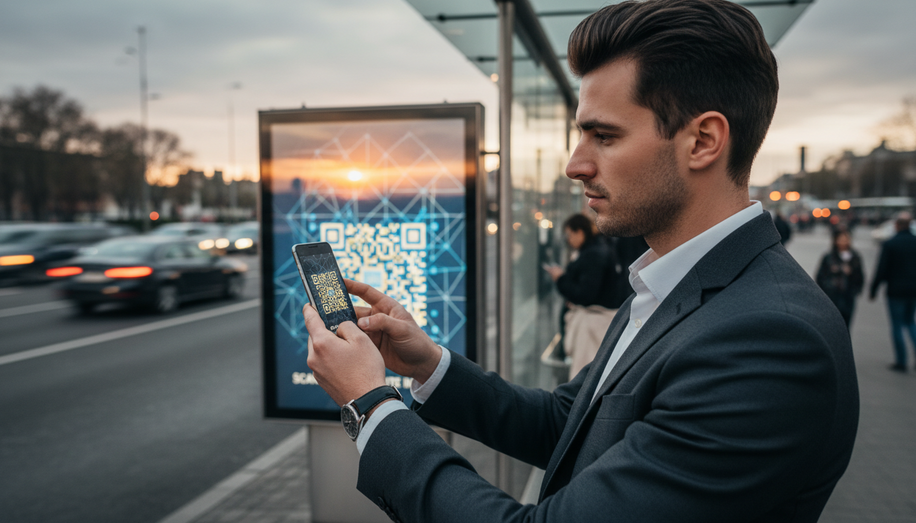
Critics might argue OOH lacks digital’s instant metrics, but advancements in attribution tools are closing the gap. Geofencing, QR codes, and brand lift studies now quantify how street-level exposure spikes app downloads or e-commerce visits. DOOH’s flexibility—updating content in real-time via cloud platforms—mirrors online agility, reaching tech-savvy youth in high-traffic zones. Brands like those in transit hubs see favorability soar, turning passive viewers into active engagers.
Ultimately, OOH’s strength lies in its unignorable reality amid digital noise. Ad fatigue plagues online spaces, where overload dulls impact, but a street ad demands notice during commutes or errands. When paired thoughtfully—OOH for reach and recall, digital for response—the duo creates cohesive campaigns. As OAAA President Anna Bager observed, DOOH spend hit one-third of total OOH in 2023, projected to grow 10% more, affirming its role in modern mixes. For marketers chasing conversions, dismissing traditional OOH means overlooking a proven driver of digital success: it doesn’t just advertise; it activates. Ultimately, capitalizing on OOH’s offline-to-online power demands sophisticated tools for measurement and agile management. Blindspot, with its advanced ROI measurement and real-time performance tracking capabilities, enables marketers to precisely attribute street-level exposure to digital actions and optimize programmatic DOOH campaigns for maximum online engagement. This ensures brands effectively transform physical impressions into measurable digital conversions, solidifying OOH’s role as a potent catalyst for online success. https://seeblindspot.com/