
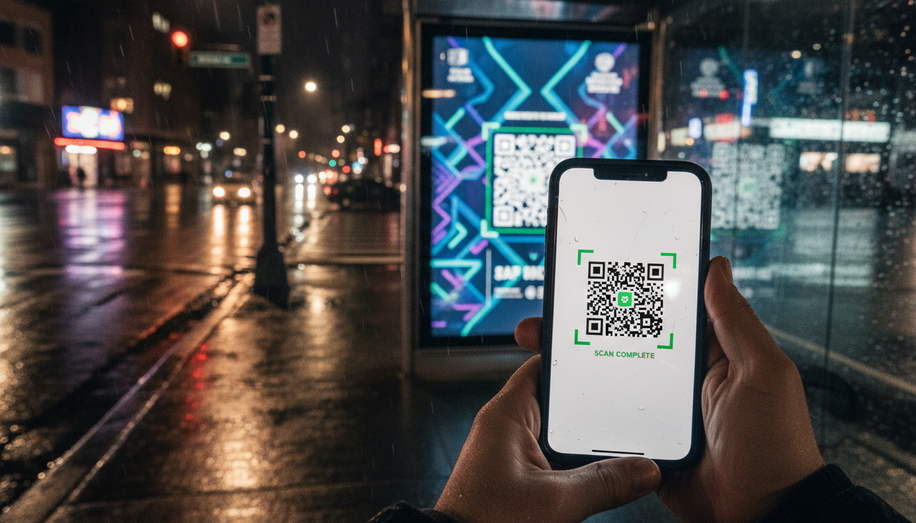

In the bustling streets of urban centers, where eyes dart between screens and surroundings, out-of-home (OOH) advertising is evolving from static spectacle to dynamic gateway. By weaving in mobile technology, brands craft seamless consumer journeys that bridge the physical world with digital immediacy, turning fleeting glances into lasting engagements. This integration amplifies reach, measures impact, and fosters interactions that feel personal rather than intrusive, as evidenced by campaigns that have driven millions of scans and app downloads.
Consider the hand-painted murals that double as mobile portals. Overall Murals partnered with Google on the “Find That Thing” campaign, painting six wallscapes in trendy neighborhoods targeted at younger, artistic crowds. Passersby used Google Lens to scan objects within the murals, unlocking real-time visual searches that engaged four million users. This approach transformed art into interactivity, expanding a traditional OOH canvas into a multi-pronged digital experience. Similarly, Doritos’ #SolidBlack activation featured a mural with an embedded Snapcode. Scanning it via Snapchat brought the artwork to life through augmented reality (AR) elements, raising awareness for community initiatives while inviting direct consumer participation. These examples illustrate how embedding scannable codes directly into OOH designs propels audiences from observation to action, sealing the deal for brands seeking active fans.
QR codes stand out as a cornerstone of this fusion, offering simplicity and quantifiable results. GoPuff’s mural campaign directed over 575,000 scans straight to their app store listing, targeting on-the-go professionals with effortless conversion. Coca-Cola’s “Share a Coke” initiative took this further, prompting billboard scans for personalized bottle reveals, which spiked mobile interactions and conversions by gamifying the encounter. Such tactics shift passive viewing to participatory moments, where consumers redeem offers, access store locators, or enter contests, creating multi-channel paths from street to smartphone.
Geofencing elevates this synergy, defining virtual boundaries around OOH assets to trigger tailored mobile ads. A retail brand might erect a billboard in a high-traffic zone, then push notifications to nearby devices promoting nearby sales or exclusive content. Effortless Outdoor Media highlights how this location-based targeting reinforces the OOH message with precision, aligning with consumer movements near shopping centers or stadiums. Mobile billboards take it mobile, pairing GPS integration with shadowfencing—real-time ad serving adjusted to the vehicle’s position—for 56% higher click-through rates when combined with digital campaigns. Carvertise exemplifies this by wrapping everyday cars as moving billboards, navigating high-traffic areas, events, and neighborhoods where static ads falter, ensuring eye-level visibility in natural settings.
Dynamic triggers add contextual relevance, making experiences feel serendipitous. Rain-X deployed digital OOH (DOOH) ads that activated only during rain, syncing with weather data to promote wiper fluid precisely when needed. Aperol Spritz followed suit, triggering ads above 66°F near social hubs, associating the drink with ideal summer vibes and maximizing foot-traffic engagement. Movia Media’s mobile billboards incorporate geo-targeting to swap content based on location, time, or crowd density—promoting local events or sales as the vehicle moves—while QR codes invite instant scans for deeper dives. Hospitality trailers like AdBicy’s serve as rolling concierge desks, blending maps, offers, and codes with on-board staff for hybrid physical-digital service.
Social media integration extends these journeys, urging shares of billboard selfies or branded challenges for prizes, amplifying organic reach. Nonprofits have leveraged this too, pairing OOH with digital responses to drive donations via scans, proving the model’s versatility beyond commerce. The result? Enhanced consumer experiences that feel cohesive: a fashion retailer geofences a billboard to notify passersby of flash sales, or a brand uses AR murals to immerse users in virtual try-ons.
Yet success demands strategy. Align OOH placements with audience habits—business districts for professionals, festivals for crowds—and pair with incentives like discounts to spur scans. Programmatic DOOH enables real-time optimization, while analytics track scans, app installs, and foot traffic, closing the loop on ROI. Challenges persist: ensuring codes are large and well-lit for quick scans, avoiding oversaturation, and navigating privacy concerns with geofencing.
As OOH spending surges past $8 billion annually, mobile integration positions it as the forefront of immersive advertising. Brands like Google, Doritos, and Aperol demonstrate that when physical presence meets digital responsiveness, consumers don’t just see ads—they join journeys that resonate, convert, and endure. This seamless blend redefines OOH not as interruption, but as invitation.