
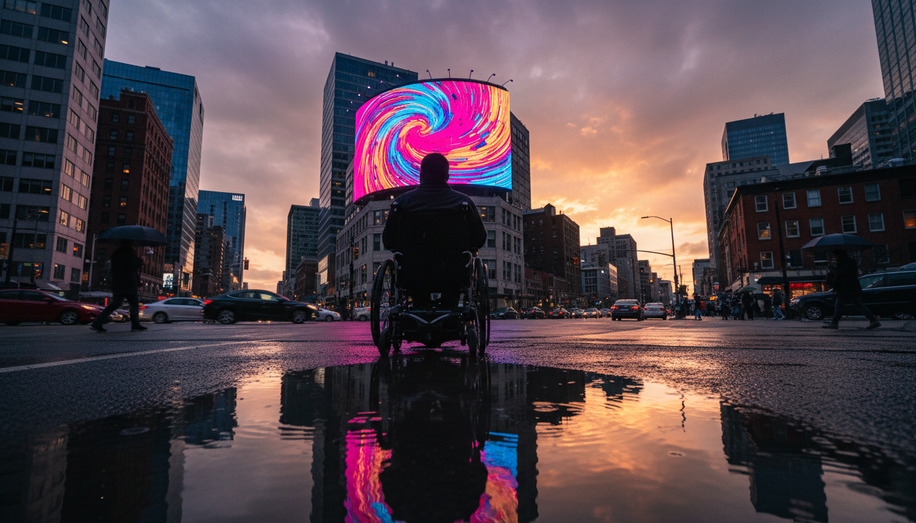

In the bustling world of out-of-home (OOH) advertising, where billboards command attention from highways and digital screens pulse in urban plazas, accessibility is no longer a footnote—it’s a fundamental imperative for reaching every audience segment effectively. As public spaces grow more diverse, OOH campaigns that overlook inclusivity risk alienating vast swaths of potential consumers, from those with visual or hearing impairments to elderly viewers navigating crowded sidewalks. Ensuring accessibility means designing ads that comply with regulations like the Americans with Disabilities Act (ADA) while amplifying brand impact across demographics.
Regulations underscore this urgency. Local zoning laws and safety standards often mandate that OOH signage avoids hazards to pedestrians, including minimum height requirements and unobstructed visibility, with explicit considerations for people with disabilities. The ADA’s standards for accessible design, applicable to public accommodations, require displays and signage to be viewable by seated individuals—no higher than 44 inches above the floor for horizontal exhibits—and accessible parking spaces with 60-inch-wide aisles. These rules extend to temporary events and public installations, where pedestrian routes must be at least 36 inches wide, with passing spaces every 200 feet for wheelchair users. Non-compliance invites legal risks, but more critically, it excludes audiences: roughly 15 percent of the global population lives with a disability, a market segment too substantial for advertisers to ignore.
For digital OOH formats, which dominate transit hubs and retail districts, technological solutions bridge these gaps elegantly. Screen readers integrated into outdoor signage convert text to speech, narrating content, describing images, and guiding navigation for visually impaired users via text-to-speech technology. Braille interfaces on touch screens or adjacent buttons allow tactile interaction, enabling independent menu navigation or voice activation. Larger fonts—ideally with high-contrast ratios of at least 4.5:1—and adjustable display options cater to those with low vision or the elderly, ensuring legibility from afar, as digital billboards demand readability from 500 feet with text at least 15 inches tall. Hearing-impaired audiences benefit from synchronized audio-visual prompts: subtitles flash alongside announcements, while animated icons or flashing visuals signal urgent messages, like emergency alerts.
Traditional static OOH, such as billboards and posters, demands similar vigilance. Simplicity reigns: bold, high-contrast visuals and minimal text prevent cognitive overload, aligning with guidelines for printed materials in events, where clear fonts and accessibility symbols—like the wheelchair icon or hearing loss emblem—signal inclusivity. Placement matters profoundly; ads must be positioned for seated or wheelchair-height viewing, avoiding upper placements that exclude shorter viewers or those using mobility aids. Environmentally conscious materials, like recyclable substrates or solar-powered digital networks, further enhance accessibility by sustaining long-term public installations without regulatory pushback.
Beyond compliance, accessibility drives tangible business gains. Inclusive campaigns boost engagement by tapping underserved audiences, fostering loyalty in transit riders, shoppers, and commuters who feel seen. Brands earn reputational dividends: prioritizing universal design signals social responsibility, building trust in an era of heightened scrutiny. Consider Eflyn’s outdoor digital solutions, which embed these features seamlessly, from braille-enabled interfaces to ADA-compliant interactions, transforming public screens into equitable communication hubs. Publicity materials incorporating accessibility symbols further amplify reach, guiding disabled attendees to tailored services.
Yet challenges persist. Jurisdictional variances complicate execution—zoning in residential areas caps sign sizes, while scenic byways ban new installations outright. “Line of sight” standards prevent ad clustering, but accessibility retrofits on legacy structures demand investment. Advertisers must collaborate with media owners versed in local ordinances, selecting compliant inventory near schools or roads only where permitted.
Ultimately, forward-thinking OOH strategies embed accessibility from conception. User-friendly designs—large buttons, intuitive layouts, and multi-sensory cues—create intuitive experiences in airports, parks, or hospitals. High-contrast palettes, validated by tools like WebAIM’s checker, ensure vibrancy without strain. Alt-text for images in digital content, though less visible in OOH, informs hybrid campaigns blending online and offline. By auditing campaigns against ADA benchmarks and international equivalents, brands not only mitigate risks but cultivate broader resonance.
In an industry racing toward digital innovation, accessibility elevates OOH from mere visibility to meaningful connection. Campaigns that welcome all—visually, audibly, tactilely—don’t just meet standards; they redefine inclusive advertising, ensuring no viewer is left on the sidelines. As public expectations evolve, those who lead with empathy will dominate the landscape.