
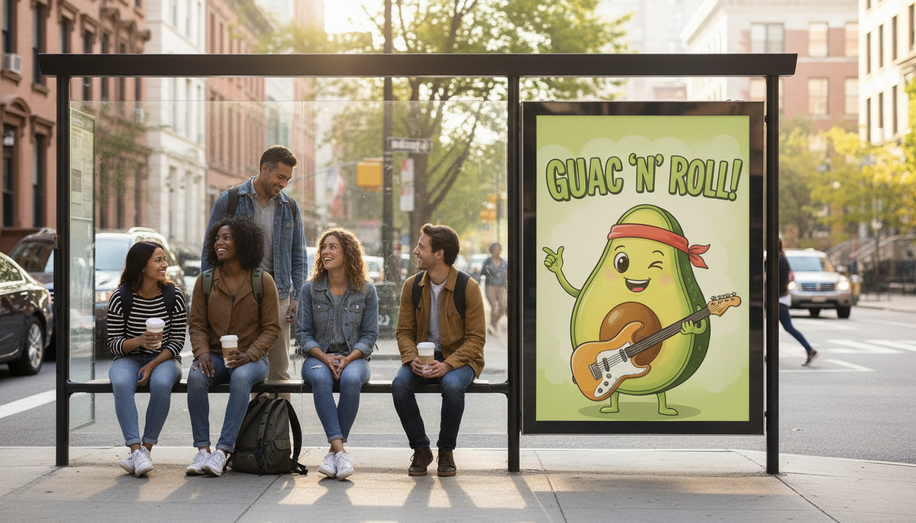

In a medium where attention spans measure in seconds, humor has emerged as one of the most powerful tools available to out-of-home advertisers. While consumers scroll past thousands of messages daily, a well-placed joke on a billboard or digital display can break through the noise, create genuine emotional connection, and drive measurable business results. As the advertising landscape evolves, understanding how to deploy humor effectively in OOH campaigns has become essential for brands seeking to maximize impact in public spaces.
The fundamental strength of humor in outdoor advertising lies in its ability to disrupt expectations. Unlike traditional media where viewers actively choose to consume content, OOH advertising exists in the margins of daily life—on commutes, during pedestrian walks, at transit stops. In these contexts, people don’t anticipate entertainment. When humor appears unexpectedly, it creates a moment of delight that stands apart from the visual clutter surrounding it. This surprise factor translates directly into attention and recall. Research shows that a smile or chuckle represents an instant win in capturing engagement, with humorous messaging more likely to be photographed and shared on social media, extending campaign reach far beyond the physical billboard location.
The business case for humor in OOH is increasingly data-driven. Across multiple generations, funny and comic OOH ads prove to be the most effective purchase drivers, with 55 to 59 percent of consumers across Gen Z, Gen Y, and Boomers reporting that humorous ads influenced their purchasing decisions. Beyond immediate purchase intent, humor creates lasting brand equity. Research from Kantar reveals that ads that genuinely make consumers laugh out loud achieve above-average distinctiveness, emotional connection, and engagement—and crucially, they demonstrate stronger persuasive power and brand building than ads that merely intended to be funny. This distinction matters. The difference between attempting humor and landing humor successfully determines whether an advertisement becomes forgettable or iconic.
Digital out-of-home (DOOH) platforms have amplified humor’s effectiveness, with research indicating that 80 percent of consumers are likely to take action after seeing DOOH content they find entertaining. Humorous OOH ads generate more social shares than their serious counterparts, creating organic amplification that paid media alone cannot achieve. This shareability transforms outdoor ads into social currency, particularly when combined with strong design elements. High-contrast text, simple layouts, and bold visuals ensure that humorous messages remain legible and impactful, even to viewers passing at speed.
Successful humor in OOH advertising typically takes several forms. Puns and wordplay offer quick, memorable impact without requiring extended reading time. Self-deprecation allows brands to feel humble and relatable, particularly effective for traditionally serious industries like finance and legal services. Situational jokes referencing common experiences—traffic delays, weather, daily routines—create immediate resonance because audiences recognize themselves in the scenario. Exaggeration and visual gags can heighten humor without relying on complex language, an advantage in a medium with inherent time constraints.
The pitfalls, however, demand equal attention. Humor disconnected from a brand’s product or service confuses rather than engages. A financial services company deploying absurdist humor may alienate customers if the tone contradicts the brand’s broader identity across other channels. Timing matters as well; humor that performs well in stable economic periods may miss the mark during recession or crisis, when consumer sentiment shifts toward seriousness.
Localized copy significantly amplifies engagement, with location-specific humor increasing interaction rates by 20 to 45 percent. Digital billboards enable real-time adaptation, allowing brands to rotate multiple humorous variations and measure performance, ensuring that campaigns stay fresh while generating actionable data about which approaches resonate most effectively.
The examples speak for themselves. Chick-fil-A’s misspelled “Eat Mor Chikin” campaign became iconic, positioning the brand as clever and approachable through sustained humor. Local law firms have embraced personality with cheeky copy like “Better call us before your ex does,” humanizing traditionally formal services.
As humor gradually returns to advertising after years of decline, the message is clear: when executed thoughtfully, humor becomes far more than entertainment—it becomes a strategic asset that captures attention, builds emotional bonds, and drives measurable business outcomes in the fast-paced environment of out-of-home advertising.