
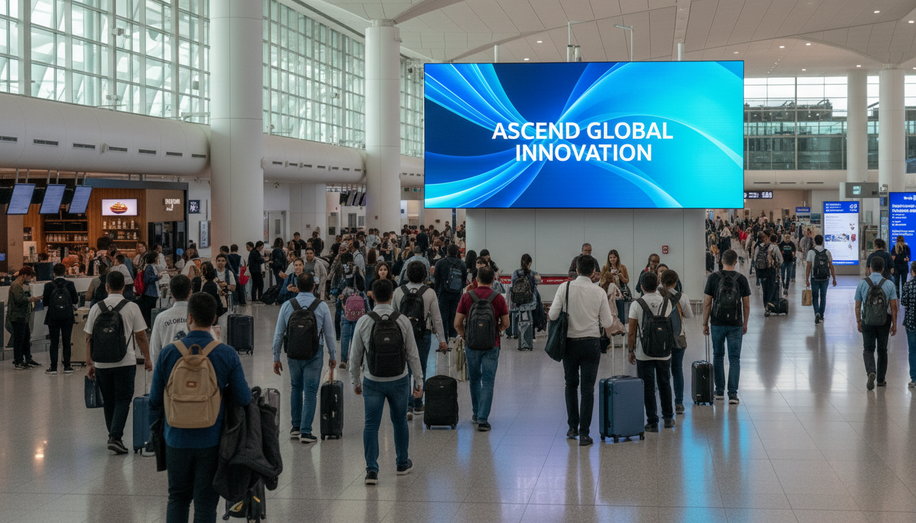

In the bustling chaos of airport terminals, where travelers juggle smartphones, suitcases, and fleeting thoughts of far-off destinations, out-of-home (OOH) advertising has evolved into a precision tool for capturing undivided attention. Unlike roadside billboards glimpsed in seconds, airport environments offer extended dwell times—often two to three hours from check-in to boarding—allowing brands to engage affluent, diverse audiences with repeated exposure that drives recall and action. As air travel surges toward record volumes in 2026, fueled by pent-up demand and airport expansions, innovative strategies are turning these high-traffic hubs into launchpads for memorable campaigns.
Premium placements remain the cornerstone of effective airport advertising, targeting zones like security checkpoints, food courts, and main concourses where foot traffic peaks and minds are receptive. Digital screens and video walls dominate here, rotating multiple ads to cut costs while enabling real-time updates tied to flight schedules or promotions. Motion graphics cut through the architectural clutter, their high-contrast visuals and animations seizing glances during natural pauses. Clear Channel Outdoor’s Nielsen study underscores this potency: over half of travelers take concrete steps post-exposure, from website visits to QR code scans, affirming airports as premium spaces for brand trust and purchase influence.
Sequential storytelling amplifies impact by weaving narratives across touchpoints, building anticipation as passengers progress from parking lots to gates. An airline might tease comfort features at security, then urge loyalty sign-ups at the gate, leveraging the journey’s rhythm for deeper imprinting. Localization sharpens this edge—restaurants flashing “See you in New York” at JFK or “Welcome back to LA” at LAX tap into regional pride, while seasonal plays like ski gear in winter Denver or sunscreen in sunny Miami align with traveler intent. High-frequency flyers, cycling through hubs monthly, compound these messages, transforming one-off sightings into recurring dialogues that boost ROI when synced with broader media like connected TV or social retargeting.
Interactive elements propel engagement beyond passive viewing, turning static displays into dynamic portals. QR codes dangle discounts, augmented reality animates scans, and hashtags spark social shares, extending reach as travelers post from terminals. By 2026, this interactivity surges with sensor-based and gesture-controlled tech, allowing real-time responses that fuse brand stories with airport aesthetics. Programmatic digital OOH (DOOH) scales these tactics, using geo-targeting and point-of-interest data to deploy ads precisely—near retail zones or during peak dwell moments—for tailored relevance.
Diverse formats cater to varied goals, from broad awareness via spectacular video walls to niche precision in private jet terminals. Clear Channel’s network spans over 115 such U.S. facilities, delivering unskippable messaging to wealthy influencers in low-clutter settings. Backlit dioramas, banners, and shuttle ads fill the mix, while digital billboards on access roads and rideshare zones capture pre- and post-flight mindsets, reaching overlooked groups like airline staff. Airports like Houston’s William P. Hobby, with 19 screens generating 19 million monthly impressions amid low ad clutter, exemplify how focused placements yield elite exposure starting at modest budgets.
Yet innovation demands balance: premium airport slots command six-figure commitments, so savvy marketers blend them with cost-effective alternatives like highway DOOH or elevator screens in office lobbies for decision-makers. JCDecaux’s 2026 push signals an inflection point, with infrastructure upgrades enabling immersive video corridors that redefine terminal storytelling. Holographic and 3D anamorphic displays, already creating “stop-and-stare” moments at premium spots, promise social amplification as organic shares multiply views.
Data validates the payoff. Nielsen’s research shows airport ads not only elevate perceptions of quality and trust but also spur multi-channel action, especially among frequent flyers whose post-exposure behaviors—searches, app downloads, purchases—intensify amid travel’s high-intent atmosphere. As U.S. airports evolve into vibrant commercial hubs, brands ignoring this captive audience risk missing a demographic blending business elites, leisure seekers, and global explorers.
For advertisers, success hinges on simplicity: one bold message, pro imagery, and a crisp call-to-action amid high-contrast designs that pop against sleek terminals. Coordinate with programmatic platforms for dynamic scaling, diversify screens from mega-walls to micro-placements, and infuse context—event-tied for conferences, evergreen for executives in transit. In 2026, as DOOH matures, these strategies don’t just advertise; they orchestrate experiences that linger long after the boarding call, proving airports aren’t mere waypoints but powerful arenas for connection and conversion.