
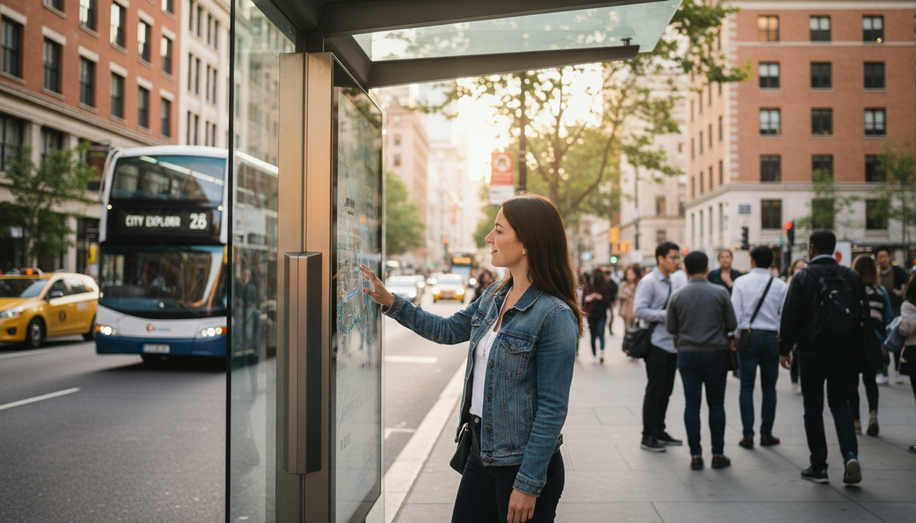

In the bustling arteries of modern cities, where commuters scroll through feeds or gaze out windows during endless rides, transit advertising is undergoing a profound transformation. Interactive technologies are turning passive bus wraps and taxi tops into dynamic engagement hubs, capturing attention in ways static billboards never could. No longer mere visual interruptions, these innovations invite riders to participate, scan codes, and even shape the message in real time, boosting brand recall amid fragmented media diets.
The shift began with digital screens but has accelerated into full interactivity by 2026. OUTFRONT Media’s digital transit offerings exemplify this: liveboards on subway platforms and in-car LiveCard MAX formats deliver eye-level and overhead exposure, complete with augmented reality (AR) overlays and data-triggered content that responds to weather, traffic, or events. Riders can interact via QR codes, triggering personalized videos or games on their phones—transforming a 20-minute delay into a branded adventure. This interactivity exploits “dwell time,” the captive moments when commuters are most receptive, far outpacing traditional static ads with quicker deployment, no printing costs, and user-controlled experiences.
Bus and taxi advertising, long staples of out-of-home (OOH) campaigns, are now mobility-led powerhouses. Wrap2Earn highlights how cab fleets are mapped to high-value zones like business districts and airports, with partial wraps or full designs incorporating NFC chips or touchpoints for instant app downloads. Imagine a fintech brand on a taxi roof: passengers tap their phone to a sensor, unlocking a customized loan calculator that syncs with their location data. Bus sides, once broad-reach canvases, now feature route-specific digital panels segmented by city zones or time of day, serving AR filters for quick commerce apps during lunch rushes. These setups ensure repetition without fatigue, as riders encounter evolving content daily on familiar routes.
Subways and commuter rails amplify this further, especially in dense hubs like New York or San Francisco. Ads inside cars or on station walls integrate 3D billboards and real-time feeds, where commuters point cameras to unlock virtual try-ons for fashion brands or gamified polls for consumer goods. Vector Media and similar networks reimagine taxis as mobile interactives, with wraps linking to geo-fenced challenges—scan a food delivery ad on a cab in Midtown, and your app reveals a discount valid only for that block. Data backs the efficacy: transit environments yield low ad avoidance, with interactive elements lifting engagement by enabling measurement through scans, dwell metrics, and attribution to foot traffic.
Technology underpins it all. AI-driven planning, as previewed in public transport forums, optimizes ad placement using route data, crowd flows, and predictive analytics—ensuring a bus ad hits college zones at peak hours or taxis cluster where app-based services thrive. Contactless interactions via apps and digital signage minimize friction, while the EU AI Act by mid-2026 standardizes ethical deployment, fostering trust. Brands like D2C and real estate leverage this for hyperlocal targeting, where a residential wrap prompts virtual tours viewable en route home.
Yet challenges persist. Creative must adapt to motion: bold visuals, scannable codes, and motion-optimized AR prevail over clutter. Privacy concerns loom with data triggers, demanding transparent partners who verify networks and report outcomes. Still, the payoff is clear—interactive transit cuts through digital noise, embedding brands in real-world routines. FMCG giants use bus interiors for polls that feed live leaderboards; fintechs gamify cab ads for instant sign-ups.
Looking ahead, 2026 cements transit as a core channel. Events like Innovate Transit underscore AI’s role in personalization, while networks push multi-city synchronization. Brands ignoring this risk invisibility amid urban flux. Instead, those harnessing interactivity—blending digital flexibility with physical ubiquity—forge lasting connections on the move. Commuters, once audiences, become co-creators, proving transit advertising’s evolution from sight to touchpoint.
As transit advertising evolves from passive viewing to interactive engagement, the complexity of managing and optimizing these dynamic campaigns demands advanced solutions. Platforms like Blindspot offer crucial real-time campaign performance tracking and robust audience measurement, enabling brands to precisely attribute ROI from interactive elements like QR scans and geo-fenced challenges to actual foot traffic and conversions. By integrating location intelligence and programmatic DOOH campaign management, Blindspot empowers advertisers to strategically place and adapt data-triggered content, ensuring their evolving messages hit the right commuters at the opportune moment, transforming urban flux into measurable brand connections. https://seeblindspot.com/