
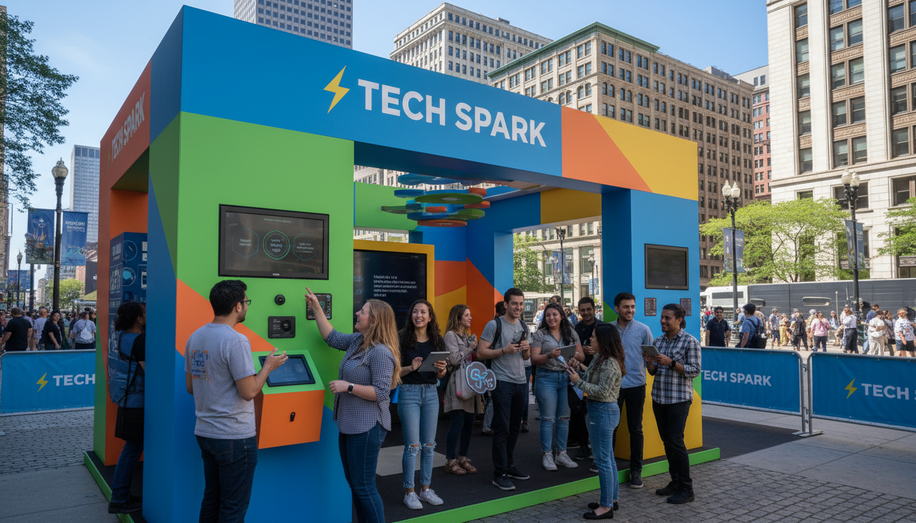

In the bustling streets of New York City, a global sneaker brand transformed urban sidewalks into a sprawling treasure hunt, where QR codes at strategic checkpoints unlocked virtual challenges and rewards tied to their latest line. Participants dashed across boroughs, customizing shoes via VR booths and sharing progress on a companion app, turning passersby into instant players. The result? Over $5 million in sales within two weeks, a 400% surge in social mentions, and a cohort of fans who didn’t just buy the product—they lived it. This is experiential out-of-home (OOH) advertising at its most potent: not a static billboard shouting slogans, but a dynamic invitation that forges emotional bonds and cultivates lasting brand loyalty.
Experiential OOH campaigns extend beyond traditional digital out-of-home (DOOH) screens by blending physical immersion with public spaces, creating moments that consumers actively participate in rather than passively observe. Unlike conventional ads that vie for fleeting attention, these activations leverage high-traffic environments—parking garages, city squares, transit hubs—to deliver sensory, interactive encounters. A fashion brand’s “Impossible Sale” campaign exemplified this, deploying DOOH screens with countdown timers and exclusive previews in parking facilities. The urgency sparked foot traffic surges of up to 30% to nearby stores, proving that experiential elements like real-time teasers convert exposure into action and repeat visits. By making the brand a co-conspirator in the consumer’s day, these campaigns shift perceptions from transactional to relational, embedding loyalty through shared adventure.
Nike’s Reactland installation took this further, installing treadmills in high-traffic areas where runners controlled avatars on massive screens, virtually testing the React shoe’s cushioning in a digital world. Onlookers watched in awe as participants grinned through workouts, the physical exertion mirroring the product’s promise of responsive energy. This tech-infused OOH experience didn’t just highlight features; it let users feel them, generating buzz through organic social shares and leaving indelible impressions that boosted long-term affinity. Research underscores why: immersive visuals in 3D OOH formats, for instance, enhance recall, with viewers retaining brand messages far longer than from flat ads, as the brain prioritizes novel, multi-sensory inputs.
Pop-up retail worlds amplify this loyalty loop by turning OOH into full-spectrum brand universes. One brand erected neon-lit dreamscapes with scent diffusers, soundscapes, and limited-edition drops, drawing crowds who forgot they were shopping amid Instagrammable tunnels and celebrity appearances. The payoff was millions in two-week sales and a 300% social engagement spike, but the real win was positional dominance—consumers emerged as evangelists, their FOMO-fueled shares extending the campaign’s reach. Similarly, a luxury car unveiling inside a purpose-built dome featured holographic demos, AR test drives, and VIP lounges, securing $15 million in pre-orders within 48 hours alongside a 700% brand mention explosion. Attendees didn’t merely view the vehicle; they piloted its future, fostering a sense of ownership that translates to enduring preference.
These successes hinge on core principles: exclusivity, gamification, and social amplification. Limited RSVPs and on-site-only perks create scarcity, while interactive touchpoints—like QR-unlocked secrets or personalized VR—empower users as protagonists in the brand narrative. Lululemon’s approach illustrates community-building through free yoga sessions in malls and high-traffic zones, evolving store visits into “Sweatlife” festivals that nurtured loyalty among fitness enthusiasts. Parking garage DOOH for retail chains synced with mobile data to drive both online and in-store traffic, yielding record sales by catching consumers at decision points, such as post-parking contemplation. Johnson Outdoors, managing eight brands, measured loyalty via customer data platforms, revealing how consistent experiential touchpoints across OOH activations sustain engagement across portfolios.
Yet, the magic lies in measurability. Beyond vanity metrics, these campaigns deliver ROI through tracked outcomes: Nissan’s Innovation Station drew a million visitors over three years, generating 30,000 leads via interactive vehicle demos in public spaces. A fruit-themed OOH promotion in Los Angeles used static bulletins to hype an immersive event, spiking awareness and ticket sales. Client testimonials for parking garage specialists like A Lot Media highlight tangible lifts in visibility and sales, attributing success to creative placement that resonates in everyday commutes.
Critics might argue experiential OOH risks overhyping short-term buzz at loyalty’s expense, but data counters this. Participants in such campaigns report higher emotional connection, with repeat engagement rates climbing as memories linger—studies show 3D and interactive OOH boosts retention by making brands unforgettable landmarks in consumers’ mental maps. Guerrilla-style twists, like McDonald’s reimagining urban fixtures into interactive prompts, further prove scalability, merging surprise with shareability for organic loyalty.
As urban landscapes evolve with DOOH advancements, experiential OOH stands as a loyalty powerhouse. A sneaker hunt doesn’t end at the finish line; it replays in social feeds, conversations, and eventual repurchases. Brands that master this—crafting public playgrounds where consumers play, connect, and commit—don’t just advertise. They architect allegiance, one unforgettable moment at a time. In an era of ad fatigue, these campaigns remind us: loyalty isn’t bought; it’s experienced.