
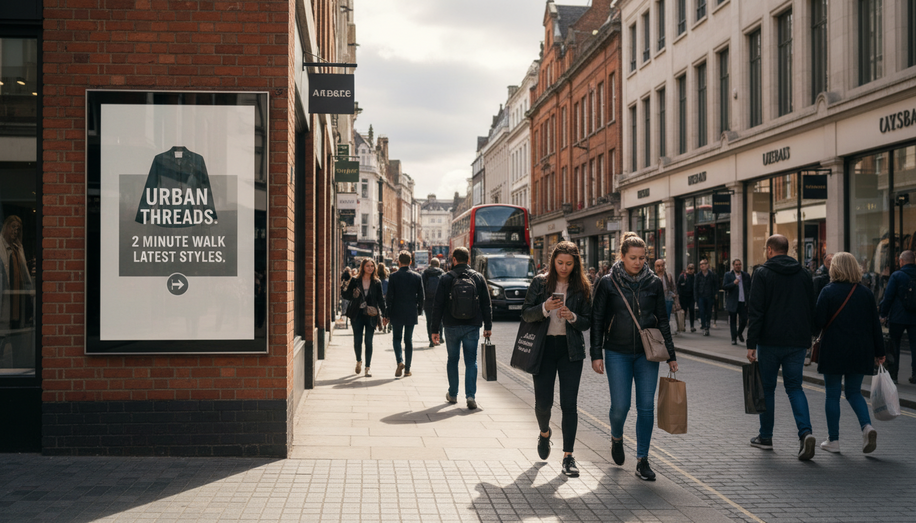

In the bustling rhythm of urban life, where consumers navigate streets, highways, and transit hubs, the placement of an outdoor advertisement can transform a fleeting glance into lasting engagement. Location context in out-of-home (OOH) advertising does more than dictate visibility; it shapes consumer perception, recall, and action by aligning messages with the immediate environment, audience mindset, and behavioral cues. Far from being a mere logistical choice, this contextual synergy elevates campaigns, turning passive exposure into active response.
Consider the foundational role of demographics and socioeconomic profiles in location selection. A luxury brand billboard thrives in affluent neighborhoods, where passersby match the target profile, fostering relevance and aspiration that might falter in mismatched settings. High-traffic zones like city intersections, shopping centers, and transportation hubs amplify this effect, exposing ads to diverse yet predictable audiences. Research underscores that 70% of time spent outdoors correlates with heightened OOH impact, with 80% of consumers reporting purchases post-exposure when locations align with their routines. Foot and vehicular traffic patterns become critical metrics: busy areas ensure repetition, embedding brand familiarity through sheer frequency, while proximity to points of sale—like a restaurant ad within a few miles—spurs immediate visits.
Contextual relevance takes this further, weaving the ad into the consumer’s lived experience. Ads congruent with their surroundings boost brand recall by up to 62%, as Nielsen studies reveal, capitalizing on spontaneous decisions. A sports brand at a stadium taps into fans’ adrenaline, linking excitement directly to the product; a health message at a January transit stop resonates with New Year’s resolutions. Similarly, a sunscreen ad at a sunny beach bus stop or rain boots promotion on a perpetually wet street creates emotional congruence, making the message part of the narrative rather than an intrusion. This environmental harmony drives not just memory but action: campaigns leveraging such alignment see personal relevance rise by 20%, brand perception improve by 10%, and location uniqueness surge by 27%.
Data from real-world campaigns quantifies the edge. In one study, location emerged as the top engagement driver, outpacing time of day or activity, with contextual overlays adding 15% overall uplift against standard OOH—peaking at 24% for specific metrics. Call-to-action and sales responses lead with +40% gains, followed by consideration at +30% and brand perception at +20%. Seasonal tie-ins amplify this: a retailer’s contextual messaging during events boosted seasonal brand association by 40%, outperforming competitors despite their heavier TV spends, and delivered strong ROI. Even advanced formats like AR billboards reflect location’s nuance—urban centers yield high volume amid visual clutter, while suburban spots foster deeper interactions with longer dwell times.
Proximity-powered tactics, such as geofencing paired with OOH, heighten hyper-local precision. A billboard near a restaurant can trigger mobile alerts to nearby users, blending static visibility with real-time relevance for enhanced engagement. Agencies emphasize this strategic layering: analyzing audience interests, competition, and 24/7 visibility to recommend spots that align brand values with context. The result? Ads that stand out in high-visibility arenas, building recognition through unavoidable exposure.
Yet, location’s power demands precision. Urban vs. suburban trade-offs highlight the balance: city cores offer scale but fragmented attention, while quieter locales ensure quality interactions. Ignoring competition or traffic data risks dilution, as does overlooking mood—contextual mismatches erode impact. Smart planners counter this with audience intelligence, tailoring dynamic digital OOH to real-time data like Google’s location-based feeds, anticipating needs and boosting perceived smarts.
Ultimately, location context revolutionizes OOH from broad broadcast to targeted conversation. As lives unfold on the move, advertisers harnessing environmental cues—demographics, emotions, events—unlock +30% average lifts across metrics, prioritizing behaviors over mere awareness. In an era of fragmented media, this foundational element ensures OOH not only captures eyes but commands responses, proving that the right place, at the right moment, with the right resonance, remains unparalleled in driving consumer connection.