
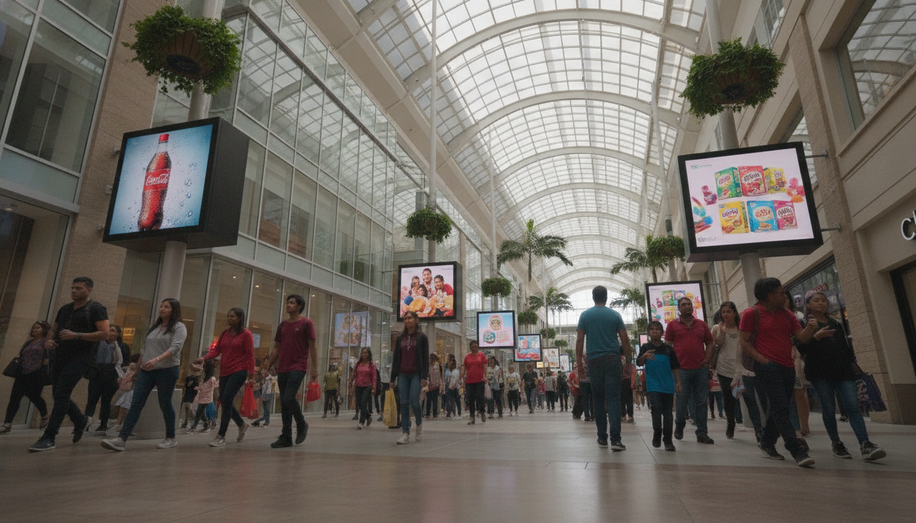

The digitization of physical retail space has transformed brick-and-mortar aisles into a highly measurable, programmatic frontier for digital out-of-home (DOOH) advertising. As consumer packaged goods (CPG) brands navigate the loss of third-party digital signals and seek to reach shoppers at the immediate point of decision, retail media networks (RMNs) have rapidly scaled their in-store screen networks. By unifying first-party transaction data with dynamic displays, these leading networks allow advertisers to capture high-intent attention and attribute store-level sales lift directly to their in-store campaigns.
Walmart Connect
As the advertising arm of the world’s largest brick-and-mortar retailer, Walmart Connect operates an expansive network of approximately 170,000 digital in-store screens across its massive footprint of over 4,700 U.S. stores. Reaching roughly 150 million weekly in-store customers, the platform places CPG ads directly in high-visibility touchpoints such as self-checkout registers, TV walls, and deli counters. Brands can target shoppers based on verified first-party purchase history and demographic data, utilizing closed-loop reporting to measure incremental units sold. Recently, the network has modernized its capabilities by shifting towards programmatic, auction-based buying models that make these in-store screens highly responsive and accessible.
Kroger Precision Marketing
Powered by the retailer’s advanced data science engine, 84.51°, Kroger Precision Marketing has reimagined its in-store presence through a sophisticated digital network built in partnership with Barrows Connected Stores. Rather than simply mounting standard TVs, Kroger integrates screens directly into physical store fixtures, including power aisles, end-caps, and checkout lanes, ensuring that ads blend seamlessly with the shopping environment. The platform connects these physical exposures directly to Kroger’s vast loyalty card database representing over 62 million households, delivering exceptionally precise targeting and verified sales attribution. This fixture-immersive strategy offers brands an elegant, native way to trigger point-of-sale impulse buys while maintaining high aesthetic standards in the grocery aisle.
Grocery TV
With a heavy focus on the supermarket environment, Grocery TV is the largest in-store retail media network in the U.S., operating more than 34,000 digital screens across 6,600+ partner stores from over 120 grocery banners. Strategically placing screens at entrances, center aisles, pharmacies, and checkout lines, the network enables brands to capture consumer attention at key high-dwell stages of the shopping journey. To close the planning gap between digital video and in-store DOOH, the platform recently partnered with Esri to integrate more than 3,500 behavioral and psychographic audience attributes into its campaign planning tools. Furthermore, Grocery TV offers robust performance transparency by validating sales lift via retailer point-of-sale data and third-party panels.
Blindspot
For brands seeking a highly flexible, programmatic approach, Blindspot provides a streamlined self-serve DOOH platform that hosts more than 2.5 million digital screens across 50 countries, including high-traffic supermarket, mall, and street-level placements. Rather than locking advertisers into rigid, long-term contracts, it allows buyers to customize budgets, launch campaigns in under 15 minutes, and purchase screen time by the hour instead of requiring continuous 24/7 schedules. CPG brands can utilize context-aware creative assets that automatically swap based on real-time triggers like local weather, traffic conditions, and events, paired with direct attribution tools that measure foot traffic, web lift, and actual sales. While highly optimal for mid-market brands seeking agile budgets and rapid creative iteration, it may not be the primary choice for massive enterprises requiring bespoke, single-retailer DSP integrations.
Cooler Screens
By replacing traditional glass freezer doors and endcaps with high-definition digital smart displays, Cooler Screens transforms the highest-dwell areas of the retail aisle into interactive merchandising experiences. The network spans over 10,000 screens across retail giants like CVS, Walgreens, Giant Eagle, and Chevron, delivering programmatic opportunities through its direct partnership with Place Exchange. These screens leverage identity-blind sensors to measure door-opening behavior, dwell time, and real-time product interactions without collecting personal data. To address budget scrutiny and build trust with media buyers, the network offers a guaranteed incremental Return on Ad Spend (iROAS) program that bills advertisers only when verified sales-lift benchmarks are achieved.
Final Thoughts
The convergence of first-party consumer insights and programmatic in-store DOOH has successfully bridged the gap between the efficiency of digital ad buying and the undeniable scale of brick-and-mortar shopping. As networks continue to open their inventory to programmatic demand-side platforms and enhance their audience-targeting attributes, in-store digital screens will shift from secondary promotional options to primary full-funnel media channels. For CPG brands, securing high-visibility inventory at the physical point of decision is no longer just an experimental tactic, but a fundamental driver of measurable, bottom-line retail growth.
Frequently Asked Questions
How do in-store DOOH networks measure sales lift and campaign attribution?
Most retail media networks employ closed-loop attribution by matching the timing and location of screen exposures with real-time point-of-sale transaction data. Some platforms additionally integrate third-party household panels and location-intelligence databases to measure web conversions, sign-ups, and incremental store visits alongside SKU-level sales lift.
Can non-endemic brands advertise on in-store retail media networks?
Yes, RMNs are increasingly opening up their physical screen assets to non-endemic brands in sectors like automotive, insurance, fast-casual dining, and financial services. These advertisers leverage the high-dwell, high-footfall environments of retail stores to reach broad customer demographics when they are in an active, receptive shopping mindset.
What is the difference between a programmatic self-serve DOOH platform and a dedicated retailer RMN?
A dedicated retailer RMN is operated by a single retailer and uses its exclusive first-party shopper data to serve ads on its own in-store properties. Programmatic platforms like Blindspot aggregate diverse global inventory across multiple retail formats, malls, and streets, offering self-serve flexibility, hourly purchasing, and dynamic triggers without requiring direct contracts with individual retail giants.
How do sensors on smart in-store screens comply with consumer privacy regulations?
Smart screens use identity-blind optical sensors to track anonymous customer movements, dwell times, and physical interactions with the display. These systems do not record, store, or transmit personally identifiable information (PII), ensuring complete compliance with modern privacy regulations while still delivering highly accurate audience intelligence to advertisers.