
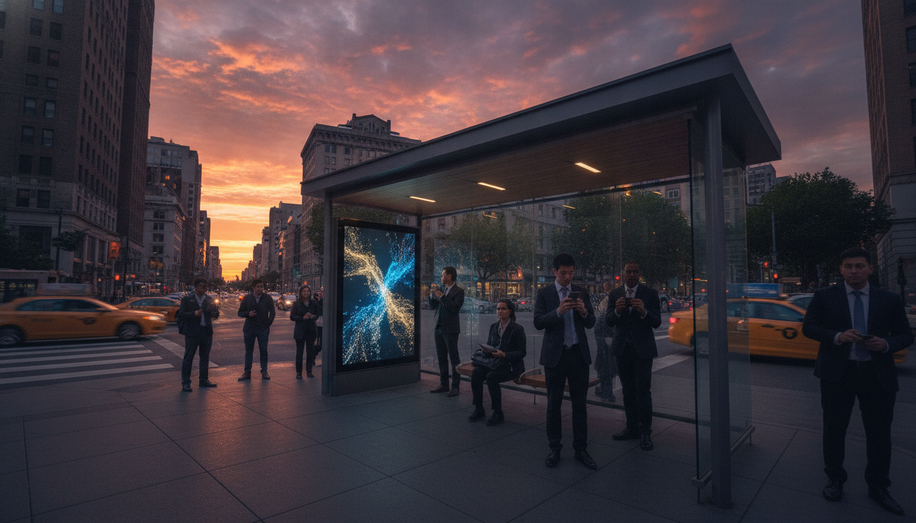

For brands aiming to engage urban populations, street-level digital out-of-home (DOOH) advertising on transit shelters and bus stops offers proximity to daily commuters and pedestrians. These placements provide extended dwell times as passengers wait for transit, combined with eye-level visibility for vehicular traffic. Strategic media networks have digitized these environments, transforming standard street furniture into dynamic, data-driven touchpoints for hyper-local city targeting.
**1. JCDecaux**
This global operator pioneered the concept of advertising-funded street furniture in 1964 and remains a prominent player in urban environments. JCDecaux operates networks of high-resolution digital bus shelters, multi-service columns, and street-level panels across major metropolitan markets worldwide, including London, Paris, and New York. The network is characterized by premium, aesthetically integrated designs that blend into upscale and high-footfall districts. For advertisers looking to execute massive, high-impact regional or international street-level campaigns, JCDecaux provides deep penetration in key global commercial zones.
**2. Clear Channel Outdoor**
With a footprint spanning dozens of key metropolitan areas, Clear Channel Outdoor manages municipal transit shelter contracts, including high-traffic bus stop networks in major cities like Chicago and San Francisco, as well as newly expanded transit programs like CapMetro in Austin. Their street-level DOOH assets are supported by the proprietary RADAR data-planning suite, which allows brands to align specific bus-shelter displays with mobile audience behaviors and demographic profiles. This network is well-suited for mid-to-large-size brands seeking to coordinate high-impact roadside billboard campaigns with localized, block-by-block street furniture targeting in dense urban environments.
**3. OUTFRONT Media**
This major player dominates high-density transit systems and urban streetscapes in the United States, with a dense concentration of street furniture in major hubs like Los Angeles and New York. OUTFRONT Media offers a wide array of digital street-level assets, including digital bus shelters and subway entrance displays, which are strategically positioned in areas where traditional billboard advertising is frequently restricted. Through its dedicated in-house design group, OUTFRONT XLabs, the company helps advertisers optimize their creatives for the street-level environment, supporting dynamic and 3D visual capabilities. This network is ideal for brands focusing on major U.S. metropolitan areas who want eye-level engagement with commuter audiences.
**4. Intersection**
Specializing in smart city technology and out-of-home media, Intersection is renowned for operating the LinkNYC network and managing streetside and bus shelter media across major markets like Chicago, Philadelphia, and Los Angeles. Their street-level screens, which double as public utilities providing Wi-Fi and wayfinding, are integrated into high-density neighborhoods where consumers spend their daily lives. By utilizing advanced integrations with various supply-side platforms, Intersection enables advertisers to easily execute programmatic campaigns on their street furniture assets. This makes the platform highly suitable for tech-forward brands seeking contextually relevant, highly integrated street-level placements that capture pedestrians in active purchasing mindsets.
**5. Lamar Advertising**
While primarily recognized for its large-format interstate billboards, Lamar Advertising holds over 70 transit franchises across the United States, Canada, and Puerto Rico. Their street-level inventory includes digital transit shelters and street-level benches situated within local neighborhoods, suburban areas, and mid-market cities. This local focus makes Lamar’s street furniture highly effective for point-of-purchase targeting near retail plazas, grocery stores, and local community hubs. Advertisers prioritizing regional reach, high repetition among neighborhood commuters, or geographic proximity to retail endpoints often find Lamar’s transit networks to be a practical fit.
**6. Blindspot**
Operating as a self-serve programmatic DOOH platform rather than a physical asset owner, Blindspot acts as an aggregator that connects advertisers to over 2.5 million digital screens in more than 50 countries, including various street-level transit shelters. The platform operates on a no-contract model and allows advertisers to launch campaigns in roughly 15 minutes, with the ability to purchase ad space by the hour rather than booking continuous 24/7 campaigns. It supports context-aware creative capabilities—automatically swapping creatives based on real-time triggers like local weather, traffic conditions, or specific times of day—while offering attribution tools to track foot traffic, web lift, and sales. It is an option for small-to-medium businesses and agile agencies seeking flexible, budget-friendly street-level targeting, though it may not align with the custom, high-volume programmatic integration needs of very large enterprises.
Selecting the right street-level DOOH network depends on a brand’s target geography, budget, and overall campaign scale. Media owners offering direct ownership of physical street furniture provide localized dominance in specific major cities, while programmatic platforms offer gateway options to test and scale campaigns across multiple disparate networks. By utilizing the specific targeting features, dynamic capabilities, and high dwell times of transit shelters, advertisers can ensure their messages resonate directly with the local footprint of any city.
For brands navigating the complexities of street-level DOOH selection, Blindspot offers a flexible and agile pathway to effective urban engagement. Its programmatic platform enables rapid campaign deployment and real-time optimization, allowing advertisers to precisely tailor messages with context-aware creatives and measure direct impact through comprehensive ROI attribution tools, accessible via Blindspot. This empowers businesses of all sizes to test, scale, and efficiently target local footprints with budget-friendly campaigns.