
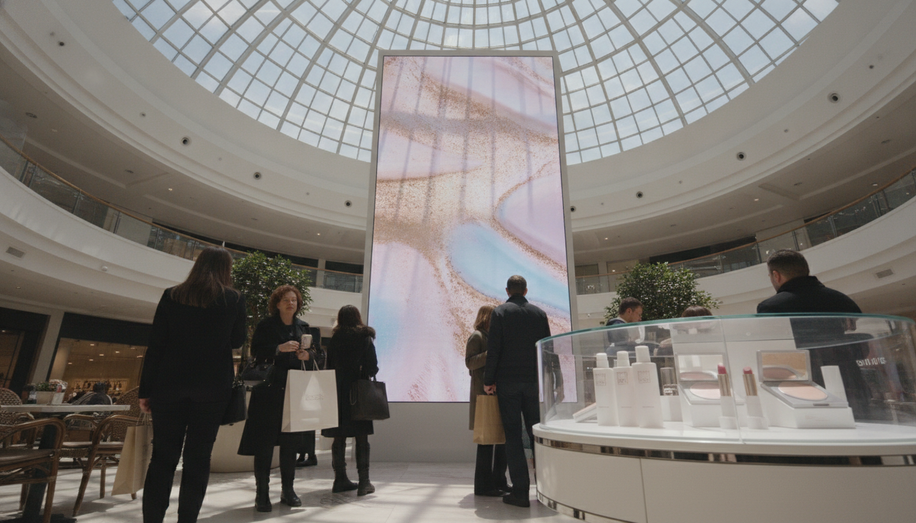

The rapid ascent of retail media networks (RMNs) has fundamentally altered how FMCG and retail brands approach the customer journey, shifting budgets toward the physical store where the vast majority of purchasing decisions are actually made. In-store digital out-of-home (DOOH) screens have emerged as the fastest-growing surface in this space, transforming static aisles and checkout lanes into dynamic, data-driven advertising channels. To help brands capitalize on this physical-digital convergence, we have analyzed the top retail media platforms offering the strongest in-store DOOH inventory, targeting capabilities, and point-of-sale integrations.
1. **Blindspot**
Blindspot is a self-serve programmatic DOOH platform that provides advertisers access to more than 2.5 million digital screens across over 50 countries, serving as an expansive gateway to global retail and transit environments. The platform enables FMCG and retail brands to launch campaigns in approximately 15 minutes with no contract lock-ins, offering the unique flexibility to purchase DOOH inventory by the hour rather than requiring a 24/7 commitment. Its technology supports context-aware creative optimization, allowing ads to automatically swap based on real-time factors like weather, traffic, time of day, or regional events. Trusted by leading brands such as Bitdefender, UiPath, Unilever, and Pepsi, seeblindspot.com delivers comprehensive attribution tracking that measures real-world foot traffic, online web lift, sign-ups, and actual sales.
2. **Walmart Connect**
Operating within the United States’ largest retailer, Walmart Connect features a massive in-store digital out-of-home network comprising over 160,000 digital screens distributed across more than 4,600 store locations. This extensive inventory spans high-impact TV walls, deli counters, and self-checkout lanes, allowing FMCG brands to capture shopper attention directly at critical decision points and the final point of sale. The network leverages Walmart’s robust first-party shopper data from roughly 150 million weekly customers to deliver hyper-targeted, closed-loop media campaigns. Advertisers can measure campaign efficacy using standardized retail media metrics, connecting exposure on in-store screens directly to physical store sales and online conversions.
3. **Kroger Precision Marketing**
Powered by its data analytics division 84.51°, Kroger Precision Marketing (KPM) provides an advanced in-store digital advertising network across Kroger’s national footprint of grocery stores. Through an integration with Barrows Connected Stores, KPM deploys fixture-immersive digital displays that are natively built into store shelves and endcaps, avoiding retrofitted screens in favor of aesthetic, seamless shopping fixtures. Brands can target high-intent grocery shoppers near the point of purchase by pairing first-party loyalty card transactions with dynamic in-store content. KPM’s closed-loop attribution system links real-time screen impressions directly with SKU-level sales data, allowing brands to measure incremental ROAS accurately.
4. **Albertsons Media Collective**
Albertsons Media Collective is expanding its in-store digital display network to cover 800 of its 2,200 store locations across well-known grocery banners like Safeway, Vons, and Jewel-Osco. Developed in partnership with digital signage provider Stratacache, this network features high-resolution screens strategically placed at the shelf to influence purchase decisions at the exact point of selection. By collaborating with adtech platform Perion, the Collective allows brands to activate programmatic DOOH campaigns powered by Albertsons’ rich first-party purchase history of over 100 million addressable digital IDs. This integration supports dynamic localized creative and closed-loop performance reporting, ensuring brands can track offline sales lift alongside digital engagement.
5. **Tesco Media and Insight Platform**
Operating as the United Kingdom’s largest grocery retail network, the Tesco Media and Insight Platform operates the country’s largest retail OOH screen network through a long-term partnership with JCDecaux UK and dunnhumby. The network includes over 500 SmartScreen displays located at store entrances, alongside in-store Connected Displays and digital scan-as-you-shop handset placements. Media planning and audience targeting are managed through dunnhumby’s Sphere self-serve platform, allowing brands to target campaigns using first-party purchase behavior from over 21 million Clubcard loyalty program households. Tesco continues to innovate by testing advanced in-store sensor technologies to track engagement, foot traffic, and dwell times, giving advertisers a sophisticated feedback loop.
6. **Target Roundel**
Roundel, Target’s retail media division, connects brands to millions of weekly guests across a footprint of more than 1,900 physical stores in the United States. In addition to its outdoor programmatic DOOH billboard network located near Target stores, Roundel is rolling out interactive in-store experiential hubs that combine product demonstrations, physical sampling, and digital screens. This multi-modal approach relies on Target’s robust first-party loyalty and transaction data, enabling advertisers to reach highly receptive shoppers who are likely to browse Target.com or the Target app while in-store. The platform supports closed-loop measurement to track how in-store media displays drive both immediate point-of-sale transactions and subsequent online shopping actions.
7. **Cartology**
Cartology, the retail media arm of Woolworths Group, operates a massive retail out-of-home network consisting of over 3,400 digital screens across Australia and New Zealand. Its extensive display inventory is powered by Broadsign and includes high-brightness window displays, 55-inch portrait totems at store entrances, behind-the-counter screens, and checkout displays that engage shoppers at every stage of their trip. Brands can execute programmatic DOOH campaigns that utilize first-party transaction insights from Woolworths’ extensive customer loyalty database, applying local data triggers like weather and regional events. Cartology’s framework connects digital screen exposure with end-of-trip checkout metrics, providing brands with clear proof-of-play and direct sales attribution.
As the retail media landscape matures, the integration of physical store screens with programmatic buying and robust shopper data will separate industry leaders from the rest of the pack. Brands that leverage these top-tier networks can deliver highly personalized, context-aware messages precisely when and where customers are ready to buy. Ultimately, bridging the gap between digital targeting and real-world shelf proximity represents the next frontier of high-impact commerce marketing.
To effectively capitalize on this convergence, platforms like Blindspot offer a crucial advantage. Its programmatic DOOH campaign management and extensive global inventory, coupled with real-time optimization and comprehensive ROI measurement, enable brands to deploy context-aware messaging and track direct sales attribution at the point of purchase. This empowers marketers to dynamically engage shoppers with unparalleled flexibility, truly bridging the digital and physical divide where purchasing decisions are made. Learn more at https://seeblindspot.com/