

For years, the direct-to-consumer (D2C) and e-commerce playbook was remarkably predictable. Brands launched on social media, scaled through highly targeted digital ads, and optimized their funnels using granular web data. However, as digital auction spaces have grown increasingly crowded and expensive, and as privacy regulations have disrupted traditional tracking, the limitations of an exclusively online strategy have become painfully clear. Seeking to escape the digital noise and soaring customer acquisition costs, a growing wave of modern retailers is turning to the physical world, leveraging out-of-home (OOH) advertising to build credibility and drive direct online sales.
Once viewed primarily as a top-of-funnel medium designed for broad brand awareness, OOH has undergone a profound technological transformation. Today, it serves as a highly effective bridge between offline exposure and online conversion, creating a frictionless path from the physical sidewalk to the digital shopping cart. By placing high-impact visual messages in high-traffic real-world environments, OOH commands a level of undivided consumer attention that digital screens, plagued by ad-blockers and banner blindness, simply cannot replicate.
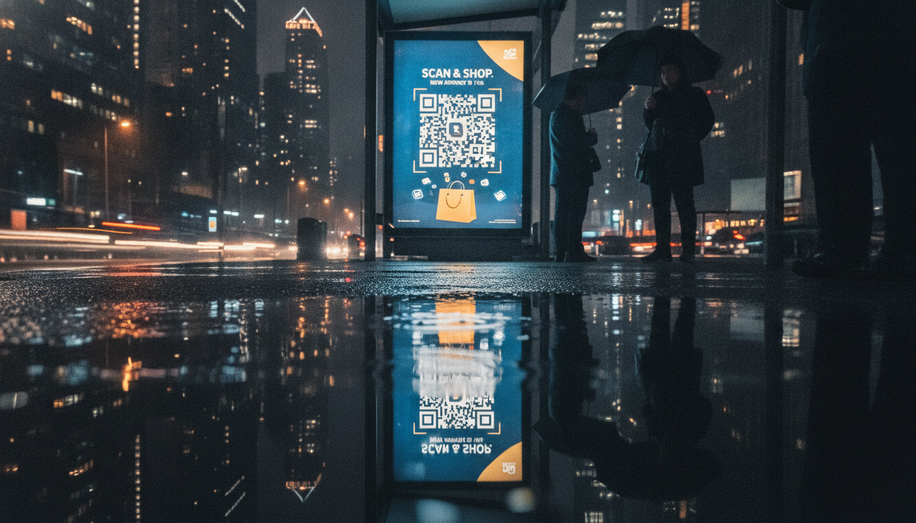
The engine powering this modern offline-to-online funnel is the clever integration of direct-response technology. Chief among these tools is the ubiquitous QR code, which has experienced a massive resurgence in consumer behavior. When placed on transit shelters, street furniture, or digital screens in retail hubs, QR codes turn a passive viewing experience into an interactive portal. A consumer waiting for a bus can scan a billboard and instantly load a curated collection, redeem an exclusive discount, or even pre-populate a digital shopping cart. For larger-format media like highway bulletins where scanning is impossible, brands utilize highly memorable, vanity URLs or short SMS codes to achieve the same result, turning every road trip into a potential customer acquisition opportunity.
Yet, OOH’s modern efficacy is not just about the technologies on the screen; it is about how these assets integrate into a broader omnichannel ecosystem. Modern e-commerce brands rarely run OOH campaigns in isolation. Instead, they use physical media as an amplifier for their digital efforts. When a consumer is exposed to a billboard, their likelihood of clicking on a subsequent social media ad or searching for the brand online increases exponentially. Sophisticated marketers are now leveraging mobile location data and programmatic digital-out-of-home (DOOH) platforms to coordinate campaigns in real time. For instance, a D2C brand can geofence its physical billboard locations, allowing them to retarget mobile devices that have passed by those screens with coordinated display ads, reinforcing the physical message and prompting a quick click to purchase.
This integration has also revolutionized how OOH is measured. The historical criticism that billboard return on investment is impossible to quantify has been dismantled by modern data analytics. By matching anonymous mobile location data with website traffic logs and purchase records, brands can calculate exact lift metrics. They can trace a spike in online conversions directly back to specific physical locations and times of exposure, bringing digital-style attribution to the physical world.
As e-commerce continues to mature, the brands that thrive will be those that master the intersection of physical presence and digital convenience. OOH advertising offers D2C brands the rare opportunity to build trust and scale authority in the real world while simultaneously feeding their digital conversion engines. By blending bold, inescapable physical creative with seamless, mobile-friendly transition points, modern marketers are proving that the most direct route to an online checkout often begins on the street.