
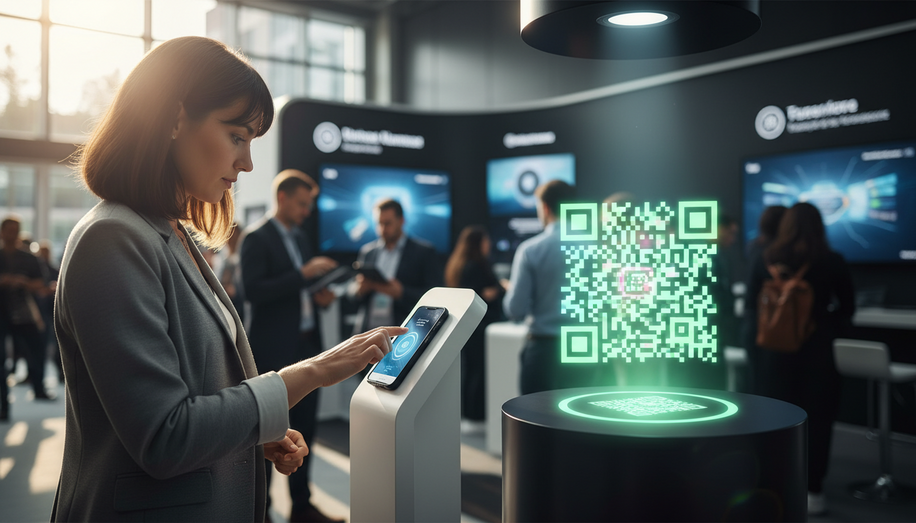

Out-of-home advertising has always been about commanding attention in the real world. But as consumers live increasingly on their phones, the value of that attention now hinges on one critical question: can you turn a fleeting glance at a poster or screen into an immediate digital action? QR codes and NFC tags have become the most practical tools to answer that question, transforming static inventory into interactive, measurable touchpoints that bridge the physical-digital divide.
The resurgence of QR codes, fueled by native camera support on smartphones and pandemic-era familiarity, has made them a staple of modern OOH. When deployed well, they give audiences an instant path from billboard to browser, from poster to purchase. NFC, while less visible, offers a complementary “tap to interact” experience that feels seamless and intuitive, particularly in environments where people are already holding their phones — transit hubs, retail, events, and street furniture.
For both technologies, the strategic foundation is the same: make interaction simple, obvious and rewarding. A QR code or NFC symbol can’t just sit passively on creative and hope for the best. The call to action has to spell out both the action and the benefit. “Scan to get 20% off,” “Tap to watch the trailer now,” or “Scan to join the citywide scavenger hunt” outperforms vague prompts like “Learn more” by a wide margin. Viewers need to know what they’re getting and why it’s worth pulling out their phone in the middle of their day.
Execution details matter. In classic OOH, size and distance determine whether a QR code is usable at all: a code on a highway billboard that’s too small or too dense to be scanned at speed is wasted real estate. In pedestrian environments, the code should be positioned within natural eye-lines and reachable without awkward stretching. For DOOH, timing and motion are critical. The code must be onscreen long enough to be recognized, framed, and scanned. Animating a subtle “pulsing” effect or a short on-screen prompt can draw attention without overwhelming the creative. With NFC, placement near where a person’s phone would naturally rest — near a payment terminal, on door decals, at bus shelters — reduces friction and makes “tap here” feel intuitive.
The destination experience is where campaigns are won or lost. QR and NFC interactions are, by definition, mobile experiences, so sending users to non-responsive, slow-loading websites is a direct path to abandonment. Mobile-optimized landing pages with load times under a few seconds are non-negotiable. The content should align precisely with the promise in the CTA: if you offer a discount, the coupon or promo code must be immediately visible; if you promise a video, it should autoplay or be clearly accessible without hunting around. Brands that use QR codes to unlock exclusive content, early access, or AR experiences — such as transporting users to a branded virtual environment or inviting them to capture and share a “moment” — consistently generate deeper engagement and social amplification.
Beyond engagement, the real power of QR codes and NFC lies in measurability. Traditional OOH has leaned on estimated impressions; scannable and tappable touchpoints give marketers confirmed interactions with time, location, device type, and operating system data. Dynamic QR codes take this a step further, enabling real-time updates to destinations, A/B testing of offers, and granular performance reporting across placements. A transit advertiser, for example, can use a single printed QR code design but route scans differently by station or city, measuring which locations drive the most redemptions, content views, or app installs. NFC tags support similar tracking, letting brands compare tap-through rates against scans and even distinguish between different outdoor fixtures or formats.
This data isn’t just for post-campaign reporting; it’s a live optimization engine. If scan rates spike for a particular creative that highlights a stronger value exchange, that messaging can be rolled out across the network. If evening scans outperform daytime in a specific district, DOOH content can be dayparted to feature stronger calls to action during those high-engagement windows. Combining scan and tap data with other OOH measurement tools — from traffic flows to mobile location analytics — helps refine placement strategies and budget allocation.
Gamification is emerging as one of the most effective ways to use QR and NFC in OOH to build sustained interaction rather than one-off clicks. Multi-location scavenger hunts, where each scan unlocks part of a code or a collectible digital asset, incentivize repeat engagement and physical movement through a city or venue. Loyalty mechanics, such as earning points or entries into giveaways with each interaction, embed OOH into a broader CRM or rewards strategy. Crucially, these experiences play to the strengths of physical media: they turn a city into a game board and outdoor assets into checkpoints.
A multi-channel mindset amplifies the impact of these technologies. QR codes on billboards and DOOH screens can drive to mobile wallets, where saved offers trigger reminders as users approach stores later. NFC-enabled posters in retail can connect to app-based experiences, nudging customers toward in-store navigation, product education, or instant checkout. Integrating SMS shortcodes as a backup — “Text PIZZA to 12345” alongside a QR code, for instance — ensures that people with older devices or camera issues still have a path to engage. Consistent CTAs and offers across posters, transit wraps, and digital screens reinforce messaging and build familiarity, increasing the likelihood of action on subsequent exposures.
As QR and NFC become standard in OOH, the bar is rising. Random links and generic landing pages are no longer enough. The campaigns that stand out are those that treat every scan or tap as the start of a relationship, not just a click. That means clear value at the moment of interaction, thoughtful mobile experiences that respect the user’s time, and a feedback loop where engagement data shapes creative and media decisions in near real time. When done well, QR codes and NFC don’t just make OOH measurable; they turn physical impressions into meaningful digital connections.