
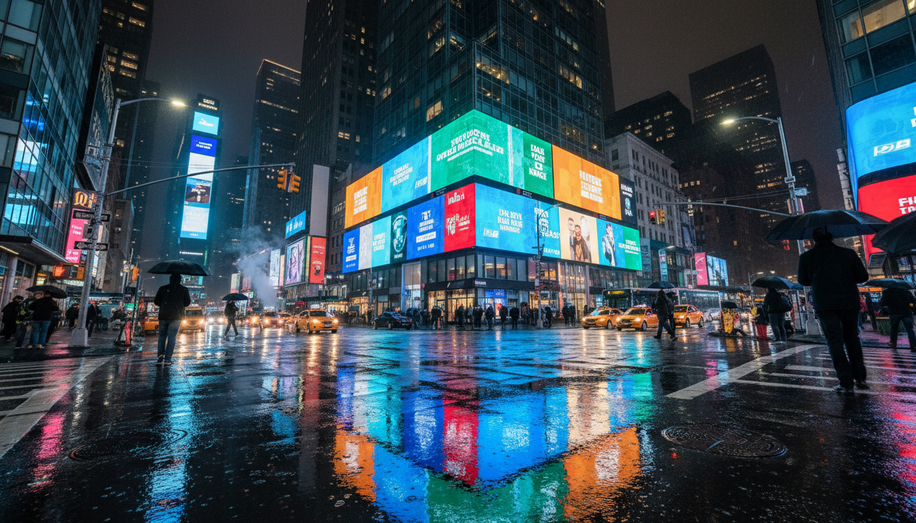

In the high-stakes arena of programmatic digital out-of-home advertising, mastering the bid isn’t just about throwing money at screens—it’s about wielding data like a scalpel to carve out maximum efficiency. With global DOOH spend surpassing $20 billion this year, as projected by industry analysts, advertisers who cling to static schedules are being left in the dust by those leveraging real-time bidding and automated logic. Programmatic DOOH, or pDOOH, transforms static billboards into dynamic canvases, where campaigns adapt on the fly to weather shifts, audience surges, or foot traffic spikes, all without the drag of manual negotiations.
At the heart of this evolution lies real-time bidding, or RTB, the auction-style mechanism that has revolutionized inventory access. When a digital screen’s slot opens up—say, in a bustling Times Square kiosk or a subway tunnel display—it’s instantly offered to demand-side platforms like those from Viant or StackAdapt. Buyers evaluate the impression in milliseconds, factoring in signals such as location data, time of day, and even nearby mobile device density. The highest bidder wins, and their creative deploys immediately. This isn’t the Wild West of open auctions, though; savvy players layer in private marketplace deals, or PMPs, for priority access at fixed CPMs, blending auction thrill with predictable pricing.
Yet RTB alone doesn’t guarantee efficiency. Enter programmatic direct and guaranteed models, which offer advertisers ironclad control. In programmatic direct, buyers secure inventory without bidding wars, setting parameters for screen counts or impressions while letting algorithms handle delivery. This shines for brands chasing guaranteed scale, like a national retailer timing Black Friday blasts. Programmatic guaranteed takes it further, automating fixed-volume deals that echo traditional insertion orders but with real-time pacing. As one OAAA report notes, networks increasingly mix these models—RTB for opportunistic fills, direct for premium slots—keeping screens revenue-maximized around the clock.
Optimization demands more than model selection; it’s about data orchestration. Forward-thinking DSPs pull from vast pools: first-party foot traffic trends, third-party weather APIs, and contextual triggers like events or stock fluctuations. Imagine a coffee chain bidding aggressively on screens near offices during morning rushes, then pivoting to beachside displays when forecasts predict sun. Viant’s platform, for instance, refines placements using audience movement insights, slashing wasted spend by aligning bids with proven performance. The payoff? ANA benchmarks show 43.9% of every DSP dollar now hits consumers, a 7.9-point YoY leap—translating to an extra $79 per $1,000.
Bidding sophistication elevates this further. Manual control suits purists, allowing custom bids per campaign, but most pros default to automated strategies powered by machine learning. Target CPA bidding optimizes for conversions, dynamically adjusting offers to hit cost-per-acquisition goals, while maximize conversions scales reach without ceiling bids. Hybrid approaches prevail: start with preferred deals for first-look inventory at negotiated rates, then feed RTB with performance learnings. A Magna Global study underscores RTB’s surge, up 20% YoY, as algorithms ingest historical data to value impressions precisely—bidding $5 CPM on high-traffic urban screens but dialing back to $2 in quieter zones.
Inventory optimization seals the deal. Fragmented DOOH networks demand unified platforms like BidSwitch, which normalize disparate SSP feeds for seamless scaling. Cross-channel frequency capping prevents ad fatigue, while dynamic creative optimization swaps assets based on triggers—rainy days cue umbrellas, sunny ones summon ice cream. For 2025, IAB Australia reports 75% of agencies tout flexibility as pDOOH’s killer app, enabling launches in days, not weeks.
Challenges persist: latency in rural networks or data privacy hurdles under evolving regs. But the trajectory is clear. Advertisers mastering these tactics—RTB agility fused with direct guarantees, data-fueled automation, and relentless optimization—aren’t just buying inventory; they’re owning the moment. In a medium where eyeballs are king, the sharpest bidders rule the out-of-home empire, turning every screen into a precision strike for reach and ROI.