
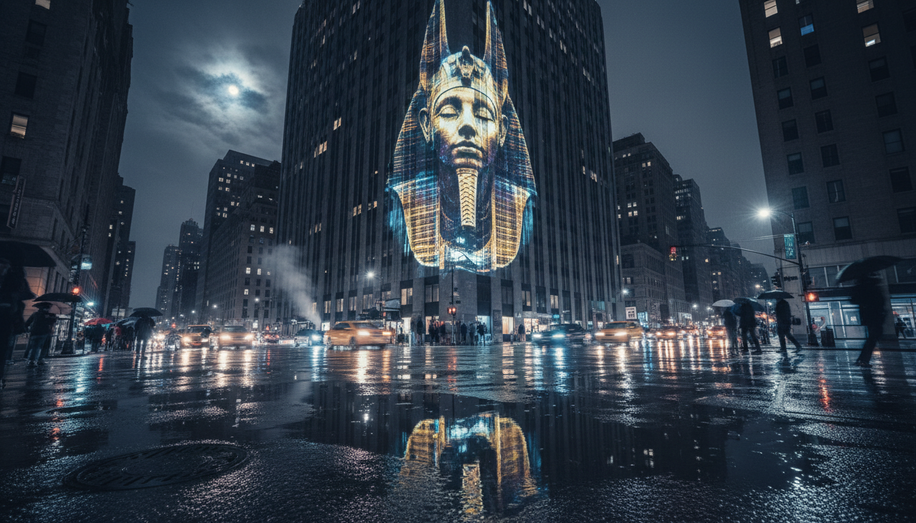

In the evolving landscape of out-of-home advertising, brands are increasingly ditching the predictable rhythm of traditional campaigns for something far more audacious: one-off art installations and experiential activations that turn public spaces into temporary realms of wonder. These fleeting spectacles, often blending OOH’s massive visual punch with immersive artistry, are redefining how companies capture attention, spark viral buzz, and secure priceless media coverage. No longer confined to static billboards or rotating digital loops, OOH is becoming a canvas for high-impact, ephemeral experiences that leave audiences buzzing long after the lights dim.
Consider the power of these activations in action. A custom-built glass truck, its transparent walls revealing a living product demo, rolls through downtown streets, inviting pedestrians to peer inside and sample wares firsthand. As detailed by experiential marketing experts at Lime Media, such mobile OOH setups eclipse static displays by fostering direct interaction—think college campuses alive with branded Airstream trailers generating leads that posters could only dream of, or LED vehicles at festivals projecting gamified challenges that pull crowds into the brand’s orbit. These aren’t repeating ad buys; they’re singular events engineered for maximum shareability, with participants snapping selfies that amplify reach exponentially on social platforms.
Art installations take this a step further, transforming OOH into sculptural storytelling. Imagine a colossal product replica dominating a city square, its surfaces alive with augmented reality overlays accessible via QR codes on flanking digital screens. True Impact Media highlights how such setups—deployed at airports, subways, or festivals—create “unique brand experiences” through VR demos, bounce houses, or street teams handing out branded swag like koozies and keychains. The result? Consumers linger, engage, and depart as unwitting ambassadors, their memories etched deeper than any fleeting billboard glance. Ipsos research underscores this, noting that OOH’s experiential edge excels in “memory encoding” through emotional connections like empathy and creative ideation, outperforming video in fostering recall.
Brands are leaning into this shift amid digital fatigue, where online ads blur into noise. Mobile OOH, as Runningboards describes, “takes messaging directly to the audience,” with eye-catching displays in unexpected locales demanding interaction over passive viewing. A weather-responsive digital billboard that shifts art in real-time, or an AR-integrated installation bridging physical and virtual worlds, doesn’t just advertise—it immerses. Grand Visual points to interactivity as the memorability multiplier: surprise elements, like pop-up games or social media feeds projected life-size, build emotional bonds and trigger online sharing. One standout example? A brand commandeering a busy intersection with a towering, light-sculpted installation mimicking its logo in motion, complete with soundscapes and photo ops. Captured by ambush video crews, the stunt floods influencers’ feeds, extending OOH’s footprint without additional spend.
This one-off approach thrives on creativity’s raw edge, as Movia Media argues. Unconventional builds—like giant replicas or custom vehicles—partner with experiential agencies for logistics and execution, yielding buzz that static campaigns can’t match. Trade shows become playgrounds for decision-makers, festivals target euphoric crowds, and urban pop-ups hijack commutes. The OAAA’s best practices nod to scaling these nationally, from rural towns to megacities, ensuring broad yet tailored impact. Yet, success hinges on planning: real-time updates via programmatic tech keep content fresh, while SEO-aligned messaging and influencer tie-ins propel earned media.
The payoff is undeniable. These activations don’t just generate impressions; they manufacture moments. A single installation can dominate local news cycles, rack up millions in social impressions, and convert passive viewers into advocates. In a 2024 Ipsos study, OOH’s experiential formats proved superior for emotional resonance, proving that when brands treat public spaces as galleries, they don’t sell products—they sell stories. As digital privacy walls rise and ad fatigue sets in, this “beyond standard” OOH isn’t a gimmick; it’s the future. Forward-thinking marketers are already booking their next pop-up masterpiece, betting that one unforgettable spectacle trumps a thousand rotations. In the attention economy, the boldest canvas wins.