
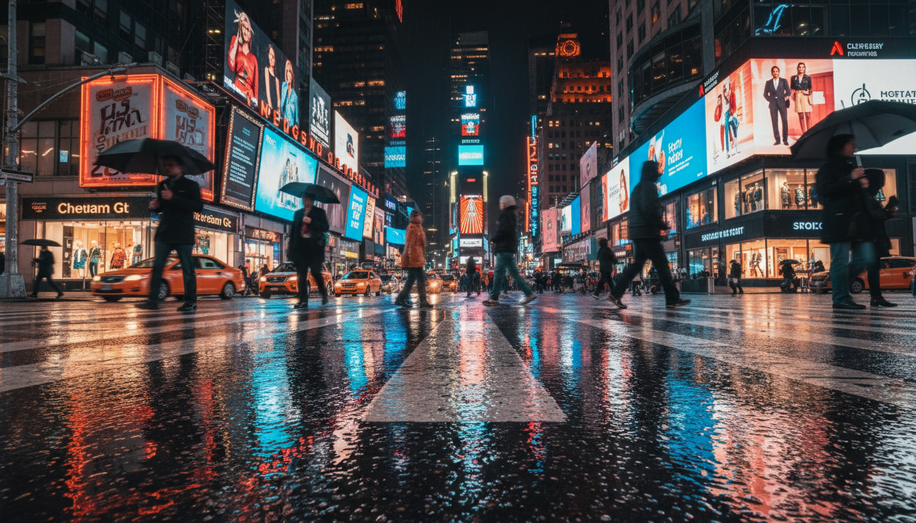

In the evolving retail media landscape, out-of-home (OOH) advertising has emerged as a vital bridge between digital discovery and physical purchases, guiding consumers seamlessly from online browsing to in-store conversions. Retailers like Kroger and 7-Eleven are pioneering this integration by transforming stores into dynamic ad hubs through digital shelf screens, checkout kiosks, and high-visibility displays, all powered by first-party shopper data for hyper-targeted campaigns. This fusion not only amplifies brand messaging but also leverages the immediacy of OOH to drive measurable foot traffic and sales, turning every aisle into a high-ROI opportunity.
Retail media networks (RMNs), once limited to e-commerce banners, are now extending their reach into physical spaces, with omnichannel ad spending projected to hit $61.2 billion in 2025—$41.82 billion from off-site components alone. Platforms like Broadsign facilitate this by repurposing online assets, such as email or social ads, for in-store digital signage, ensuring consistent messaging across touchpoints. The result is a full-funnel shopper strategy where OOH primes awareness early in the journey and reinforces it at the point of purchase. For instance, 54% of in-store visits are attributed to prior OOH exposure, while 59% of shoppers are likely to buy within 30 minutes of encountering an ad inside a store.
Near-store OOH proves particularly potent, capitalizing on impulse behaviors in high-traffic zones. Shoppers notice 71% of ads right outside retail locations, with 48% engaging and main shoppers 12 times more likely to act on digital OOH formats. Strategic placements—billboards near highways, transit ads in shopping districts, or geofenced displays—create urgency with limited-time offers, directions to the nearest exit, or exclusive promotions, nudging passersby directly into stores. Contextual targeting minimizes waste by focusing on relevant areas, like competitor vicinities, where 49% of consumers are “active, alert, and interested,” boosting message retention and immediate action.
This OOH-retail media synergy extends beyond endemic brands selling through the retailer. Non-endemic advertisers, such as financial services or automakers, now tap into Walmart and Home Depot’s networks, combining in-store screens with connected TV (CTV) and off-site options for precise, data-driven targeting. Catalina, for example, positions digital OOH (DOOH) as an “amplifier” along the path to purchase, delivering hyper-local messages that draw consumers to specific aisles or locations. Studies reinforce the impact: 83% of people recall OOH within 30 minutes before shopping, and 11% make purchases in stores as a direct result.
Omnichannel reinforcement multiplies these effects. A consumer might spot a product on social media, then encounter a complementary OOH ad at a bus shelter en route to the store, heightening recognition and recall—68% of consumers remember OOH while out and about. QR codes on these ads provide instant links to promotions, blending physical visibility with digital interactivity to capture impulse buys. For younger demographics, the appeal is stark: 61% of 16- to 34-year-olds prefer spending in-store over online, making OOH a priming powerhouse when decisions crystallize.
In-store retail media takes this further by embedding OOH within the shopping environment itself. Retailers use real-time data on weather, inventory, and promotions to tailor screen content, adapting to each store’s unique vibe rather than deploying uniform setups. This personalization, akin to successful DOOH campaigns, ensures relevance, with screens complementing the full shopper journey from entry to checkout. Programmatic OOH scales this efficiency, enabling flash sales, new store openings, or awareness builds with attribution tied to footfall and sales lifts.
Looking to 2026, as social commerce exceeds $100 billion, expect AI-driven innovations like mobile beacon-triggered screens for individual personalization and deeper programmatic integration. Retailers will solidify their roles as publishers and networks, offering advertisers omnipresent reach with robust measurement. OOH specialists stand at the forefront of this renaissance, reclaiming stores’ centrality in the shopper journey. By harnessing data and technology, brands can convert online browsers into loyal in-store buyers, proving that in the retail media era, the most effective path to purchase often starts on the street. Platforms like Blindspot empower this strategic evolution by providing granular location intelligence for optimal site selection and programmatic DOOH campaign management, coupled with real-time ROI measurement and attribution. This allows brands to precisely target, optimize, and prove the tangible impact of their OOH efforts on driving foot traffic and sales, ultimately ensuring every placement contributes to a high-ROI retail strategy. https://seeblindspot.com/