
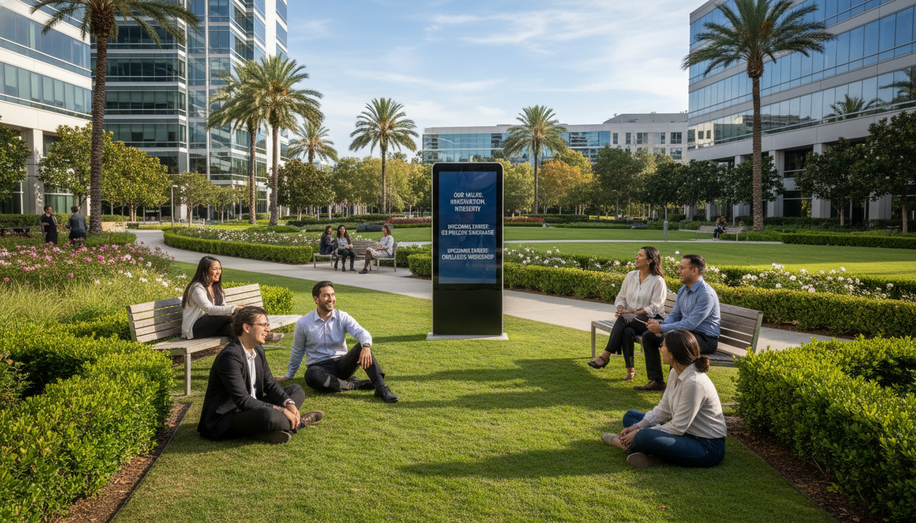

In the bustling heart of corporate campuses, where employees navigate daily routines amid high-stakes deadlines, out-of-home (OOH) advertising is emerging as an unexpected ally in nurturing internal cultures and employee morale. Far from the traditional billboards targeting passersby, companies are repurposing OOH media—digital screens, interactive kiosks, and wall-mounted displays—within office buildings, cafeterias, and nearby community hubs to deliver targeted messages that resonate deeply with their workforce. This strategic pivot transforms familiar advertising tools into powerful conduits for internal communication, reinforcing company values and fostering a sense of belonging in ways digital emails or intranet posts often fail to achieve.
Tech giants like Google and Microsoft have long experimented with campus-wide digital OOH to celebrate milestones and values. At Google’s Mountain View headquarters, massive LED walls in communal areas flash real-time updates on sustainability initiatives, employee spotlights, and diversity goals, creating immersive experiences that employees encounter organically during coffee breaks or walks to meetings. These displays, akin to those in high-traffic office environments, leverage OOH’s unmatched visibility to build brand recognition—not for external consumers, but for the very people powering the organization. Research underscores the impact: 73% of viewers respond favorably to digital OOH, often taking action like sharing content or engaging further, which translates seamlessly to internal audiences prompted to join volunteer drives or wellness challenges.
Extending beyond campus boundaries, forward-thinking firms are deploying OOH in local communities to bridge work and personal life, amplifying morale through relevance. Consider a mid-sized fintech in Austin, Texas, which installed interactive Soofa screens in nearby parks and transit stops frequented by employees. These displays poll workers on topics like “What’s your favorite team-building idea?” while overlaying company news, drawing commuters into a crowd-sourced dialogue that triples engagement rates compared to static ads. The result? A localized sense of community, where employees feel seen and heard, reinforcing values like innovation and inclusivity right in their daily commute paths. Such tactics mirror consumer OOH successes, where 40% of viewers share content online, but here it sparks internal Slack channels buzzing with poll-inspired conversations.
This internal OOH renaissance thrives on interactivity, blending physical presence with digital hooks to combat remote-work isolation. QR codes on cafeteria screens link to morale-boosting surveys or virtual town halls, while gamified displays reward participation with shoutouts or perks, much like experiential OOH campaigns that engage all senses for lasting impressions. A healthcare conglomerate in Boston used wall-mounted digital billboards in its headquarters lobby to showcase employee-submitted stories aligned with core values like empathy and resilience. Employees scanned codes to vote, vote tallies updated live, and top entries won wellness stipends—boosting participation by 52% and online follows of internal channels, per patterns in OOH-social synergies. In workplace settings targeting affluent professionals, these placements generate measurable lift in brand consideration, now applied to “internal branding” where employees become culture evangelists.
Challenges persist, particularly in measuring ROI for non-sales outcomes like engagement. Yet, data from OOH’s consumer playbook offers reassurance: campaigns drive 73% action rates, from purchases to searches, suggesting parallel gains in employee behaviors like retention or advocacy. Hybrid models integrating OOH with social media amplify this; 67% of adults notice hashtag-laden ads, with 48% following brands online afterward—ideal for prompting staff to join employee resource groups via linked Instagram stories. Companies like Salesforce report sustained morale upticks after piloting DOOH in lobbies, where targeted messaging by time and location ensures shift workers see relevant content, from mental health tips during late hours to celebration reels post-project wins.
Critics might argue internal comms belong on apps, but OOH’s ambient power—unskippable, multi-sensory—cuts through notification fatigue. In an era of quiet quitting, these displays humanize leadership, with 45% interest peaking around novel ideas like new perks, mirroring beverage ad responses. Progressive firms are innovating further: 3D projections in atriums visualize growth metrics as soaring graphs, evoking Puma’s high-impact mall displays that positioned it as the “fastest sports brand.” Local community OOH extends this, with transit wraps near headquarters touting “Our Values in Action” via employee testimonials, fostering pride that spills into neighborhoods.
Ultimately, leveraging OOH internally signals a cultural shift: viewing employees not as cogs, but as an audience deserving premium engagement. As workplaces evolve post-pandemic, with hybrid models demanding novel connection tools, OOH stands ready—scalable, precise, and proven to spark action. Forward-looking HR leaders are already budgeting for it, recognizing that a disengaged workforce costs billions annually, while inspired teams drive innovation. In corporate campuses and communities alike, these glowing screens aren’t just ads; they’re the pulse of a thriving internal ecosystem. For organizations seeking to optimize this vital internal communication channel, platforms like Blindspot offer crucial programmatic DOOH campaign management and ROI measurement and attribution, enabling precise content delivery and quantifiable insights into employee engagement. By tracking real-time performance and audience interactions, companies can fine-tune their internal OOH strategies to foster a truly connected and motivated workforce. Learn more at https://seeblindspot.com/