
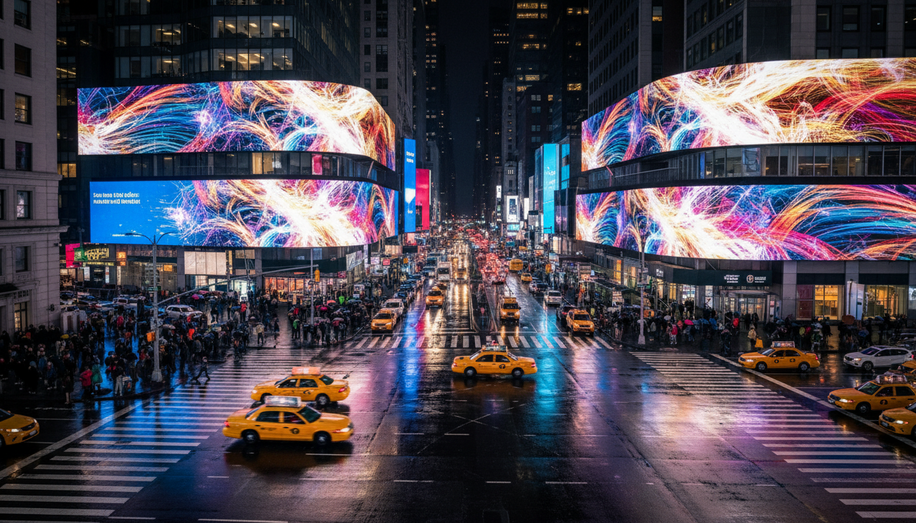

Digital out-of-home advertising has undergone a fundamental transformation over the past several years, shifting from a static, manually negotiated channel into a dynamic, data-driven ecosystem that mirrors the sophistication of programmatic digital advertising. This evolution represents more than a simple technological upgrade—it fundamentally changes how brands access, activate, and optimize physical advertising inventory in real time.
Programmatic DOOH operates by automating the buying, selling, and delivery of out-of-home advertising through centralized platforms that connect advertisers directly with screen networks. Unlike traditional DOOH, which requires weeks of advance planning, manual negotiations, and fixed placements, programmatic systems enable brands to launch campaigns from a single platform and adjust them dynamically based on real-world conditions. The infrastructure supporting this transformation mirrors established digital advertising ecosystems, with Demand-Side Platforms (DSPs) serving as the strategic control layer where advertisers manage budgets, pacing, and targeting logic, while Supply-Side Platforms (SSPs) grant media owners the ability to make their inventory available for programmatic transactions.
The core mechanism driving programmatic DOOH transactions is real-time bidding (RTB). When DOOH network inventory becomes available, the system presents it to potential buyers within milliseconds, who then place bids for the desired placements. The winning bid results in immediate delivery of the advertiser’s creative to the screen. This auction-based model democratizes access to premium inventory, allowing brands of varying sizes to compete for placement without requiring long-term commitments or direct relationships with media owners. Beyond RTB, programmatic platforms support alternative buying methods including Private Marketplace (PMP) deals and Automated Guaranteed options, providing flexibility for advertisers seeking either open auctions or more structured arrangements.
What distinguishes programmatic DOOH from its traditional counterpart is the ability to activate inventory based on trigger conditions rather than fixed schedules. When specific conditions are met—whether a time window, weather change, audience threshold, or local event—the system evaluates eligible campaigns and delivers the most relevant creative. A notable example demonstrates this capability: Guinness deployed weather-responsive triggers that adapted creative based on atmospheric conditions, driving an 18 percent year-over-year revenue increase. This real-time responsiveness transforms DOOH from a passive medium into an agile channel capable of meeting audiences at critical decision-making moments throughout their day.
The efficiency gains extend beyond creative optimization to fundamental budget management. Advertisers traditionally committed spend weeks in advance with limited recourse for adjustments. Programmatic DOOH reverses this paradigm, allowing brands to scale campaigns up, pause, or redirect budgets based on performance or shifting business priorities without renegotiating placements or awaiting post-campaign analysis. This flexibility proves especially valuable in fast-moving environments where competitive dynamics or market conditions shift daily.
Yet the programmatic DOOH landscape faces a significant structural challenge: inventory fragmentation. No single media owner controls more than a small fraction of total DOOH inventory, and industry data indicates that over 60 percent remains siloed by owner or platform. As a result, buyers often must work across five to ten different supply paths to achieve national coverage. This fragmentation increases operational overhead and limits optimization potential, though it mirrors broader media trends pushing buyers toward intelligent consolidation strategies rather than raw reach chasing.
The expanding footprint of programmatic DOOH inventory itself represents another transformative force. Digital screens increasingly populate environments previously considered inaccessible or difficult to buy across multiple locations—big box retailers, fitness centers, transit hubs, universities, workplaces, and EV charging stations. This proliferation enables advertisers to reach audiences throughout their day with unprecedented granularity, positioning DOOH as a strategic pillar within omnichannel marketing strategies.
Perhaps most significantly, programmatic DOOH addresses a longstanding measurement challenge that plagued traditional out-of-home advertising. By integrating real-time data and verification metrics, programmatic systems now provide verifiable ROI through foot traffic lift analysis, brand salience tracking, and direct sales attribution. This transparency transforms DOOH from a medium viewed primarily through media impressions and estimated eyeballs into a measurable, accountable advertising channel with demonstrated business impact.
The convergence of automation, real-time optimization, and expanded inventory access positions programmatic DOOH as a critical evolution in out-of-home advertising, enabling brands to execute sophisticated, responsive campaigns that traditional channels simply cannot match.