
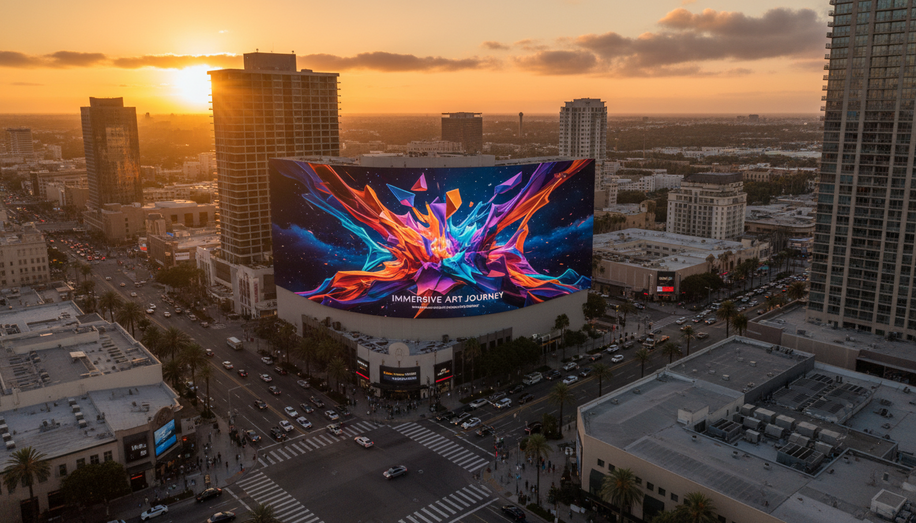

In the throbbing heart of a bustling city, where neon lights flicker against the night sky and crowds surge toward sold-out arenas, out-of-home (OOH) advertising stands as the unmissable herald of the experience economy. As consumers crave live concerts, pulsing festivals, high-stakes sports events, and immersive activations over passive digital scrolls, OOH emerges as the medium that doesn’t just announce these spectacles—it propels audiences straight to the gates, transforming distant curiosity into urgent foot traffic. A recent Harris Poll study underscores this power: 74% of mobile users take action—searching, calling, or visiting—after encountering digital OOH (DOOH) ads, outpacing traditional channels in driving real-world engagement.
This surge aligns perfectly with the experience economy’s ethos, where value lies not in products but in unforgettable moments. Entertainment promoters, from indie festival organizers to global sports leagues, leverage OOH’s hyper-local reach to cut through the noise of fragmented media landscapes. Billboards towering over highways, digital screens at transit hubs, and bus shelters near venues deliver time-sensitive calls to action that resonate in high-traffic zones, where 71% of drivers consciously notice them and 50% report purchase influences. During major events like concerts or expos, OOH impressions skyrocket as foot traffic swells, amplifying ROI even as costs rise—a strategic bet on concentrated audiences primed for discovery.
Consider the mechanics at play. Event data now supercharges OOH planning, allowing advertisers to pinpoint high-attendance spectacles and deploy campaigns with surgical precision. Knowing a stadium will draw tens of thousands for a championship game or a pop icon’s tour stop enables placements along approach routes, at nearby point-of-interest clusters like hotels and bars, and even on venue-adjacent digital networks. This data-driven timing ensures ads hit when potential attendees are en route, their senses heightened by anticipation. Directional DOOH, with its dynamic content like countdown timers or exclusive offers, funnels viewers directly to box offices or apps, boosting store traffic and sales—80% of consumers deem time-specific promotions, such as festival drink deals, highly useful.
Real-world efficacy shines in urban hotspots. DOOH’s favoritism among younger generations and transit users—key demographics for entertainment—stems from its contextual relevance; 73% prefer it over TV or social media, with 83% recall from digital billboards alone. For sports events, OOH wraps stadium perimeters and fan zones, heightening pre-game buzz and post-event recaps to extend engagement. Festivals benefit from geo-targeted screens flashing lineup teasers at bus stops, drawing diverse crowds while enhancing the communal vibe. Experiential activations, those pop-up art installations or brand immersions, use OOH to seed FOMO—fear of missing out—turning passive passersby into participants.
Yet OOH’s magic extends beyond mere attendance spikes. In an era where 47% of event discoveries happen via word-of-mouth and organizers allocate up to 50% of budgets to live experiences, OOH amplifies organic sharing. A striking concert poster glimpsed on a subway car sparks conversations, while interactive DOOH polls or QR codes deepen involvement, blending promotion with participation. This elevates the overall event experience: attendees arrive not as ticket numbers but as hyped insiders, their journeys primed by vivid, unavoidable visuals that build emotional investment.
Critics might point to volatile attendance trends—31.3% of organizers report stability in 2025, down from prior years—as a risk, especially amid competition for booths and activations at larger shows. But OOH mitigates this by prioritizing quality over quantity. Smaller, targeted events yield higher ROI per dollar when paired with precise placements, avoiding the dilution of massive crowds where messages drown. Data integration further refines this: combining event forecasts with location insights identifies not just high-traffic spots but engaged pockets, like music fans clustering near a venue.
The billboard market’s projected growth to $62.52 billion in 2025 signals OOH’s enduring vitality, with DOOH claiming a third of spend and expanding 10% annually. For entertainment marketers, this isn’t hype—it’s proven propulsion. As one industry leader notes, DOOH “captures attention and drives meaningful actions,” making it indispensable for an economy fueled by live thrills. In cities alive with festivals and games, OOH doesn’t just advertise events; it orchestrates the crowd, ensuring every roar, riff, and revelation starts with a glance upward. Foot traffic surges, engagement soars, and the experience economy pulses stronger, billboard by billboard.