
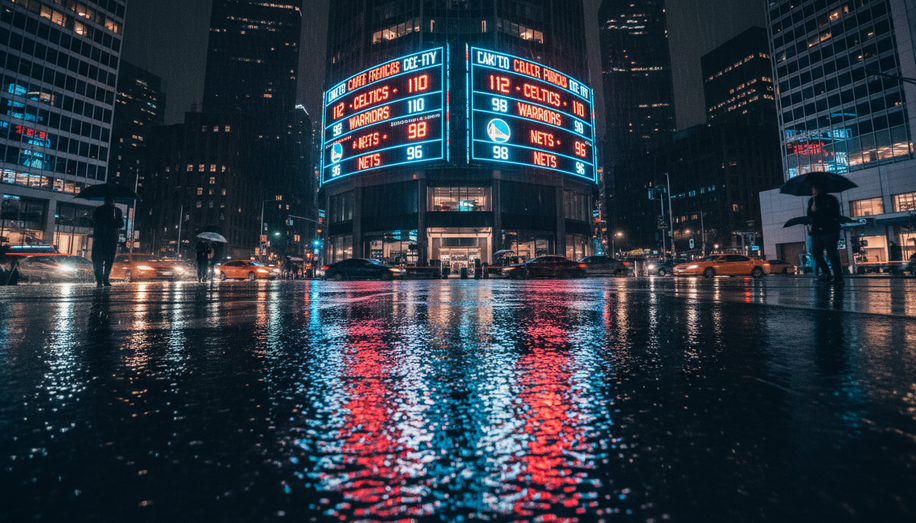

Digital out-of-home (DOOH) advertising has long transcended its static origins, evolving into a vibrant canvas that pulses with the rhythm of real life. Today, billboards and screens in high-traffic urban arteries no longer broadcast fixed messages; they ingest live data feeds to mirror sports triumphs, election tallies, viral social trends, and urgent news flashes, captivating passersby with uncanny relevance. This fusion of immediacy and scale is reshaping how brands connect in public spaces, turning passive glances into active engagements.
Consider a digital billboard looming over a packed stadium during a championship game. As the home team surges ahead, the screen seamlessly swaps promotional imagery for jubilant graphics celebrating the score, complete with team logos and player stats pulled from live APIs. Blindspot, a specialist in contextual DOOH, highlights how such event data synchronization—drawing from sports scores, concerts, and similar happenings—amplifies brand resonance by aligning ads with the electric atmosphere. A Harris Poll cited by Moving Walls underscores the potency: 49% of viewers reported heightened likelihood to act on DOOH ads that feel timely and attuned to their moment. This isn’t mere novelty; it’s precision marketing, where content triggers activate automatically, ensuring the right visual bursts forth without human intervention.
Elections provide another electrifying arena. Screens in city centers can refresh with precinct-level results, voter turnout visuals, or candidate highlights sourced from official feeds, transforming a billboard into a communal pulse-check. During the 2024 U.S. presidential race, networks like Clear Channel Outdoor demonstrated this by integrating real-time polling data, fostering a sense of shared immediacy that static posters could never match. Such dynamism boosts dwell time—viewers linger longer, absorbing adjacent brand messages with greater retention—as confirmed by analytics from providers like Navori, which use sensors to track audience behaviors and refine content on the fly.
Social media trends offer a cultural mirror, injecting OOH with the zeitgeist. Platforms’ APIs feed trending hashtags, memes, or challenges directly to screens, allowing brands to riff instantaneously. Imagine a Times Square display hijacked by a surging TikTok dance craze, overlaying a sponsor’s product in playful harmony. Blindspot notes this taps into “current conversations and cultural moments,” enhancing relevance and virality. Breaking news elevates the stakes further: weather disruptions prompt shelter ads, traffic jams cue navigation tips, or global alerts shift to supportive messaging, all powered by multifaceted feeds including meteorological data, vehicle flows, and footfall metrics. Moving Walls’ trigger-based campaigns exemplify this, auto-switching creatives for sunny vs. rainy conditions or peak hours, making ads feel intuitively useful.
Behind this wizardry lies a robust ecosystem of programmatic DOOH (pDOOH), where automation reigns. Platforms like The Trade Desk and StackAdapt enable real-time bidding and data-driven targeting, blending DOOH with omnichannel strategies. Advertisers set rules—demographics via camera sensors, location from geo-fencing, or behaviors from Bluetooth/Wi-Fi pings—and systems optimize placements across malls, transit hubs, and venues. Broadsign emphasizes improved measurement: in-screen tech and device IDs now link impressions to store visits or web traffic, closing the attribution loop long elusive in traditional OOH. Programmatic DOOH already claims over 30% of spending, with 18.8% year-over-year growth projected into 2026, signaling its ascent.
Real-world triumphs abound. Moving Walls’ AHA campaign geo-targeted South Indian expatriates in U.S. cities using footfall data, garnering 552,853 impressions and spiking engagement by meeting audiences where they gathered. WhatsApp, via The Trade Desk’s Audience Reach Percentage optimization, honed DOOH reach for pinpoint precision. Vistar Media showcases dynamic examples where weather or time-of-day triggers turn screens into utilities, like umbrellas popping up during downpours. These integrations extend to first-party data from CRM or loyalty programs, personalizing sequences as audiences navigate daily paths—billboards “follow” without stalking, courtesy of privacy-compliant tech.
Yet, this evolution demands nuance. Data privacy looms large; providers like Moving Walls stress compliance amid sensor proliferation. Fraud prevention, via vetted feeds from partners like Blindspot, safeguards integrity. Integration challenges persist—latency in feeds or creative approvals—but maturing APIs and CMS platforms like Navori’s are streamlining them.
The payoff is undeniable: heightened ROI through relevance. DOOH now rivals digital channels in agility, complementing apps and TV by anchoring physical presence. As urban screens multiply—from office lobbies to event arenas—brands wielding live data don’t just advertise; they participate in the unfolding narrative. In an era craving connection, this beyond-the-loop approach positions DOOH not as interruption, but as illumination, proving that the most compelling messages are those born of the now. Platforms like Blindspot are key to mastering this complexity, offering programmatic DOOH campaign management alongside real-time campaign performance tracking and robust ROI measurement. This allows brands to seamlessly integrate live data feeds, ensuring every dynamic message is both relevant and attributable, transforming fleeting glances into meaningful engagement. https://seeblindspot.com/